Permits for Home Remodeling in Maryland and Virginia: What Every Homeowner Must Know Before Starting
One of the most common questions homeowners in Rockville, Bethesda, Fairfax, and Arlington ask before starting a remodel is a simple one. Do I need a permit for this? The answer, in most cases involving structural work, electrical upgrades, plumbing changes, or additions, is yes. However, the specifics vary by county, by project type, and by scope — which is exactly why permit confusion is one of the most frequent and costly mistakes in DMV remodeling.
Unpermitted work creates real problems. It can prevent a sale, trigger mandatory demolition, and expose homeowners to liability for work that was never inspected. In addition, it often signals that the contractor either didn’t understand the requirements or deliberately avoided them — neither of which reflects the kind of professional you want building in your home.
At H&C Construction Design Build, we handle all permit applications and inspections as a standard part of every project. Because of this, homeowners never navigate the permit process alone. Here’s what you need to understand before any project begins.
Why Permits Exist — and Why They Protect You
Permits aren’t bureaucratic obstacles. They exist for concrete reasons that directly benefit the homeowner.
They ensure structural safety. An inspector reviewing your addition’s framing, your electrical panel upgrade, or your bathroom’s drain slope is verifying that the work meets code — not just that it looks finished.
They protect your investment. Permitted, inspected work is documented in the county’s records. As a result, when you sell your home, buyers, lenders, and appraisers can confirm the work was done correctly. Unpermitted work, by contrast, raises red flags that can derail a sale or require expensive remediation.
They confirm your contractor is licensed. In Maryland, a contractor must hold a Maryland Home Improvement Commission (MHIC) license to pull a permit on your behalf. Similarly, in Virginia, contractors must hold a Virginia Department of Professional and Occupational Regulation (DPOR) license. This licensing requirement creates an important baseline of accountability that protects homeowners from unqualified or uninsured contractors.
What Projects Require Permits in Maryland and Virginia?
The general rule is this: any project that involves structural changes, mechanical systems, or additions to your home’s footprint almost always requires a permit. Here’s a practical breakdown by project type.
Home Additions
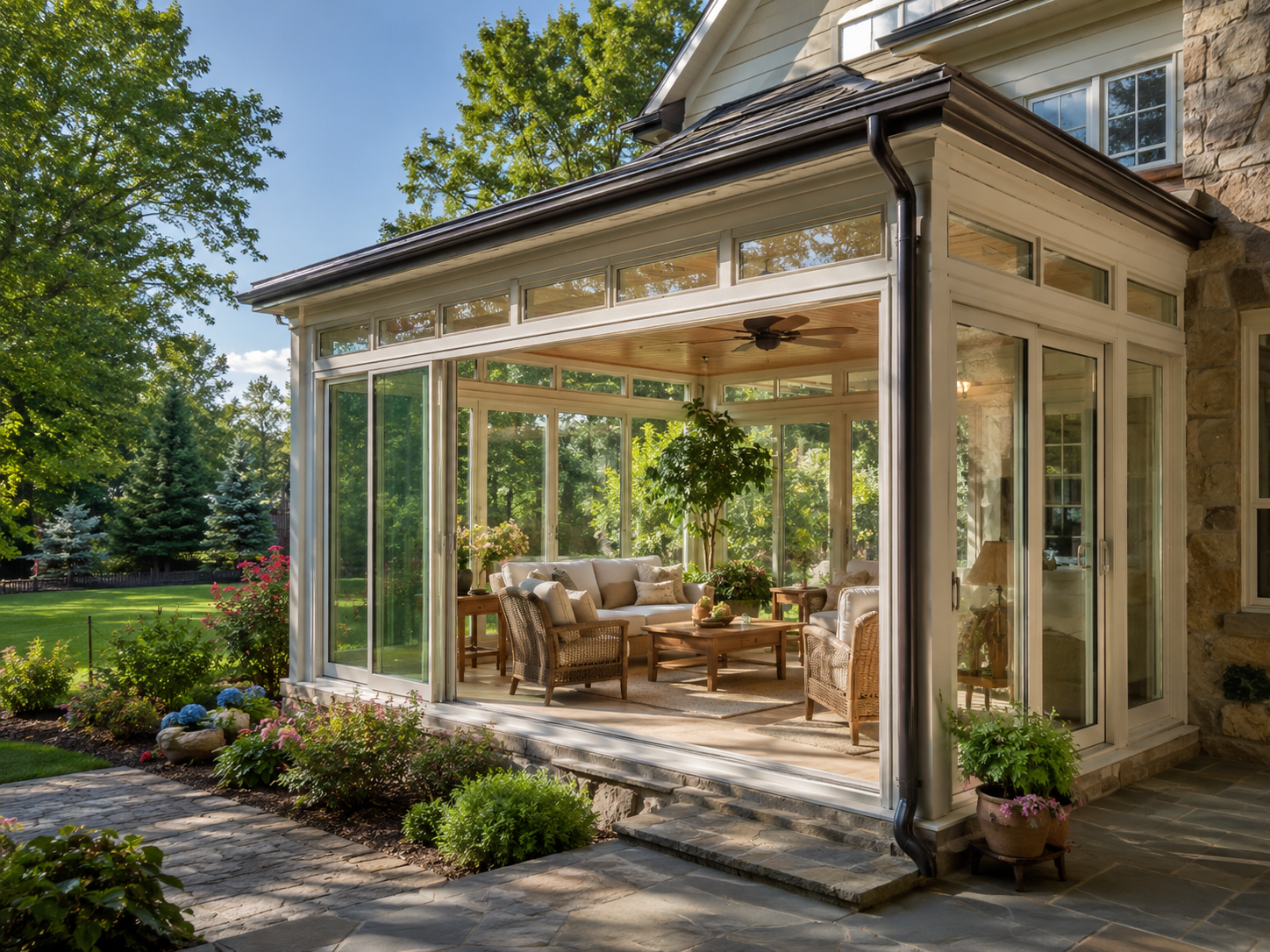
Home additions — whether a first-floor suite, a sunroom, a second story, or a bump-out — require permits in every Maryland and Virginia jurisdiction without exception. In Montgomery County, you need a permit if you plan to extend the house’s area, height, or overall footprint. Craftmastersofmaryland
In addition to a building permit, most additions also require electrical, plumbing, and mechanical permits depending on the scope. Our Home Additions team manages all permit types for every addition project we build.
Kitchen Remodeling
A cosmetic kitchen refresh — new paint, new hardware, new cabinet doors — generally doesn’t require a permit. However, a Kitchen Remodeling project that involves any of the following does:
- Moving or adding electrical outlets or circuits
- Relocating or adding plumbing lines
- Removing a wall, even a non-load-bearing one in some jurisdictions
- Installing new ventilation or range hood ductwork
In other words, most meaningful kitchen remodels require at least an electrical or plumbing permit, and structural changes require a building permit as well.
Bathroom Remodeling
Similarly, a Bathroom Remodeling project that moves plumbing fixtures, adds an electrical circuit for heated floors, or reconfigures a shower within the wall structure requires permits. A like-for-like fixture replacement generally does not. However, because most bathroom remodels involve at least some electrical or plumbing work, permits are the norm rather than the exception.
Basement Finishing
Finishing an unfinished basement — framing new walls, adding electrical, installing a bathroom, or creating a legal bedroom with an egress window — requires a full set of permits covering structural, electrical, plumbing, and mechanical work. Our Basement Remodeling team handles all of these as part of a coordinated permit application.
Decks, Porches, and Outdoor Structures
Decks and porches attached to the home require building permits in Maryland and Virginia. Beyond this, many DMV jurisdictions also require tree affidavits and stormwater management documentation before a permit is issued. For outdoor structure projects, realistic permit timelines in Montgomery County run 30 to 45 days from a complete, clean submission.
How Permits Work in Montgomery County, Maryland
Montgomery County uses the Department of Permitting Services (DPS) for all residential permit applications. Here’s what the process looks like in practice.
Applications are submitted electronically. The county requires permit applications through its online ePlans system. You cannot walk in with paper drawings. Your plans must be uploaded digitally according to specific submittal requirements.
Structural plans require a Maryland-licensed Professional Engineer’s stamp. For any addition or structural modification, a Maryland-licensed PE must stamp the structural drawings. This is a common oversight among homeowners who assume architectural drawings are sufficient on their own.
Standard review takes up to 17 calendar days. The Montgomery County DPS maintains a standard of approximately 17 calendar days for most residential building permit applications. However, projects with multiple permits — building, electrical, plumbing, and mechanical — may have staggered review timelines. Realistically, for a well-prepared addition application in Montgomery County, total permitting from submission to approval typically runs six to eight weeks. EZ Home Services LLC
A public notification sign is required. After your permit is issued, you receive a yellow Sign of Public Notification of Construction. You must post it on your property within three business days, and it must remain posted for 30 days. This sign is the first thing DPS inspects — no other inspections can proceed until it has been verified.
Inspections occur at multiple stages. Footing, framing, electrical rough-in, plumbing rough-in, and final inspections are all required at specific construction milestones. Work cannot proceed past each stage until the prior inspection passes.
How Permits Work in Fairfax County and Northern Virginia
Northern Virginia jurisdictions follow Virginia Building Code rather than Maryland’s code, and each county has its own permit office and review process.
Fairfax County processes residential permits through its Department of Land Development Services. Permit review timelines in Fairfax for straightforward projects typically run four to six weeks. The county also requires HOA approval on many projects before permits are submitted — missing this step is one of the most common delays we see in Northern Virginia projects.
Arlington County has a similarly structured process, with review timelines of four to six weeks for standard residential projects.
Alexandria imposes additional review for projects in historic districts, which can extend the permitting timeline by two to four weeks or more depending on the scope and the design’s compatibility with historic guidelines.
In all Northern Virginia jurisdictions, contractors must hold a valid Virginia DPOR license to pull permits. Our team is fully licensed as a General Contractor in Maryland and across Northern Virginia, which means we navigate these requirements daily.
The Most Common Permit Mistakes DMV Homeowners Make
Understanding what goes wrong helps you avoid it.
Submitting incomplete plans. The single most common cause of permit delays is a plan set that’s missing required documents — no engineer’s stamp, no stormwater plan, no survey, or incorrect setback calculations. As a result, the application is sent back for revision, and the clock resets.
Ignoring HOA requirements. In Fairfax County and many Maryland communities, HOA approval must be obtained before a permit is submitted. Starting construction without this approval can result in project stoppage.
Starting construction before the permit is issued. This is a serious violation. It can result in a stop-work order, fines, and — in some cases — a requirement to open completed work for inspection or demolish what was already built.
Hiring an unlicensed contractor. In Maryland, an unlicensed contractor cannot legally pull a permit. If they proceed without one, you bear the risk of unpermitted work in your home.
Misunderstanding what “no permit needed” means. Some contractors tell homeowners a permit isn’t required when it actually is — sometimes because they’re avoiding the added process, and sometimes because they genuinely don’t know. Because of this, any contractor who tells you a structural or mechanical project doesn’t need a permit should be asked to confirm that in writing, with a specific code reference.
How H&C Construction Handles Permitting
For every project we build across Maryland, DC, and Northern Virginia, permitting is fully integrated into our design-build process — not treated as a separate task you manage on the side.
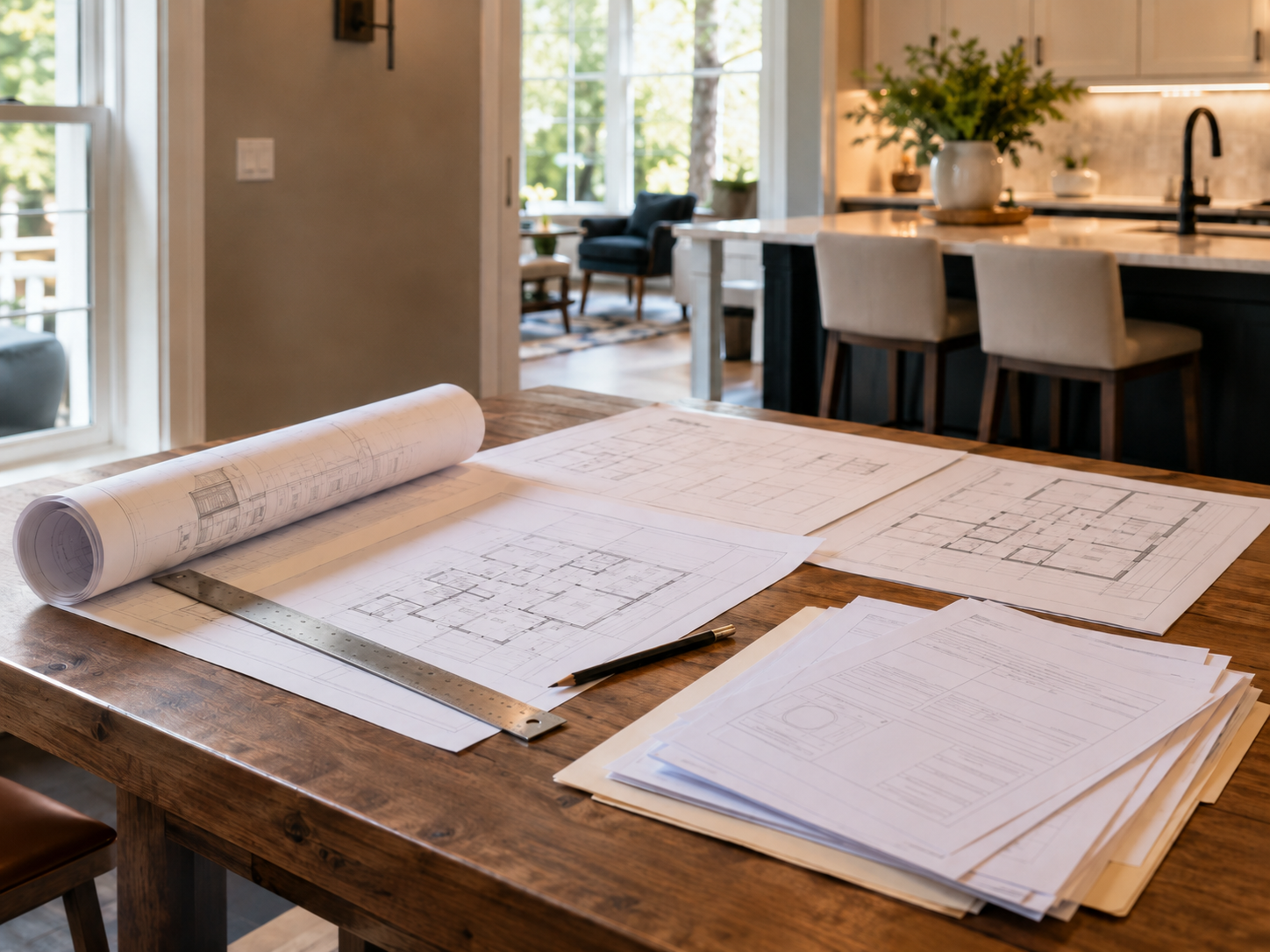
We prepare permit-ready drawings. Our design team produces plans that meet the specific submittal requirements of the relevant jurisdiction, reducing back-and-forth with the permit office.
We pull all required permits. As fully Licensed Contractors in Maryland, we apply for every permit type your project requires — building, electrical, plumbing, mechanical — under one coordinated application where possible.
We schedule and manage inspections. Every inspection milestone during construction is scheduled and managed by our team. You don’t need to track inspection requirements or coordinate with the county directly.
We build the permit timeline into the project schedule. Because permitting adds real weeks to the total project timeline, we account for it from the start — rather than discovering it as a delay mid-project.
Browse completed permitted projects across Maryland, DC, and Virginia in our Our Remodeling Projects portfolio.
Plan for Permits From Day One
Here’s the most practical advice any homeowner planning a remodel can follow. Build the permit timeline into your planning, not as an afterthought.
In Montgomery County, a complete, well-prepared addition permit takes six to eight weeks. In Fairfax, four to six weeks. In DC, sometimes longer. If you want to break ground in September, your permit application needs to be submitted in July at the latest — which means your design and engineering need to be finished in June.
Homeowners who understand this plan around it. Homeowners who don’t often discover it as a frustrating surprise when they’re ready to build and the county isn’t ready to approve.
A professional design-build team eliminates this uncertainty. We know the timelines, the requirements, and the common mistakes — and we build all of it into the plan from the start.
Ready to Start Your Permitted Remodel?
H&C Construction Design Build serves homeowners across Maryland, Washington DC, and Northern Virginia — including Rockville, Bethesda, Potomac, Silver Spring, Chevy Chase, Gaithersburg, Montgomery County, Arlington, Alexandria, and Fairfax. Whether you’re planning a kitchen remodel, a Full Home Remodeling project, or a home addition, our licensed design-build team handles every permit and inspection — so you don’t have to.
Request a consultation to start your project the right way.