Posted on

Basement Egress and Guest Suite Remodeling in the DMV: 2026 Guide

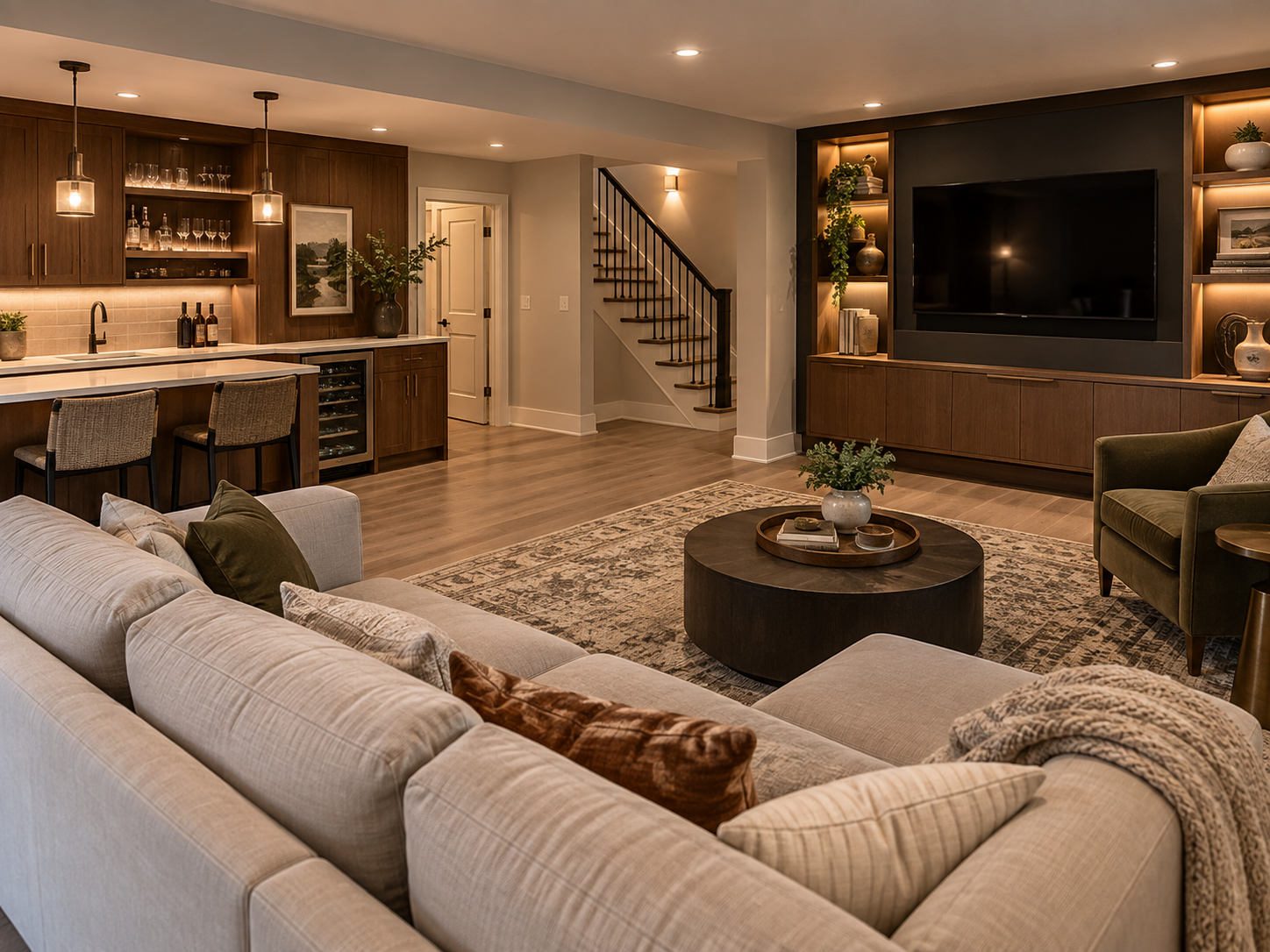
Basement egress and guest suite remodeling in the DMV with bright lower-level bedroom, egress window, modern bathroom, comfortable lounge, moisture-conscious flooring, and safe finished basement design.

Basement Egress and Guest Suite Remodeling in the DMV: How 2026 Homeowners Are Turning Lower Levels Into Safer, Brighter, More Valuable Living Space

Basement egress and guest suite remodeling in the DMV is becoming one of the strongest ways to unlock hidden value inside an existing home. Many homeowners already have square footage below the main level, but it may be dark, unfinished, damp, poorly lit, underused, or treated only as storage.

In 2026, that is changing.

Homeowners in Rockville, Bethesda, Potomac, Silver Spring, Chevy Chase, Gaithersburg, Washington DC, Arlington, Alexandria, Fairfax, and Northern Virginia are turning basements into real living space: guest suites, in-law suites, family rooms, offices, gyms, media rooms, laundry zones, and flexible lower-level retreats.

But a basement remodel should not begin with paint and flooring.

It should begin with safety, moisture, lighting, egress, ventilation, layout, and long-term use.

At H&C Construction Design Build, we help DMV homeowners plan basement remodeling projects with durability, comfort, safety, and craftsmanship. If your basement is unfinished, outdated, dark, damaged, or ready to become real living space, start with Basement Remodeling or view Our Remodeling Projects.


Why Basement Remodeling Is So Valuable in the DMV

Basements are valuable because they use space the home already has.

Instead of building outward or upward, homeowners may be able to improve the lower level and create functional square footage without changing the main footprint.

A basement remodel can create:

  • Guest bedroom
  • In-law suite
  • Full bathroom
  • Family room
  • Home office
  • Gym
  • Playroom
  • Media room
  • Storage wall
  • Laundry room
  • Wet bar or kitchenette
  • Hobby space
  • Rental-supportive flexibility where legally appropriate

This matters because many DMV homeowners want more space but do not necessarily want to move.

A finished basement can support family needs, guests, adult children, aging parents, remote work, entertainment, and long-term property value.

This is why Basement Remodeling is one of the strongest services to connect with Full Home Remodeling.


Egress Planning Is Essential for Basement Bedrooms

If a basement will include a bedroom or sleeping area, egress planning becomes one of the most important issues.

Egress means safe emergency exit access. It is not just a design feature. It is a life-safety consideration.

Basement egress planning may involve:

  • Egress window
  • Window well
  • Exterior exit
  • Walkout basement access
  • Proper bedroom layout
  • Natural light
  • Emergency access
  • Code-conscious planning
  • Permit and inspection coordination

A basement bedroom without proper egress can create safety concerns and compliance problems.

That is why homeowners should work with a professional General Contractor in Maryland and qualified professionals when planning basement sleeping areas.

A basement guest suite should be comfortable, but it must also be safe.


Moisture Control Comes Before Finished Materials

Basements must be planned differently from main-level rooms.

Before installing flooring, drywall, cabinetry, or trim, homeowners should evaluate moisture conditions.

Warning signs include:

  • Musty odors
  • Damp walls
  • Water stains
  • Efflorescence
  • Soft flooring
  • Peeling paint
  • Mold concerns
  • Window well leaks
  • Cracks
  • High humidity
  • Past flooding
  • Damaged baseboards

If moisture is present, the correct first step may be Restoration & Rebuild, not cosmetic finishing.

A finished basement should be dry, durable, and comfortable. Installing premium finishes over moisture problems can create long-term damage.

This is why basement remodeling must prioritize performance before aesthetics.


Guest Suites Need More Than a Bedroom

A strong basement guest suite is not just a bed placed in the corner of a finished room.

It should feel intentional, private, and comfortable.

A basement guest suite may include:

  • Bedroom or sleeping area
  • Egress window
  • Full bathroom
  • Closet or wardrobe storage
  • Lounge area
  • Better lighting
  • Sound control
  • Moisture-conscious flooring
  • Warm finishes
  • Private or semi-private access
  • Storage
  • Small beverage or snack zone

For extended family or long-term guests, the suite should feel more independent.

This connects directly with Bathroom Remodeling because a basement bathroom can make the lower level dramatically more useful.

A basement without a bathroom may be a family room. A basement with a bathroom and proper layout can become a true guest suite.


Basement Bathrooms Add Major Function

Adding or remodeling a basement bathroom can significantly improve the lower level.

A basement bathroom may support:

  • Guest suite
  • In-law suite
  • Media room
  • Home gym
  • Children’s play area
  • Home office
  • Outdoor walkout use
  • Entertainment space

However, basement bathrooms require careful plumbing, drainage, ventilation, waterproofing, lighting, and material planning.

A Bathroom Remodeling project below grade is not the same as updating a main-level powder room. It should be designed with moisture, access, durability, and long-term use in mind.

If the bathroom will include a shower, proper waterproofing and ventilation become even more important.


Lighting Makes the Basement Feel Like Real Living Space

Lighting can completely change the feeling of a basement.

Many basements feel dark because they rely on small windows, low ceilings, or a few overhead fixtures. A strong lighting plan can make the lower level feel warm, comfortable, and finished.

A basement lighting strategy may include:

  • Recessed lighting
  • Wall sconces
  • LED accent lighting
  • Stair lighting
  • Bathroom lighting
  • Closet lighting
  • Natural light from egress windows
  • Window wells designed for brightness
  • Warm color temperature
  • Dimmable zones
  • Task lighting for desks or bars

Good lighting also supports safety.

Stairs, hallways, bathrooms, laundry zones, and guest areas should be easy to navigate.

Lighting should be planned before ceilings and walls are finished, not after.


Basement Guest Suites Can Support Multigenerational Living

Basement guest suites are especially valuable for multigenerational households.

They can support:

  • Aging parents
  • Adult children
  • Long-term guests
  • Caregivers
  • Visiting family
  • Remote workers
  • Private study space
  • Flexible family needs

A lower-level suite can give family members more privacy while keeping everyone under one roof.

This type of remodeling connects with broader 2026 housing and design trends around multigenerational living and flexible layouts. Recent home design reporting shows increasing interest in homes that support multiple generations, adaptable spaces, finished basements, and long-term flexibility.

For homeowners, the lesson is clear: a basement remodel should be planned for how the family may change over time.


Basement Walkout Connections Improve Daily Use

Some homes have walkout basements or the potential to connect the lower level to outdoor living areas.

This can make the basement feel less like a basement and more like a real extension of the home.

A walkout basement plan may include:

  • Patio connection
  • Outdoor lounge
  • Deck stairs
  • Safer exterior access
  • Outdoor lighting
  • Covered lower-level seating
  • Better drainage
  • Guest entry
  • Basement-to-yard flow

This connects with Decks & Porches because outdoor access can make a finished basement more valuable and more enjoyable.

A lower-level guest suite with access to an outdoor patio can feel more private and comfortable.


When Should You Consider Basement Egress and Guest Suite Remodeling?

This project may be right if your home has:

  • Unfinished basement
  • Dark lower level
  • Need for guest space
  • Need for in-law suite
  • Adult child living at home
  • Basement bathroom potential
  • Underused storage space
  • Walkout basement
  • Poor lighting
  • Moisture concerns
  • Need for home office
  • Need for flexible living space
  • Growing family
  • Desire to improve property value without moving

The best basement remodels are planned around safety, comfort, moisture, light, and long-term flexibility.

A basement should not feel like leftover space. It should feel like part of the home.


How H&C Construction Design Build Helps DMV Homeowners

At H&C Construction Design Build, we help homeowners transform basements into safer, brighter, more functional living spaces.

Our basement egress and guest suite remodeling process focuses on five priorities.

1. Understanding the Homeowner’s Goals

We learn whether the basement should become a guest suite, family room, in-law space, office, gym, bathroom, storage area, or flexible lower-level retreat.

2. Evaluating Existing Conditions

We review moisture, lighting, ceiling height, walls, flooring, windows, stairs, bathroom feasibility, storage, and potential egress needs.

3. Planning the Right Layout

We help homeowners decide where bedrooms, bathrooms, living areas, storage, laundry, and outdoor connections should be placed.

4. Coordinating Construction Professionally

We manage framing, flooring, lighting, bathroom work, finishes, moisture-conscious materials, and construction sequencing with attention to quality.

5. Building for Long-Term Value

We focus on basements that feel safe, finished, comfortable, and useful for years.

Whether you need basement remodeling in Rockville, a guest suite in Bethesda, egress planning in Potomac, a basement bathroom in Silver Spring, or a full lower-level transformation in Northern Virginia, H&C Construction can help you remodel with confidence.

View Our Remodeling Projects to start planning.


Turn the Basement Into Space Your Family Actually Uses

Basement egress and guest suite remodeling is one of the smartest ways to create more living space in the DMV.

In 2026, homeowners need flexible homes that support guests, family, work, storage, privacy, and long-term value. A well-planned basement can help solve those needs without changing the home’s main footprint.

If your basement is unfinished, dark, underused, or ready to become a true guest suite, H&C Construction Design Build can help you plan the right next step.

Explore Basement Remodeling, Bathroom Remodeling, Full Home Remodeling, and General Contractor in Maryland, with H&C Construction Design Build today.

Posted on

Second-Story Home Additions in Maryland, DC & Virginia: 2026 Guide

Second-story home addition in Maryland, Washington DC, and Virginia with expanded upper level, new primary suite, updated exterior, modern windows, and professional design-build construction.

Basement Egress and Guest Suite Remodeling in the DMV: How 2026 Homeowners Are Turning Lower Levels Into Safer, Brighter, More Valuable Living Space

Basement egress and guest suite remodeling in the DMV is becoming one of the strongest ways to unlock hidden value inside an existing home. Many homeowners already have square footage below the main level, but it may be dark, unfinished, damp, poorly lit, underused, or treated only as storage.

In 2026, that is changing.

Homeowners in Rockville, Bethesda, Potomac, Silver Spring, Chevy Chase, Gaithersburg, Washington DC, Arlington, Alexandria, Fairfax, and Northern Virginia are turning basements into real living space: guest suites, in-law suites, family rooms, offices, gyms, media rooms, laundry zones, and flexible lower-level retreats.

But a basement remodel should not begin with paint and flooring.

It should begin with safety, moisture, lighting, egress, ventilation, layout, and long-term use.

At H&C Construction Design Build, we help DMV homeowners plan basement remodeling projects with durability, comfort, safety, and craftsmanship. If your basement is unfinished, outdated, dark, damaged, or ready to become real living space, start with Basement Remodeling or view Our Remodeling Projects.


Why Basement Remodeling Is So Valuable in the DMV

Basements are valuable because they use space the home already has.

Instead of building outward or upward, homeowners may be able to improve the lower level and create functional square footage without changing the main footprint.

A basement remodel can create:

  • Guest bedroom
  • In-law suite
  • Full bathroom
  • Family room
  • Home office
  • Gym
  • Playroom
  • Media room
  • Storage wall
  • Laundry room
  • Wet bar or kitchenette
  • Hobby space
  • Rental-supportive flexibility where legally appropriate

This matters because many DMV homeowners want more space but do not necessarily want to move.

A finished basement can support family needs, guests, adult children, aging parents, remote work, entertainment, and long-term property value.

This is why Basement Remodeling is one of the strongest services to connect with Full Home Remodeling.


Egress Planning Is Essential for Basement Bedrooms

If a basement will include a bedroom or sleeping area, egress planning becomes one of the most important issues.

Egress means safe emergency exit access. It is not just a design feature. It is a life-safety consideration.

Basement egress planning may involve:

  • Egress window
  • Window well
  • Exterior exit
  • Walkout basement access
  • Proper bedroom layout
  • Natural light
  • Emergency access
  • Code-conscious planning
  • Permit and inspection coordination

A basement bedroom without proper egress can create safety concerns and compliance problems.

That is why homeowners should work with a professional General Contractor in Maryland and qualified professionals when planning basement sleeping areas.

A basement guest suite should be comfortable, but it must also be safe.


Moisture Control Comes Before Finished Materials

Basements must be planned differently from main-level rooms.

Before installing flooring, drywall, cabinetry, or trim, homeowners should evaluate moisture conditions.

Warning signs include:

  • Musty odors
  • Damp walls
  • Water stains
  • Efflorescence
  • Soft flooring
  • Peeling paint
  • Mold concerns
  • Window well leaks
  • Cracks
  • High humidity
  • Past flooding
  • Damaged baseboards

If moisture is present, the correct first step may be Restoration & Rebuild, not cosmetic finishing.

A finished basement should be dry, durable, and comfortable. Installing premium finishes over moisture problems can create long-term damage.

This is why basement remodeling must prioritize performance before aesthetics.


Guest Suites Need More Than a Bedroom

A strong basement guest suite is not just a bed placed in the corner of a finished room.

It should feel intentional, private, and comfortable.

A basement guest suite may include:

  • Bedroom or sleeping area
  • Egress window
  • Full bathroom
  • Closet or wardrobe storage
  • Lounge area
  • Better lighting
  • Sound control
  • Moisture-conscious flooring
  • Warm finishes
  • Private or semi-private access
  • Storage
  • Small beverage or snack zone

For extended family or long-term guests, the suite should feel more independent.

This connects directly with Bathroom Remodeling because a basement bathroom can make the lower level dramatically more useful.

A basement without a bathroom may be a family room. A basement with a bathroom and proper layout can become a true guest suite.


Basement Bathrooms Add Major Function

Adding or remodeling a basement bathroom can significantly improve the lower level.

A basement bathroom may support:

  • Guest suite
  • In-law suite
  • Media room
  • Home gym
  • Children’s play area
  • Home office
  • Outdoor walkout use
  • Entertainment space

However, basement bathrooms require careful plumbing, drainage, ventilation, waterproofing, lighting, and material planning.

A Bathroom Remodeling project below grade is not the same as updating a main-level powder room. It should be designed with moisture, access, durability, and long-term use in mind.

If the bathroom will include a shower, proper waterproofing and ventilation become even more important.


Lighting Makes the Basement Feel Like Real Living Space

Lighting can completely change the feeling of a basement.

Many basements feel dark because they rely on small windows, low ceilings, or a few overhead fixtures. A strong lighting plan can make the lower level feel warm, comfortable, and finished.

A basement lighting strategy may include:

  • Recessed lighting
  • Wall sconces
  • LED accent lighting
  • Stair lighting
  • Bathroom lighting
  • Closet lighting
  • Natural light from egress windows
  • Window wells designed for brightness
  • Warm color temperature
  • Dimmable zones
  • Task lighting for desks or bars

Good lighting also supports safety.

Stairs, hallways, bathrooms, laundry zones, and guest areas should be easy to navigate.

Lighting should be planned before ceilings and walls are finished, not after.


Basement Guest Suites Can Support Multigenerational Living

Basement guest suites are especially valuable for multigenerational households.

They can support:

  • Aging parents
  • Adult children
  • Long-term guests
  • Caregivers
  • Visiting family
  • Remote workers
  • Private study space
  • Flexible family needs

A lower-level suite can give family members more privacy while keeping everyone under one roof.

This type of remodeling connects with broader 2026 housing and design trends around multigenerational living and flexible layouts. Recent home design reporting shows increasing interest in homes that support multiple generations, adaptable spaces, finished basements, and long-term flexibility.

For homeowners, the lesson is clear: a basement remodel should be planned for how the family may change over time.


Basement Walkout Connections Improve Daily Use

Some homes have walkout basements or the potential to connect the lower level to outdoor living areas.

This can make the basement feel less like a basement and more like a real extension of the home.

A walkout basement plan may include:

  • Patio connection
  • Outdoor lounge
  • Deck stairs
  • Safer exterior access
  • Outdoor lighting
  • Covered lower-level seating
  • Better drainage
  • Guest entry
  • Basement-to-yard flow

This connects with Decks & Porches because outdoor access can make a finished basement more valuable and more enjoyable.

A lower-level guest suite with access to an outdoor patio can feel more private and comfortable.


When Should You Consider Basement Egress and Guest Suite Remodeling?

This project may be right if your home has:

  • Unfinished basement
  • Dark lower level
  • Need for guest space
  • Need for in-law suite
  • Adult child living at home
  • Basement bathroom potential
  • Underused storage space
  • Walkout basement
  • Poor lighting
  • Moisture concerns
  • Need for home office
  • Need for flexible living space
  • Growing family
  • Desire to improve property value without moving

The best basement remodels are planned around safety, comfort, moisture, light, and long-term flexibility.

A basement should not feel like leftover space. It should feel like part of the home.


How H&C Construction Design Build Helps DMV Homeowners

At H&C Construction Design Build, we help homeowners transform basements into safer, brighter, more functional living spaces.

Our basement egress and guest suite remodeling process focuses on five priorities.

1. Understanding the Homeowner’s Goals

We learn whether the basement should become a guest suite, family room, in-law space, office, gym, bathroom, storage area, or flexible lower-level retreat.

2. Evaluating Existing Conditions

We review moisture, lighting, ceiling height, walls, flooring, windows, stairs, bathroom feasibility, storage, and potential egress needs.

3. Planning the Right Layout

We help homeowners decide where bedrooms, bathrooms, living areas, storage, laundry, and outdoor connections should be placed.

4. Coordinating Construction Professionally

We manage framing, flooring, lighting, bathroom work, finishes, moisture-conscious materials, and construction sequencing with attention to quality.

5. Building for Long-Term Value

We focus on basements that feel safe, finished, comfortable, and useful for years.

Whether you need basement remodeling in Rockville, a guest suite in Bethesda, egress planning in Potomac, a basement bathroom in Silver Spring, or a full lower-level transformation in Northern Virginia, H&C Construction can help you remodel with confidence.

View Our Remodeling Projects  to start planning.


Turn the Basement Into Space Your Family Actually Uses

Basement egress and guest suite remodeling is one of the smartest ways to create more living space in the DMV.

In 2026, homeowners need flexible homes that support guests, family, work, storage, privacy, and long-term value. A well-planned basement can help solve those needs without changing the home’s main footprint.

If your basement is unfinished, dark, underused, or ready to become a true guest suite, H&C Construction Design Build can help you plan the right next step.

Explore Basement Remodeling, Bathroom Remodeling, Full Home Remodeling, and General Contractor in Maryland, with H&C Construction Design Build today.

Posted on

Permit-Ready Home Additions and Remodeling in the DMV: 2026 Guide

Permit-ready home additions and remodeling in the DMV with contractor reviewing plans, home addition framing, inspection checklist, kitchen remodel, deck construction, and professional design-build planning

Permit-Ready Home Additions and Remodeling in the DMV: How Maryland, Washington DC, and Virginia Homeowners Can Avoid Delays, Rework, and Failed Inspections

Permit-ready remodeling is one of the most important topics for homeowners in Maryland, Washington DC, and Virginia.

A beautiful remodeling idea is not enough.

Before a home addition, kitchen remodel, bathroom remodel, basement finish, deck, porch, structural change, or whole-home renovation moves forward, homeowners need to understand whether the project requires permits, inspections, code review, licensed contractors, and proper construction documentation.

This matters because permit problems can create delays, failed inspections, rework, unsafe conditions, resale issues, and unnecessary stress.

In Maryland, the Maryland Home Improvement Commission states that the prime contractor on a home improvement project must obtain all required building permits or make sure all required permits have been obtained. It also states that permits issued to a home improvement contractor must include the contractor’s license number.

In Washington DC, the Department of Buildings regulates construction activity, reviews construction documents for code and zoning compliance, inspects construction activity, and issues construction permits. DC’s Homeowner’s Center also helps homeowners get permits for projects such as decks, fences, interior renovations, repairs, and window replacement.

In Virginia, contractor licensing is managed by DPOR’s Board for Contractors.

For homeowners across Rockville, Bethesda, Potomac, Silver Spring, Washington DC, Arlington, Alexandria, Fairfax, and Northern Virginia, the message is clear: serious remodeling should be planned with permits and compliance in mind from the beginning.

At H&C Construction Design Build, we help homeowners approach remodeling with planning, professionalism, craftsmanship, and long-term value. If your project includes an addition, structural change, kitchen, bathroom, basement, deck, porch, or full-home remodel, start with Home Additions, Full Home Remodeling, or General Contractor in Maryland.


What Does Permit-Ready Remodeling Mean?

Permit-ready remodeling means the project is planned with code, structure, inspections, documentation, and construction sequence in mind before work begins.

It does not mean every small update requires the same process.

It means homeowners and contractors should understand the difference between cosmetic work and construction work that may affect safety, structure, plumbing, electrical systems, mechanical systems, exterior openings, decks, porches, additions, or occupancy.

Permit-ready remodeling may involve:

  • Scope review
  • Existing condition review
  • Layout planning
  • Structural consideration
  • Permit requirement review
  • Trade coordination
  • Code-conscious planning
  • Inspection sequencing
  • Material compliance
  • Proper contractor licensing
  • Documentation
  • Construction quality control

The goal is to avoid surprises.

A homeowner should not discover halfway through a remodel that the work requires a permit, that inspections were missed, or that construction must be opened again because something was not properly reviewed.


Why Permit Planning Matters Before Construction Starts

Permit planning matters because remodeling is more than visual improvement.

Many projects affect safety, structure, utilities, and long-term performance.

Permit-sensitive work may include:

  • Home additions
  • Structural wall changes
  • Deck construction
  • Porch construction
  • Basement finishing
  • New bathrooms
  • Kitchen layout changes
  • Electrical changes
  • Plumbing changes
  • HVAC changes
  • Window or door changes
  • Exterior alterations
  • Major restoration work

In Washington DC, alteration and repair permits apply to construction or renovation of existing structures, including space reconfiguration, replacement in kind, and repairs.

That is a strong reminder for DMV homeowners: even work that feels like “renovation” may still require official review depending on scope and jurisdiction.

This is why homeowners should work with a qualified General Contractor in Maryland and understand the importance of Licensed Contractors in Maryland before beginning major work.


Home Additions Need Permit-Ready Planning From Day One

Home additions are among the most permit-sensitive remodeling projects.

A Home Addition may involve:

  • Foundation
  • Framing
  • Roofline integration
  • Exterior walls
  • Windows
  • Doors
  • Insulation
  • Electrical systems
  • HVAC coordination
  • Plumbing
  • Drainage
  • Structural connections
  • Zoning considerations
  • Inspections

A home addition changes the physical structure of the home. It may affect setbacks, lot coverage, rooflines, drainage, utilities, exterior materials, and interior flow.

This is why additions should not be planned casually.

Before construction begins, homeowners need a clear scope, realistic budget, construction plan, and understanding of permit requirements.

A well-planned addition can create a larger kitchen, first-floor suite, family room, sunroom, mudroom, home office, or primary suite. A poorly planned addition can create delays, rework, exterior mismatches, inspection issues, or long-term performance problems.

Permit-ready planning protects the project.


Kitchen Remodeling May Require More Than Cosmetic Planning

Some kitchen remodels are cosmetic. Others are much more involved.

A Kitchen Remodeling project may require deeper planning when it includes:

  • Moving plumbing
  • Adding electrical circuits
  • Changing walls
  • Installing larger windows or doors
  • Changing ventilation
  • Adding island outlets
  • Modifying structural elements
  • Relocating appliances
  • Expanding into another room
  • Connecting to outdoor living spaces

A kitchen is a technical room. It includes plumbing, electrical work, ventilation, cabinetry, lighting, flooring, appliances, and sometimes structural changes.

Permit-ready kitchen remodeling helps homeowners avoid unsafe electrical work, poor ventilation, plumbing mistakes, and rework.

The best kitchens are not only beautiful. They are planned correctly behind the walls.


Bathroom Remodeling Requires Waterproofing, Plumbing, and Inspection Discipline

Bathrooms are another high-risk remodeling area because they involve water, electrical systems, ventilation, tile, waterproofing, and drainage.

A Bathroom Remodeling project may require careful planning when it includes:

  • New shower
  • Curbless shower
  • Wet room
  • Relocated plumbing
  • New electrical work
  • Ventilation upgrades
  • New bathroom addition
  • Basement bathroom
  • Structural changes
  • Expanded footprint

A bathroom that looks beautiful but is poorly built can fail quickly.

Common risks include:

  • Poor waterproofing
  • Incorrect shower slope
  • Weak ventilation
  • Plumbing leaks
  • Electrical safety issues
  • Tile failure
  • Moisture behind walls
  • Mold risk
  • Failed inspection

Permit-ready bathroom remodeling helps protect both safety and long-term value.

If the existing bathroom already has water damage, soft flooring, failing tile, or mold concerns, homeowners may need Restoration & Rebuild before installing new finishes.


Basement Remodeling Requires Egress, Moisture, and Code Awareness

Basement remodeling can create valuable living space, but it needs serious planning.

A Basement Remodeling project may involve:

  • Egress planning
  • Insulation
  • Framing
  • Electrical work
  • Lighting
  • Bathroom plumbing
  • Moisture control
  • Ceiling height
  • HVAC coordination
  • Smoke and carbon monoxide safety
  • Storage
  • Waterproof materials
  • Inspection sequencing

Basements can become family rooms, guest suites, in-law spaces, home offices, gyms, playrooms, or entertainment rooms.

But they should never be finished without reviewing moisture and code-sensitive conditions.

If a homeowner wants to add a bedroom or bathroom in the basement, the project becomes more complex. It may require egress, plumbing, ventilation, electrical work, and inspections.

Permit-ready planning helps prevent a finished basement from becoming an unsafe or noncompliant space.


Decks and Porches Must Be Built for Safety

Decks and porches are exterior structures. They carry weight. They face weather. They require safe stairs, railings, footings, framing, connections, and materials.

A Decks & Porches project may involve:

  • Footings
  • Posts
  • Beams
  • Joists
  • Ledger connection
  • Flashing
  • Stairs
  • Railings
  • Lighting
  • Roof structure for covered porches
  • Drainage
  • Exterior materials
  • Inspection requirements

A deck may look simple, but it is a structural project.

Poorly built decks can create serious safety risks.

This is why deck and porch remodeling should be treated as professional construction, not a weekend cosmetic upgrade.

If the existing deck has rot, loose railings, soft boards, weak stairs, or poor flashing, the project may begin with Restoration & Rebuild.


Licensed Contractors Reduce Homeowner Risk

A licensed contractor matters because remodeling involves trust, safety, accountability, and technical execution.

Maryland states that only MHIC licensed contractors may enter into contracts with homeowners to perform home improvement work. Maryland’s licensing FAQ also says every contractor who solicits or performs home improvement services in Maryland must hold an MHIC license.

For homeowners, this is not a small detail.

Licensing helps establish that the contractor is operating within the required legal framework. It also matters for permits because Maryland states that permits issued to a home improvement contractor must include the contractor’s license number.

Before starting major remodeling, homeowners should verify that their contractor is qualified for the work and understands the permit process for the relevant jurisdiction.

Explore Licensed Contractors in Maryland to reinforce trust before beginning a major remodel.


Permit-Ready Remodeling Helps Avoid Costly Rework

Rework is one of the most expensive problems in remodeling.

It can happen when:

  • Work begins without required permits
  • Inspections are missed
  • Walls are closed before review
  • Structural changes are not planned correctly
  • Electrical work is not coordinated
  • Plumbing is moved without proper planning
  • Bathroom waterproofing fails
  • Deck framing is incorrect
  • Basement bedrooms lack proper planning
  • Materials are installed before damage is repaired

Permit-ready remodeling reduces these risks.

It helps homeowners understand what needs to happen, when inspections may be needed, and how construction should be sequenced.

The result is a cleaner process and stronger final product.


Full-Home Remodeling Requires a Master Plan

Full-home remodeling is one of the areas where permit planning becomes especially important.

A Full Home Remodeling project may affect:

  • Kitchen
  • Bathrooms
  • Basement
  • Flooring
  • Lighting
  • Electrical systems
  • Plumbing
  • HVAC
  • Exterior openings
  • Stairs
  • Decks
  • Additions
  • Layout changes
  • Structural walls
  • Windows and doors

The more rooms involved, the more important it is to plan correctly.

A whole-home master plan helps homeowners avoid doing work twice, opening finished walls again, or making material decisions before structural and permit questions are understood.

This is why design-build planning and permit-ready planning work together.


When Should You Prioritize Permit-Ready Planning?

Homeowners should prioritize permit-ready planning when a project includes:

  • Home addition
  • Structural changes
  • Wall removal
  • New bathroom
  • Basement finishing
  • Deck or porch construction
  • Kitchen layout changes
  • Plumbing relocation
  • Electrical upgrades
  • HVAC changes
  • Window or door changes
  • Exterior modifications
  • Restoration after damage
  • Full-home remodeling

The best time to ask permit questions is before construction begins.

Waiting until after work starts can lead to delays, redesign, rework, and unnecessary stress.


How H&C Construction Design Build Helps DMV Homeowners

At H&C Construction Design Build, we help homeowners approach remodeling with planning, craftsmanship, and accountability.

Our permit-ready remodeling approach focuses on five priorities.

1. Understanding the Project Scope

We begin by identifying what the homeowner wants to build, remodel, expand, repair, or improve.

2. Reviewing the Existing Home

We evaluate layout, structure, visible conditions, moisture risks, exterior areas, and construction constraints.

3. Planning the Work Correctly

We help homeowners think through additions, kitchens, bathrooms, basements, decks, porches, restoration work, and full-home remodeling with proper sequencing.

4. Coordinating Construction Professionally

We manage construction with attention to trades, materials, safety, quality, inspections, and finish details.

5. Building for Long-Term Value

We focus on remodeling that performs well, looks beautiful, and supports the home for years.

Whether you need a permit-ready home addition in Bethesda, kitchen remodeling in Rockville, bathroom remodeling in Potomac, basement remodeling in Silver Spring, deck construction in Maryland, or full-home remodeling in the DMV, H&C Construction can help you remodel with confidence.

View Our Remodeling Projects to start planning.


Build the Right Way Before Problems Start

Permit-ready remodeling is not bureaucracy. It is protection.

It helps homeowners avoid unsafe work, failed inspections, project delays, rework, and avoidable cost overruns.

In 2026, Maryland, Washington DC, and Virginia homeowners need remodeling partners who understand both craftsmanship and process. The best remodel is not only beautiful. It is properly planned, professionally built, and ready to support the home for years.

If your project includes an addition, kitchen, bathroom, basement, deck, porch, restoration work, or full-home remodel, H&C Construction Design Build can help you plan the right next step.

Explore Home Additions, Full Home Remodeling, Kitchen Remodeling, Bathroom Remodeling, and General Contractor in Maryland with H&C Construction Design Build today.

Posted on

Design-Build Home Remodeling in Maryland, DC and Virginia: 2026 Guide

Design-build home remodeling in Maryland, Washington DC, and Virginia with coordinated kitchen, living room, home addition, outdoor space, architectural planning, and construction craftsmanship.

Design-Build Home Remodeling in Maryland, Washington DC, and Virginia: Why 2026 Homeowners Want One Accountable Contractor From Planning to Final Build

Design-build home remodeling is becoming one of the most strategic choices for homeowners in Maryland, Washington DC, and Virginia. In 2026, homeowners are not only searching for beautiful kitchens, spa bathrooms, finished basements, home additions, and outdoor living spaces. They are also searching for confidence.

They want a remodeling process that feels organized.

They want one accountable contractor.

They want design decisions, construction feasibility, materials, permits, sequencing, and craftsmanship to work together from the beginning.

That is why design-build home remodeling in Maryland, DC, and Virginia is becoming such a powerful approach for serious homeowners across Rockville, Bethesda, Potomac, Silver Spring, Chevy Chase, Gaithersburg, Washington DC, Arlington, Alexandria, Fairfax, and Northern Virginia.

A design-build approach helps homeowners avoid the common problem of fragmented remodeling: one designer, one architect, one contractor, separate trades, unclear communication, changing budgets, and decisions that are made too late.

Current renovation guidance continues to emphasize the value of planning with a whole-home master plan instead of renovating piecemeal. Designers and architects recommend aligning structural, mechanical, aesthetic, and budget decisions early to avoid rework and create cohesive homes that feel intentional rather than patched together.

At H&C Construction Design Build, we help homeowners remodel with structure, craftsmanship, communication, and long-term value. If your home needs more than a surface update, start with Full Home Remodeling, explore our role as a General Contractor in Maryland, or view Our Remodeling Projects.


What Is Design-Build Remodeling?

Design-build remodeling is a project delivery approach where planning, design direction, construction feasibility, material coordination, trade management, and execution are handled through one integrated process.

Instead of separating design decisions from construction realities, design-build connects them from the start.

A design-build remodeling process may include:

  • Initial consultation
  • Home condition review
  • Scope definition
  • Layout planning
  • Budget alignment
  • Material direction
  • Permit planning
  • Construction sequencing
  • Trade coordination
  • Quality control
  • Final walkthrough

The value is accountability.

When the remodeling process is fragmented, homeowners often face gaps between what is designed, what is permitted, what is buildable, and what fits the budget. Design-build reduces that gap by making the project more coordinated.

This matters especially for Home Additions, Full Home Remodeling, Kitchen Remodeling, Bathroom Remodeling, and Basement Remodeling because these projects require multiple decisions to work together.


Why DMV Homeowners Need a More Coordinated Remodeling Process

Homes across Maryland, Washington DC, and Virginia often have unique remodeling challenges.

Many properties have older layouts, aging materials, limited storage, small bathrooms, unfinished basements, outdated kitchens, aging decks, older electrical planning, and additions that may have been built years ago under different standards.

A homeowner may want a new kitchen, but the project may also affect:

  • Flooring
  • Lighting
  • Electrical systems
  • Plumbing
  • Wall openings
  • Dining layout
  • Outdoor access
  • Pantry storage
  • Ventilation
  • Permit requirements

A homeowner may want a finished basement, but the project may require:

  • Moisture evaluation
  • Egress planning
  • Insulation
  • Lighting
  • Bathroom feasibility
  • Flooring strategy
  • Ventilation
  • Storage
  • Ceiling height review

A homeowner may want a home addition, but the project may involve:

  • Foundation
  • Roofline integration
  • Exterior materials
  • HVAC coordination
  • Drainage
  • Structural framing
  • Windows
  • Permits
  • Interior flow

This is why a coordinated design-build process is stronger than making decisions room by room without a master plan.

A strong remodel should not feel improvised.

It should feel intentional from concept to completion.


Design-Build Helps Protect the Budget

One of the biggest homeowner frustrations in remodeling is budget uncertainty.

Budgets become harder to control when design ideas are not connected to construction reality. A beautiful concept may become expensive if structural work, plumbing changes, electrical upgrades, or permit requirements are discovered too late.

A design-build process helps homeowners evaluate the project more realistically.

It connects:

  • Desired outcome
  • Scope of work
  • Existing home conditions
  • Construction complexity
  • Material choices
  • Trade coordination
  • Permit needs
  • Sequencing
  • Long-term value

This does not mean every project becomes inexpensive. Serious remodeling requires serious investment.

But it does mean the homeowner can make smarter decisions earlier.

For example, a homeowner may decide whether the right path is a full kitchen expansion, a smarter pantry wall, a home addition, or a whole-first-floor remodel. That decision should be made before demolition begins.

This is especially important for Kitchen Remodeling, where layout, cabinetry, countertops, lighting, flooring, appliances, and plumbing all affect budget.


Design-Build Improves Communication

A successful remodel depends on communication.

Homeowners need to understand what is happening, why it is happening, and how decisions affect the project.

Design-build improves communication because the project is not passed from one disconnected party to another. The team can align design intent, construction execution, trade coordination, and homeowner expectations.

This helps reduce common problems such as:

  • Unclear scope
  • Conflicting recommendations
  • Material delays
  • Design decisions that do not fit the home
  • Poor sequencing
  • Rework
  • Budget surprises
  • Miscommunication between trades
  • Delayed decisions
  • Inconsistent quality

For homeowners in Maryland, DC, and Virginia, this is important because remodeling projects often involve both design decisions and regulatory requirements.

A professional General Contractor in Maryland should help homeowners understand the project from a construction standpoint, not only from a decorative standpoint.


Design-Build Is Especially Valuable for Home Additions

Home additions are one of the strongest examples of why design-build matters.

A home addition is not just “adding a room.”

It affects the structure, exterior, interior, roofline, foundation, drainage, HVAC, electrical systems, windows, doors, flooring, lighting, and how the home flows.

A design-build Home Addition may create:

  • Larger kitchen
  • Primary suite
  • First-floor suite
  • Family room
  • Sunroom
  • Mudroom
  • Home office
  • Guest suite
  • Expanded bathroom
  • Indoor-outdoor living area

The addition must feel like part of the home.

A poorly planned addition can look disconnected, create awkward transitions, or fail to solve the family’s actual needs. A well-planned addition can transform how the entire home works.

This is why design-build planning should begin before finalizing layout, finishes, or construction timing.


Design-Build Creates Stronger Kitchen Remodeling Results

Kitchen remodeling is one of the most valuable remodeling categories because the kitchen affects daily living, entertaining, storage, family routines, and resale perception.

A design-build kitchen remodel can coordinate:

  • Layout
  • Cabinetry
  • Island size
  • Pantry storage
  • Appliance placement
  • Lighting
  • Electrical outlets
  • Flooring
  • Plumbing
  • Ventilation
  • Dining connection
  • Outdoor access

Many homeowners focus first on cabinets and countertops. But the best kitchens start with layout and function.

A strong Kitchen Remodeling project should answer practical questions before materials are chosen:

  • Where does the family cook?
  • Where does food storage belong?
  • Is the island helping or blocking traffic?
  • Is there enough lighting?
  • Is the kitchen connected to dining and outdoor spaces?
  • Does the home need a pantry, butler’s pantry, or prep zone?
  • Should the kitchen be expanded or reconfigured?

Design-build makes those decisions more disciplined.


Design-Build Makes Bathroom Remodeling Safer and More Durable

Bathroom remodeling is not only tile and fixtures.

A bathroom contains plumbing, waterproofing, ventilation, electrical work, drainage, lighting, and moisture-sensitive materials. A beautiful bathroom can fail if construction details are weak.

A design-build Bathroom Remodeling project can coordinate:

  • Walk-in shower layout
  • Waterproofing
  • Drain placement
  • Tile selection
  • Ventilation
  • Vanity storage
  • Lighting
  • Slip-resistant flooring
  • Curbless shower feasibility
  • Aging-in-place features
  • Plumbing coordination

This is especially important for wet rooms, spa bathrooms, primary bathrooms, and accessible bathrooms.

A bathroom should look beautiful, but it should also perform for years.


Design-Build Helps Basements Become Real Living Space

A basement remodel can add major usable space, but only if the project is planned correctly.

A design-build Basement Remodeling project should consider:

  • Moisture
  • Insulation
  • Egress
  • Ceiling height
  • Lighting
  • Flooring
  • Ventilation
  • Bathroom feasibility
  • Storage
  • Laundry areas
  • Family room layout
  • Guest suite planning

The biggest mistake is treating a basement like a normal above-grade room.

Basements need performance-first planning.

If there are signs of water damage, musty odors, damaged flooring, or foundation concerns, Restoration & Rebuild may be the correct first step before finishes are installed.


Design-Build Connects Outdoor Living With the Home

Outdoor spaces are becoming more important in the DMV.

Homeowners want decks, porches, covered patios, outdoor kitchens, screened porches, safer stairs, better railings, and outdoor lighting that feel connected to the home.

A design-build Decks & Porches project can coordinate:

  • Deck structure
  • Porch rooflines
  • Outdoor lighting
  • Stairs and railings
  • Kitchen-to-outdoor flow
  • Exterior materials
  • Drainage
  • Safety
  • Seating areas
  • Covered spaces
  • Outdoor cooking zones

Outdoor living should not feel like an afterthought.

A strong deck or porch should feel like an extension of the house.


Why Licensed Contractors Matter in Maryland, DC, and Virginia

Homeowners should treat contractor selection as a serious risk-management decision.

Maryland states that only MHIC licensed contractors may enter into contracts with homeowners to perform home improvement work, and Maryland’s licensing FAQ says each contractor who solicits or performs home improvement services in Maryland must hold an MHIC license.

In Washington DC, the Department of Buildings regulates construction activity through permits, document review, inspections, and code and zoning compliance.

In Virginia, contractor licensing is overseen by DPOR’s Board for Contractors, with Class A, B, and C contractor licensing categories.

For homeowners, the lesson is clear: serious remodeling should be handled by qualified professionals.

Explore Licensed Contractors in Maryland if you want to understand why licensing, accountability, and professional standards matter before starting a project.


When Should You Choose Design-Build Remodeling?

Design-build remodeling may be the right approach if your project includes:

  • Multiple rooms
  • Layout changes
  • Home additions
  • Kitchen remodeling
  • Bathroom remodeling
  • Basement finishing
  • Deck or porch construction
  • Structural work
  • Permit requirements
  • Material coordination
  • Whole-home upgrades
  • Aging-in-place planning
  • Storm damage rebuild
  • Outdoor living integration

The more complex the project, the more valuable coordination becomes.

If the remodel affects how the home functions, looks, and performs, it should be planned with a professional design-build mindset.


How H&C Construction Design Build Helps DMV Homeowners

At H&C Construction Design Build, we help homeowners move from scattered ideas to a structured remodeling plan.

Our design-build approach focuses on five priorities.

1. Understanding the Homeowner’s Goals

We begin by learning what the homeowner wants to improve: space, comfort, layout, storage, safety, entertaining, outdoor living, or long-term value.

2. Evaluating the Existing Home

We review the home’s current layout, materials, structural concerns, moisture risks, exterior conditions, and remodeling opportunities.

3. Planning the Right Scope

We help homeowners decide whether the project should focus on full-home remodeling, home additions, kitchens, bathrooms, basements, decks, porches, or restoration.

4. Coordinating Construction Professionally

We manage construction with attention to sequencing, materials, trades, communication, quality control, and finish details.

5. Building for Long-Term Value

We focus on remodeling that looks beautiful, functions better, and supports the home for years.

Whether you need full-home remodeling in Bethesda, a home addition in Potomac, kitchen remodeling in Rockville, basement remodeling in Silver Spring, or outdoor living upgrades in Northern Virginia, H&C Construction can help you remodel with purpose.

View Our Remodeling Projects  to start planning.


Build With One Clear Plan, One Accountable Process, and Long-Term Value

Design-build home remodeling gives homeowners a stronger way to remodel.

Instead of separating design from construction, it connects planning, feasibility, materials, permits, sequencing, craftsmanship, and communication into one more accountable process.

In 2026, homeowners in Maryland, Washington DC, and Virginia need remodeling partners who can think beyond one room and understand the full home.

If your home needs more space, better layout, a modern kitchen, safer bathroom, finished basement, outdoor living, or a complete transformation, H&C Construction Design Build can help you move from idea to execution with confidence.

Explore Full Home Remodeling, Home Additions, Kitchen Remodeling, Bathroom Remodeling, and General Contractor in Maryland, with H&C Construction Design Build today.

Posted on

Storm-Ready Home Remodeling in Maryland: 2026 Protection Guide

Storm-ready home remodeling in Maryland with protected basement entry, reinforced deck, covered porch, upgraded exterior, drainage planning, and durable family home design.

Storm-Ready Home Remodeling in Maryland: How 2026 Homeowners Can Protect Basements, Decks, Porches, Exteriors, and Living Spaces Before Summer Weather Hits

Storm-ready home remodeling in Maryland is one of the most practical home improvement priorities for June 2026. As summer weather begins, homeowners across Rockville, Bethesda, Potomac, Silver Spring, Chevy Chase, Gaithersburg, Washington, D.C., Arlington, and Northern Virginia need to think about more than cosmetic upgrades.

They need to ask a serious question:

Is the home ready for heavy rain, wind, humidity, drainage pressure, basement moisture, exterior wear, and storm-related damage?

NOAA’s 2026 Atlantic hurricane outlook predicts a below-normal season, with the season running from June 1 through November 30. However, NOAA still emphasizes preparedness because a quieter forecast does not eliminate risk. Maryland’s Department of the Environment also advises homeowners to protect property from flooding risks, including securing tanks and reducing hazards around flood-prone areas.

For H&C Construction Design Build clients, the most important takeaway is clear: storm preparation is not only an emergency checklist. It is also a remodeling strategy.

At H&C Construction Design Build, we help homeowners repair, rebuild, and improve homes with craftsmanship, durability, safety, and long-term value. If your home has water damage, an aging deck, weak porch structure, basement moisture, damaged exterior areas, or outdated materials, start with Restoration & Rebuild or view Our Remodeling Projects.


Why Storm-Ready Remodeling Matters in Maryland

Maryland homeowners do not need to live directly on the coast to experience storm-related damage. Heavy rain, poor drainage, high humidity, wind, falling branches, clogged gutters, basement seepage, and aging exterior materials can all create problems.

A storm-ready remodeling plan may address:

  • Basement moisture
  • Foundation-area drainage
  • Water-damaged flooring
  • Damaged drywall
  • Weak exterior doors
  • Aging decks
  • Unsafe porch stairs
  • Loose railings
  • Damaged siding
  • Rot around trim
  • Poorly flashed exterior transitions
  • Vulnerable basement windows
  • Outdoor lighting
  • Covered entry protection
  • Interior rebuild after leaks

FEMA’s Homeowner’s Guide to Retrofitting explains that there are multiple methods homeowners can use to reduce flood risk and protect properties from flooding damage. For remodeling, that means homeowners should think about the home as a system: exterior protection, drainage, basement performance, safe outdoor structures, and durable interior materials all work together.

This is why storm-ready remodeling often connects with Restoration & Rebuild, Basement Remodeling, Decks & Porches, and Full Home Remodeling.


Start With the Basement: Moisture, Drainage, and Water Damage

Basements are one of the most vulnerable areas during heavy rain.

A finished basement can add major value to a home, but only if the space is dry, properly planned, and built with moisture-conscious materials. A basement with hidden water issues should not be finished with new flooring, drywall, cabinetry, or paint before the underlying problem is evaluated.

Warning signs include:

  • Musty odors
  • Water stains
  • Soft flooring
  • Peeling paint
  • Efflorescence on foundation walls
  • Damp corners
  • Mold concerns
  • Damaged baseboards
  • Cracked or warped flooring
  • Basement window leaks
  • Water near the foundation

A storm-ready basement strategy may include better drainage awareness, moisture-resistant materials, sump pump review by qualified specialists, flooring replacement, improved ventilation, and careful rebuild after damage.

For homeowners planning Basement Remodeling, storm readiness should come before finishes. If water damage already exists, the better first step is Restoration & Rebuild.

A finished basement should feel like a true living space, not a vulnerable storage area waiting for the next storm.


Decks and Porches Need Structural Attention Before Summer Use

Storm-ready remodeling is not limited to basements.

Decks and porches also need serious attention before summer storms and heavy outdoor use.

Older decks may have:

  • Soft boards
  • Loose railings
  • Weak stairs
  • Rusted fasteners
  • Poor flashing
  • Damaged posts
  • Rot near the ledger board
  • Uneven surfaces
  • Poor drainage beneath the structure
  • Worn railings
  • Loose lighting fixtures

Heavy rain and wind can expose problems that already existed. A deck may look acceptable from a distance but still have structural weaknesses.

For homeowners planning Decks & Porches, the goal should be more than creating a beautiful outdoor space. The project should also improve safety, durability, drainage, lighting, and year-round performance.

A covered porch can also protect the entryway from rain and make the home more usable during changing weather. If the current porch is damaged, unstable, or poorly built, homeowners may need Restoration & Rebuild before cosmetic upgrades.

A storm-ready deck or porch should be safe before it is stylish.


Exterior Remodeling Protects the Home Envelope

The exterior is the home’s first line of defense.

If siding, trim, windows, doors, flashing, or exterior transitions are failing, water can enter behind walls and create damage that is not immediately visible.

Storm-ready exterior remodeling may include:

  • Siding repair or replacement
  • Trim repair
  • Window and door transition improvements
  • Exterior caulking review
  • Porch roof improvements
  • Covered entry upgrades
  • Drainage-conscious exterior planning
  • Exterior lighting
  • Safer walkways
  • Structural rebuild of damaged areas
  • Better outdoor materials

Current home improvement trend coverage continues to show rising interest in weatherproofing, durability, and resilience as homeowners look to protect long-term value. This is especially relevant for Maryland homes where humidity, heavy rain, older housing stock, and prior patchwork repairs can create hidden vulnerabilities.

Storm-ready exterior work may be part of Full Home Remodeling when the interior and exterior both need modernization.

A home should not only look updated. It should resist water intrusion, wear, and seasonal stress.


Covered Entries and Home Additions Can Improve Protection

Some homes are vulnerable because the entry points are poorly protected.

A front door without a proper overhang, a side entry exposed to rain, or a rear entrance without a covered transition can lead to water intrusion, slippery surfaces, and poor daily function.

A storm-conscious Home Addition may create:

  • Covered entry
  • Mudroom
  • Expanded porch
  • Protected side entrance
  • Sunroom transition
  • Better outdoor-to-indoor flow
  • Storage for wet shoes and gear
  • Safer landing
  • Better lighting
  • Weather-protected family entry

This kind of addition can improve both comfort and protection.

For families, a covered entry or mudroom is also practical. It gives the home a place to manage wet coats, shoes, backpacks, umbrellas, pet supplies, and outdoor items before they enter the main living area.

A home addition should not only add space. It should solve real daily problems.


Storm Damage Should Be Repaired Before Cosmetic Remodeling

One of the biggest mistakes homeowners make is remodeling over damage.

New paint, flooring, cabinets, tile, or trim cannot fix water intrusion, rot, soft subfloors, or poor ventilation.

Before investing in visible upgrades, homeowners should inspect for:

  • Water stains
  • Soft drywall
  • Damaged flooring
  • Mold odors
  • Rotten trim
  • Leaking doors
  • Basement moisture
  • Damaged deck boards
  • Loose railings
  • Poor previous repairs
  • Cracked tile after water exposure
  • Plumbing leaks
  • Window leaks

If damage exists, start with Restoration & Rebuild.

This applies to kitchens, bathrooms, basements, decks, porches, and exterior walls. A Kitchen Remodeling or Bathroom Remodeling project should begin with the condition of the home, not only the design selections.

Strong remodeling starts with strong structure.


Durable Materials Matter More in Storm-Prone Seasons

Storm-ready remodeling should prioritize durable materials.

Important material qualities include:

  • Moisture resistance
  • Slip resistance
  • Easy cleaning
  • Exterior durability
  • UV resistance
  • Structural strength
  • Long-term maintenance control
  • Compatibility with the room’s risk level

Good remodeling decisions may include:

  • Moisture-conscious basement flooring
  • Durable deck materials
  • Exterior-rated lighting
  • Weather-resistant trim
  • Slip-resistant tile
  • Large-format bathroom tile
  • Quartz or quartzite surfaces
  • Composite decking
  • Durable cabinetry in utility zones
  • Better waterproofing in bathrooms

Recent 2026 kitchen and bathroom trend coverage shows homeowners prioritizing durable surfaces, natural materials, quartz and quartzite countertops, large-format tile, and low-maintenance finishes.

For storm-ready homes, durability is not only a design preference. It is part of protecting the investment.


When Should You Consider Storm-Ready Remodeling?

Storm-ready remodeling may be a smart decision if your home has any of these issues:

  • Basement moisture
  • Water stains
  • Musty odors
  • Aging deck
  • Unsafe porch stairs
  • Loose railings
  • Exterior trim rot
  • Damaged siding
  • Poor drainage near the home
  • Old basement flooring
  • Previous storm damage
  • Leaking windows or doors
  • Weak outdoor lighting
  • Unprotected entryways
  • Outdated exterior materials
  • Finished basement with moisture concerns

The best time to act is before the next major storm.

A professional remodeling plan can help homeowners avoid bigger repair costs, protect family safety, and improve long-term home value.


How H&C Construction Design Build Helps Maryland Homeowners

At H&C Construction Design Build, we help homeowners repair, rebuild, and remodel homes with practical planning and professional craftsmanship.

Our storm-ready remodeling process focuses on five priorities.

1. Understanding the Risk Areas

We identify where the home is most vulnerable: basement, deck, porch, exterior doors, siding, windows, drainage areas, or previously damaged rooms.

2. Evaluating Existing Conditions

We review visible damage, moisture concerns, structural issues, unsafe outdoor areas, worn materials, and previous repair quality.

3. Planning the Right Scope

We help homeowners decide whether the right solution is restoration, basement remodeling, deck and porch rebuilding, exterior upgrades, home additions, or full-home remodeling.

4. Coordinating Construction Professionally

We manage repairs and remodeling with attention to structure, materials, waterproofing details, safety, sequencing, and finish quality.

5. Building for Long-Term Value

We focus on homes that look better, function better, and stand stronger through Maryland’s seasons.

Whether you need water damage repair in Rockville, basement remodeling in Bethesda, porch rebuilding in Potomac, exterior upgrades in Silver Spring, or storm-ready full-home remodeling in Montgomery County, H&C Construction can help you remodel with confidence.

View Our Remodeling Projects to start planning.


Build a Home That Is Ready Before the Storm Arrives

Storm-ready remodeling is not about fear. It is about preparation, protection, and long-term value.

In 2026, Maryland homeowners should use the summer season to evaluate basements, decks, porches, exterior materials, drainage-sensitive areas, and any rooms that have already suffered water or weather damage.

The strongest homes are not only beautiful. They are durable, safe, and built with the right priorities.

If your home has basement moisture, storm damage, an aging deck, unsafe porch structure, damaged exterior materials, or vulnerable entryways, H&C Construction Design Build can help you repair and remodel with purpose.

Explore Restoration & Rebuild, Basement Remodeling, Decks & Porches, and Full Home Remodeling, or request a consultation with H&C Construction Design Build today.

Posted on

Garage Remodeling and Garage Mudroom Design in Maryland: 2026 Guide

Garage remodeling and garage mudroom design in Maryland with custom storage cabinets, durable flooring, EV-ready wall area, built-in bench, tool organization, and family entryway.

Garage Remodeling and Garage Mudroom Design in Maryland: How 2026 Homeowners Are Creating Organized, EV-Ready, Family-Friendly Entry Spaces

Garage remodeling in Maryland is becoming one of the most practical home improvement opportunities for 2026. For many homeowners, the garage is no longer just a place to park cars. It is a storage zone, tool area, family entry point, sports gear station, workshop, charging zone, seasonal storage area, and sometimes the main transition between the outside world and the clean interior of the home.

That is why garage remodeling and garage mudroom design are becoming stronger priorities for homeowners in Rockville, Bethesda, Potomac, Silver Spring, Chevy Chase, Gaithersburg, Washington, D.C., Arlington, and Northern Virginia.

A poorly organized garage creates daily frustration. Shoes, tools, bikes, sports equipment, outdoor furniture, cleaning supplies, pet gear, and seasonal items quickly spread into the home. A well-designed garage can reduce clutter, protect the interior, support family routines, and make the home feel more organized.

Current 2026 home design coverage shows that homeowners are prioritizing daily routines, hyper-flexible spaces, sustainability, and practical design over purely decorative trends. Storage design is also becoming more integrated and concealed, with 2026 kitchen storage trends emphasizing hidden functionality, underused spaces, appliance zones, recessed shelving, and island storage that keep homes calmer and more organized.

At H&C Construction Design Build, we help Maryland and DMV homeowners improve homes with better organization, durable materials, layout planning, and long-term value. If your garage is cluttered, unfinished, hard to clean, poorly lit, or disconnected from your family’s daily routines, start with Full Home Remodeling or view Our Remodeling Projects.


Why Garage Remodeling Matters in 2026

The garage is often one of the most underused spaces in the home.

It may have good square footage, but poor planning. Many garages are filled with open shelves, loose bins, tools, bikes, sports equipment, holiday storage, cleaning supplies, and outdoor gear without a clear system.

A garage remodel may improve:

  • Storage
  • Flooring
  • Lighting
  • Tool organization
  • Sports gear storage
  • Bike storage
  • EV-ready planning
  • Mudroom transition
  • Laundry connection
  • Workshop function
  • Seasonal storage
  • Pet supplies
  • Outdoor gear management
  • Home safety
  • Daily entry routines

A garage remodel does not need to turn the garage into a showroom. It needs to make the space work better.

For many families, the garage is the real front door. It is where people enter after work, school, sports, shopping, yard work, and outdoor activities. If that entrance is chaotic, the rest of the home feels chaotic too.

This is why garage remodeling connects naturally with Full Home Remodeling and Home Additions.


Garage Mudrooms Create a Cleaner Family Entry

A garage mudroom is one of the smartest upgrades for families.

Instead of letting shoes, coats, bags, tools, leashes, and sports gear enter the kitchen or hallway, the garage mudroom creates a transition zone before clutter reaches the main living area.

A garage mudroom may include:

  • Built-in bench
  • Shoe storage
  • Coat hooks
  • Closed cabinets
  • Cubbies
  • Backpack storage
  • Pet supply storage
  • Sports gear storage
  • Durable flooring
  • Drop zone for keys and mail
  • Cleaning supply cabinet
  • Laundry connection
  • Charging drawer
  • Seasonal storage

Houzz’s mudroom design guidance notes that a garage entry can become an effective mudroom with benches, shelving, baskets, hooks, and storage that helps keep clutter out of the home.

For homeowners who do not have a dedicated mudroom inside the house, the garage may be the best place to create one.

This can connect with Kitchen Remodeling when the garage entry leads into the kitchen, or with Home Additions when the home needs a larger transition space.


EV-Ready Garage Planning Is Becoming More Important

EV-ready planning is becoming part of modern garage design.

Even if a homeowner does not currently own an electric vehicle, remodeling the garage is an opportunity to think about electrical capacity, future charging needs, panel access, storage layout, lighting, and safe cable management.

Garage trend coverage for 2026 notes that EV readiness is moving beyond a simple outlet and toward electrical capacity planning, load management, safe equipment selection, and organized cable design.

A garage remodeling plan may consider:

  • Electrical panel location
  • Future EV charging area
  • Wall clearance
  • Lighting
  • Cable routing
  • Storage around parking areas
  • Safety clearances
  • Smart charging possibilities
  • Dedicated zones for tools and vehicles

H&C Construction is not positioning this as electrical installation advice. The important point is planning. If the garage is being remodeled, the layout should not block future electrical access or create clutter around potential charging areas.

This is why homeowners should work with an experienced General Contractor in Maryland and appropriate licensed trade professionals when garage remodeling involves electrical upgrades.


Durable Garage Flooring Changes the Entire Space

Garage flooring has to handle more than normal interior floors.

It may deal with vehicle traffic, moisture, dirt, tools, bikes, sports gear, winter residue, cleaning supplies, and outdoor equipment.

A garage flooring strategy should consider:

  • Durability
  • Slip resistance
  • Moisture resistance
  • Easy cleaning
  • Vehicle use
  • Storage layout
  • Workshop needs
  • Entry transition
  • Long-term maintenance

A finished garage floor can make the garage feel cleaner, brighter, and more useful.

However, flooring should not be installed over damage without review. If the slab has cracks, water issues, or surface problems, those conditions should be evaluated first.

This is where Restoration & Rebuild may be relevant before cosmetic garage upgrades.

A garage should not only look better. It should be easier to clean and more durable.


Custom Storage Makes the Garage More Valuable

Garage remodeling succeeds or fails based on storage.

The best garage storage systems are designed around actual household use.

Storage zones may include:

  • Tools
  • Bikes
  • Sports equipment
  • Yard tools
  • Seasonal decor
  • Cleaning products
  • Car supplies
  • Pet supplies
  • Outdoor cushions
  • Camping gear
  • Kids’ equipment
  • Paint and maintenance items
  • Recycling
  • Bulk household storage

Storage options may include:

  • Tall cabinets
  • Closed wall cabinets
  • Slatwall systems
  • Overhead racks
  • Bike hooks
  • Tool panels
  • Workbench storage
  • Utility cabinets
  • Shoe storage
  • Built-in mudroom bench
  • Labeled zones
  • Open shelves for daily items

Recent storage trend coverage emphasizes that built-in storage, real wood, natural materials, and tailored storage systems can make a home feel more elevated and organized.

For Maryland homeowners, the lesson is simple: storage should look intentional.

A garage with random shelves and loose bins creates stress. A garage with planned storage supports daily routines.


Garage Workshops Need Lighting, Power, and Organization

Some homeowners use the garage as a workshop.

That may include tools, home repair supplies, woodworking, gardening projects, automotive tasks, or hobby work.

A garage workshop remodel may include:

  • Workbench
  • Task lighting
  • Tool wall
  • Closed cabinets
  • Durable flooring
  • Electrical planning
  • Ventilation awareness
  • Storage drawers
  • Utility sink where feasible
  • Safe pathways
  • Clear parking zones

A workshop should not compete with family entry needs. The garage can support both, but only if zones are planned clearly.

For example, one wall may become the tool zone, another wall may become family mudroom storage, and overhead racks may hold seasonal items.

This is the kind of planning that turns a cluttered garage into a functional extension of the home.


Garage Remodeling Can Reduce Basement and Kitchen Clutter

A poorly organized garage often creates problems in other parts of the home.

When the garage has no storage system, overflow spreads into:

  • Kitchen counters
  • Basement storage rooms
  • Laundry areas
  • Hall closets
  • Mudrooms
  • Bedrooms
  • Outdoor spaces
  • Family rooms

A garage remodel can reduce pressure on the rest of the home by giving outdoor and utility items a proper place.

This connects directly with Basement Remodeling. If the basement is being finished into a family room, office, guest suite, or entertainment area, storage items need to move somewhere else. A garage storage plan can make basement remodeling more successful.

It also connects with Kitchen Remodeling because the kitchen should not become the drop zone for everything that comes through the garage.

The garage can help the whole home function better.


Garage-to-Outdoor Flow Supports Decks, Porches, and Backyard Living

Garages often store items used outside: tools, cushions, sports gear, yard equipment, outdoor toys, and grilling supplies.

That means garage remodeling can support outdoor living.

A strong garage plan may include storage for:

  • Outdoor cushions
  • Deck accessories
  • Gardening tools
  • Sports gear
  • Patio items
  • Grilling supplies
  • Outdoor cleaning tools
  • Seasonal decor
  • Fire pit accessories

For homeowners investing in Decks & Porches, garage storage can make outdoor living easier to maintain.

A beautiful deck or porch works better when the home has a proper place to store the items that support outdoor life.

This is especially useful during summer, when families move between garage, yard, deck, porch, and kitchen throughout the day.


When Should You Consider Garage Remodeling?

Garage remodeling may be a strong decision if your home has any of these issues:

  • Garage is too cluttered to use well
  • Tools and equipment are disorganized
  • Shoes and bags enter directly into the kitchen
  • No dedicated family entry zone
  • Garage flooring is hard to clean
  • Storage bins are spread everywhere
  • Basement storage is overloaded
  • Bikes and sports gear have no place
  • Outdoor cushions and yard tools are messy
  • Lighting is weak
  • Garage feels unfinished
  • EV-ready planning is needed
  • Family wants a better mudroom transition
  • Home needs more functional storage

The best time to remodel the garage is before clutter becomes normal.

A garage remodel can make the whole home feel calmer, cleaner, and more organized.


How H&C Construction Design Build Helps Maryland Homeowners

At H&C Construction Design Build, we help homeowners improve homes with better planning, craftsmanship, and long-term value.

Our garage remodeling and garage mudroom design process focuses on five priorities.

1. Understanding Daily Use

We begin by learning how the family uses the garage: parking, storage, tools, sports gear, pets, laundry access, entry routines, outdoor supplies, or future EV planning.

2. Evaluating the Existing Space

We review garage layout, flooring, lighting, storage, entry points, wall space, ceiling height, electrical planning needs, and connection to the home.

3. Planning the Right Organization Strategy

We help homeowners decide whether the garage needs mudroom storage, built-ins, cabinets, durable flooring, workshop zones, overhead storage, or a larger home addition.

4. Coordinating Construction Professionally

We manage remodeling with attention to layout, materials, storage, lighting, durability, safety, and finish quality.

5. Building for Long-Term Value

We focus on creating a garage that supports family routines, reduces clutter, and makes the home easier to live in.

Whether you need garage storage in Rockville, a garage mudroom in Bethesda, EV-ready planning in Potomac, basement overflow storage in Silver Spring, or full-home organization remodeling in Montgomery County, H&C Construction can help you remodel with purpose.

View Our Remodeling Projects  to start planning.


Build a Garage That Works Like Part of the Home

Garage remodeling and garage mudroom design are no longer secondary projects.

In 2026, Maryland homeowners want garages that support real life: storage, family entry, tools, outdoor gear, EV-ready planning, durable flooring, and clean transitions into the home.

A well-designed garage can reduce clutter, protect the interior, improve daily routines, and make the home feel more complete.

If your garage is cluttered, unfinished, hard to clean, poorly lit, or failing as a family entry space, H&C Construction Design Build can help you create a better plan.

Explore Full Home Remodeling, Home Additions, Basement Remodeling, and General Contractor in Maryland, with H&C Construction Design Build today.

Posted on

Smart Home Remodeling in Maryland: 2026 Design-Build Guide

Smart home remodeling in Maryland with integrated lighting, modern kitchen, smart security, climate controls, connected living space, and outdoor living design.

Smart Home Remodeling in Maryland: How 2026 Homeowners Are Integrating Lighting, Security, Climate Comfort, Kitchens, Bathrooms, and Outdoor Living

Smart home remodeling in Maryland is becoming one of the most important design-build strategies for 2026. Homeowners are no longer thinking about smart technology as a few separate gadgets. They want integrated homes that feel safer, easier to manage, more comfortable, more energy-aware, and better prepared for daily life.

For homeowners in Rockville, Bethesda, Potomac, Silver Spring, Chevy Chase, Gaithersburg, Washington, D.C., Arlington, and Northern Virginia, smart home remodeling is especially valuable because many homes are older, layouts may be outdated, electrical systems may need modernization, and families want homes that work better without feeling complicated.

Recent smart home trend coverage shows that homeowners are moving toward unified systems, energy-aware controls, design-conscious technology, better security, and automation that supports daily routines instead of adding complexity. Smart lighting is also becoming more adaptive and wellness-oriented, with newer systems emphasizing natural rhythm, color temperature, and deeper integration with everyday living.

At H&C Construction Design Build, we help Maryland and DMV homeowners remodel homes with better layouts, lighting, comfort, safety, and long-term value. If your home feels outdated, poorly lit, inefficient, disconnected, or difficult to manage, start with Full Home Remodeling or view Our Remodeling Projects.


Why Smart Home Remodeling Matters in 2026

A smart home remodel is not only about installing devices. It is about improving how the home works.

A modern smart remodeling plan may include:

  • Smart lighting
  • Motion-sensitive lighting
  • Smart thermostats
  • Integrated security
  • Video doorbells
  • Smart locks
  • Whole-home Wi-Fi planning
  • Smart bathroom mirrors
  • Smart shower controls
  • Outdoor lighting automation
  • Basement entertainment controls
  • Energy monitoring
  • Automated shades
  • Voice or app-based controls
  • Garage and entry monitoring
  • Leak detection
  • Smoke and carbon monoxide alerts

The strongest smart home upgrades are not random. They are planned around the homeowner’s lifestyle.

A family may need better entry security. A remote worker may need lighting and climate comfort. An older homeowner may need safer pathways and easier controls. A homeowner who entertains may want integrated outdoor lighting, deck lighting, and kitchen-to-porch flow.

This is why smart home remodeling often works best as part of Full Home Remodeling. A whole-home approach allows lighting, electrical planning, room layout, storage, security, and comfort to be coordinated properly.


Smart Lighting Is One of the Highest-Impact Upgrades

Lighting affects the way every room feels.

Poor lighting can make a newly remodeled home feel unfinished. Smart lighting can improve comfort, safety, energy use, and daily routines.

Smart lighting can support:

  • Morning brightness
  • Evening relaxation
  • Motion-activated hallway lighting
  • Kitchen task lighting
  • Bathroom night lighting
  • Basement media room scenes
  • Outdoor porch lighting
  • Deck stair safety
  • Accent lighting for built-ins
  • Security lighting
  • Dimming and color temperature control

Current design coverage shows that layered lighting is becoming more important across home design, from kitchens to bedrooms and bathrooms. Good Housekeeping’s 2026 kitchen trend coverage highlights bold and integrated lighting, including under-cabinet and toe-kick lighting that supports both ambiance and function. The Spruce also notes that layered lighting is replacing single overhead lighting in bedrooms because homeowners want spaces that feel warmer and more comfortable.

For Maryland homeowners, this means lighting should be planned early during remodeling.

During Kitchen Remodeling, lighting can improve cooking, prep work, island seating, pantry use, and entertaining. During Bathroom Remodeling, lighting can improve safety, grooming, relaxation, and nighttime movement.

Smart lighting should not be an afterthought. It should be part of the design.


Smart Kitchens Are About Function, Not Gimmicks

The kitchen is one of the best rooms for smart remodeling because it handles cooking, storage, lighting, appliances, family routines, and entertaining.

A smart kitchen remodel may include:

  • Under-cabinet lighting
  • Toe-kick night lighting
  • Smart switches
  • Smart appliance planning
  • Charging drawers
  • Hidden outlets
  • Appliance garages
  • Smart ventilation controls
  • Leak sensors under sinks
  • Beverage station lighting
  • Pantry lighting
  • Indoor-outdoor serving connections
  • Better electrical planning for future appliances

Kitchen design is moving toward richer materials, hidden functionality, pantry zones, statement lighting, and better indoor-outdoor connection. Good Housekeeping’s 2026 kitchen trend coverage highlights butler’s pantries, pocket door cabinets, integrated lighting, indoor-outdoor connectivity, and warmer color choices. The Spruce also reports that future kitchens are expected to include more appliance garages, richer colors, zoned layouts, and scullery-style support spaces.

For H&C Construction clients, the important point is simple: smart kitchen remodeling should make the kitchen easier to use.

Explore Kitchen Remodeling if your kitchen lacks storage, lighting, appliance planning, or modern function.


Smart Bathrooms Improve Safety, Comfort, and Daily Routines

Bathrooms are becoming smarter because homeowners want spaces that feel safer, cleaner, warmer, and more spa-like.

A smart bathroom remodel may include:

  • Backlit mirrors
  • Motion-activated night lighting
  • Heated floors
  • Smart ventilation fans
  • Humidity sensors
  • Smart shower controls
  • Leak detection
  • Better vanity lighting
  • Touchless fixtures
  • Integrated outlets
  • Heated towel bars
  • Layered lighting scenes

Bathroom remodeling trends are moving toward immersive, restorative spaces with intentional lighting, warm finishes, cocoon-like showers, and spa-inspired comfort.

For Maryland homeowners, smart bathroom design is especially valuable when combined with safety and aging-in-place planning. Motion lighting, curbless showers, better ventilation, and slip-resistant flooring can make the room feel modern while also improving long-term usability.

This is why smart bathroom remodeling connects directly with Bathroom Remodeling and Full Home Remodeling.

A bathroom should look beautiful, but it should also work intelligently.


Smart Security Starts at the Entry Points

Smart home remodeling should also improve security.

For many homeowners, the most important smart upgrades are not luxury features. They are practical protections around doors, windows, exterior lighting, garages, and outdoor spaces.

Smart security upgrades may include:

  • Video doorbells
  • Smart locks
  • Door sensors
  • Window sensors
  • Exterior cameras
  • Motion lighting
  • Garage door monitoring
  • Floodlight cameras
  • Smart smoke alarms
  • Smart carbon monoxide detectors
  • Water leak sensors
  • App-based access controls

These upgrades are especially valuable when paired with exterior remodeling.

During Decks & Porches, homeowners can plan exterior lighting, porch lighting, deck stair lighting, and backyard visibility. During Home Additions, smart access and security can be planned into the new structure from the beginning.

The goal is not to make the home feel like a security system. The goal is to make safety feel seamless.


Smart Climate Comfort Supports Year-Round Living

Smart thermostats and climate controls can help homeowners manage comfort more intelligently.

This matters in Maryland because homes must handle humid summers, cold winters, changing seasons, basements, additions, sunrooms, and rooms with different comfort needs.

Smart comfort upgrades may include:

  • Smart thermostats
  • Zoned temperature control
  • Smart ceiling fans
  • Humidity monitoring
  • Basement comfort monitoring
  • Sunroom comfort planning
  • Automated shades
  • Ventilation improvements
  • Energy-use insights
  • Smart leak and freeze alerts

Smart home trend coverage continues to emphasize energy-aware systems and connected controls that help homeowners reduce waste and adapt to daily routines. A recent IoT home automation research paper also shows how sensors for motion, temperature, humidity, light, and smoke can support automated control and energy efficiency.

For remodeling, this means comfort planning should happen before walls are closed.

This is especially important for Basement Remodeling, Home Additions, and Full Home Remodeling.

A smart remodel should help the home feel better in every season.


Smart Outdoor Living Makes Decks and Porches More Usable

Outdoor living is becoming smarter too.

A deck, porch, or outdoor kitchen becomes more valuable when homeowners can control lighting, comfort, and security easily.

Smart outdoor remodeling may include:

  • Deck stair lighting
  • Porch ceiling fans
  • Outdoor-rated outlets
  • Smart landscape lighting
  • Outdoor security cameras
  • Motion lighting
  • Outdoor speakers
  • App-controlled lighting scenes
  • Smart irrigation coordination
  • Exterior door sensors
  • Outdoor kitchen lighting
  • Weather-resistant controls

For families who entertain, these upgrades make outdoor spaces more usable after sunset. For homeowners who care about security, smart lighting and cameras improve visibility. For daily living, automated lighting makes porches, stairs, and backyard paths safer.

This is why smart remodeling connects strongly with Decks & Porches.

The best outdoor living spaces are not only beautiful during the day. They are comfortable, safe, and usable at night.


Smart Remodeling Requires Good Construction Planning

Smart home remodeling should not be improvised at the end of a project.

Technology works best when electrical planning, wall locations, lighting layouts, outlets, Wi-Fi coverage, cabinetry, appliances, and room functions are coordinated before construction begins.

Smart remodeling may require planning for:

  • Outlet placement
  • Low-voltage wiring
  • Switch locations
  • Lighting circuits
  • Network coverage
  • Device power
  • Cabinet-integrated charging
  • Hidden wiring
  • Bathroom-safe electrical planning
  • Outdoor-rated systems
  • Future upgrades

This is why homeowners should work with a qualified General Contractor in Maryland and Licensed Contractors in Maryland when integrating smart systems into a remodel.

The technology should support the design, not clutter it.

A smart home should still feel warm, beautiful, and human.


Repair Old Problems Before Adding Smart Features

Smart upgrades should not cover construction problems.

Before investing in smart systems, homeowners should address issues such as:

  • Outdated electrical work
  • Water damage
  • Poor ventilation
  • Failing flooring
  • Moisture in basements
  • Unsafe decks
  • Poor previous remodeling
  • Damaged drywall
  • Leaking windows or doors
  • Structural concerns

If these problems exist, the right starting point may be Restoration & Rebuild.

A smart home still needs strong construction behind the walls.

Technology can improve daily life, but it cannot fix poor waterproofing, unsafe framing, damaged materials, or outdated infrastructure.


When Should You Consider Smart Home Remodeling?

Smart home remodeling may be a strong decision if your home has any of these issues:

  • Poor lighting
  • Outdated switches and outlets
  • Weak home security
  • Uneven room comfort
  • Dark hallways or stairs
  • Basement comfort issues
  • Outdoor areas are hard to use at night
  • Kitchen lacks modern electrical planning
  • Bathroom ventilation is weak
  • Home office needs better lighting and connectivity
  • You want easier control of daily routines
  • You are planning aging-in-place upgrades
  • You want the home to feel more modern without looking overly technical

Smart remodeling is most effective when it is planned with the whole home in mind.


How H&C Construction Design Build Helps Maryland Homeowners

At H&C Construction Design Build, we help homeowners remodel with design, comfort, safety, craftsmanship, and long-term value.

Our smart home remodeling approach focuses on five priorities.

1. Understanding Daily Routines

We begin by learning how the home should function: lighting, security, comfort, entertainment, kitchen flow, bathroom use, outdoor living, or aging-in-place support.

2. Evaluating the Existing Home

We review layout, electrical needs, lighting gaps, basement comfort, kitchen planning, bathroom ventilation, exterior access, and old construction issues.

3. Planning the Right Smart Remodeling Strategy

We help homeowners decide whether the project should focus on smart lighting, kitchen upgrades, bathroom comfort, outdoor living, full-home remodeling, basement improvements, or additions.

4. Coordinating Construction Professionally

We manage remodeling with attention to electrical planning, lighting, layout, materials, safety, waterproofing, and finish quality.

5. Building for Long-Term Value

We focus on creating homes that feel easier, safer, more comfortable, and better prepared for the future.

Whether you need smart lighting in Bethesda, a connected kitchen in Rockville, smart outdoor living in Potomac, bathroom comfort upgrades in Silver Spring, or full-home remodeling in Montgomery County, H&C Construction can help you remodel with purpose and craftsmanship.

View Our Remodeling Projects to start planning.


Build a Smarter Home Without Losing Warmth and Design

Smart home remodeling in Maryland is not about filling the home with gadgets. It is about creating a home that feels easier to use, safer to manage, more comfortable, and better aligned with daily life.

In 2026, homeowners want smart lighting, better security, climate comfort, connected kitchens, spa-like bathrooms, safer outdoor spaces, and full-home systems that work quietly in the background.

If your home feels outdated, poorly lit, disconnected, inefficient, or difficult to manage, H&C Construction Design Build can help you remodel with intelligence, craftsmanship, and long-term value.

Explore Full Home Remodeling, Kitchen Remodeling, Bathroom Remodeling, Decks & Porches, and General Contractor in Maryland, with H&C Construction Design Build today.

Posted on

Aging-in-Place Remodeling in Maryland: 2026 Safety And Comfort Guide

Aging-in-place remodeling in Maryland with curbless shower, safer bathroom, first-floor suite, wider pathways, better lighting, accessible kitchen, and comfortable home design.

Aging-in-Place Remodeling in Maryland: How 2026 Homeowners Are Creating Safer Bathrooms, First-Floor Suites, Better Lighting, and Long-Term Comfort

Aging-in-place remodeling in Maryland is becoming one of the most important home improvement priorities for 2026. Homeowners are thinking beyond short-term upgrades and asking a deeper question:

Can this home support us safely and comfortably for the next 10, 20, or 30 years?

For homeowners in Rockville, Bethesda, Potomac, Silver Spring, Chevy Chase, Gaithersburg, Washington, D.C., Arlington, and Northern Virginia, aging-in-place remodeling is not only for seniors. It is a smart strategy for families who want safer bathrooms, better lighting, more accessible kitchens, first-floor living options, guest suites, flexible layouts, and long-term comfort.

AARP reports that over half of adults age 50-plus say they need a home that supports independent aging, and many expect future modifications such as bathroom improvements, entryway enhancements, and kitchen upgrades. AARP’s Home and Community Preferences Survey also found that 43% of older adults expect they will need to make their homes more accessible as they age.

At H&C Construction Design Build, we help Maryland and DMV homeowners remodel homes with safety, comfort, craftsmanship, and long-term value in mind. If your home needs safer bathrooms, better lighting, a first-floor suite, improved access, or a more future-ready layout, start with Full Home Remodeling or view Our Remodeling Projects.


What Is Aging-in-Place Remodeling?

Aging-in-place remodeling means adapting a home so people can live there safely and comfortably as their needs change.

It does not mean making the home look medical or institutional.

A well-designed aging-in-place remodel can feel warm, elegant, modern, and timeless.

It may include:

  • Curbless shower
  • Walk-in shower
  • Slip-resistant flooring
  • Better bathroom lighting
  • Reinforced walls for future grab bars
  • Comfort-height toilet
  • First-floor bedroom
  • First-floor bathroom
  • Wider pathways where feasible
  • Better kitchen access
  • Improved entryways
  • Safer stairs
  • Better exterior lighting
  • Lever-style door handles
  • Main-level laundry
  • Home addition for first-floor living
  • Smart lighting and security

The best aging-in-place design is often invisible. It simply makes the home easier to use.

That is why aging-in-place remodeling connects naturally with Bathroom Remodeling, Home Additions, Kitchen Remodeling, and Full Home Remodeling.


Safer Bathrooms Are the First Priority

Bathrooms are one of the most important areas for aging-in-place remodeling.

They combine water, tile, hard surfaces, limited space, and daily routines. That makes safety and layout critical.

A safer bathroom remodel may include:

  • Curbless shower
  • Walk-in shower
  • Low-threshold entry
  • Built-in bench
  • Handheld showerhead
  • Slip-resistant tile
  • Better vanity lighting
  • Motion night lighting
  • Comfort-height toilet
  • Reinforced walls for future grab bars
  • Wider shower opening where possible
  • Easy-access storage
  • Better ventilation

AARP’s research shows that bathroom modifications are among the most expected home changes for older adults planning to age in place. Current aging-in-place bathroom remodeling guidance also emphasizes curbless showers, grab bars, slip-resistant flooring, and accessible layouts that improve safety without sacrificing style.

This is why Bathroom Remodeling is often the first major project in an aging-in-place strategy.

A safer bathroom can also be beautiful. Warm tile, frameless glass, wood vanities, layered lighting, and spa-inspired finishes can make accessibility feel premium.


First-Floor Living Can Protect Long-Term Independence

Stairs can become a challenge over time.

Aging-in-place remodeling often includes planning for first-floor living, especially when homeowners want to remain in the home long term.

A first-floor living strategy may include:

  • First-floor bedroom
  • First-floor bathroom
  • Main-level laundry
  • Accessible entry
  • Wider pathways
  • Safer flooring
  • Nearby kitchen access
  • Better lighting
  • Storage on the main level
  • Private suite addition

Some homes already have a room that can be converted. Others may need a Home Addition to create a first-floor suite.

A first-floor suite can also support guests, caregivers, multigenerational living, or recovery after injury. That makes it valuable even before it is urgently needed.

The best time to plan is before mobility becomes a crisis.

A well-designed addition should feel like a natural part of the home, with proper roofline integration, insulation, windows, HVAC coordination, plumbing, and exterior materials.


Better Lighting Reduces Risk and Improves Comfort

Lighting is one of the simplest but most important aging-in-place upgrades.

Poor lighting can make stairs, bathrooms, hallways, kitchens, and outdoor paths harder to use safely.

Aging-in-place lighting may include:

  • Brighter bathroom lighting
  • Motion-activated night lighting
  • Stair lighting
  • Hallway lighting
  • Under-cabinet kitchen lighting
  • Toe-kick lighting
  • Exterior pathway lighting
  • Porch lighting
  • Closet lighting
  • Dimmable controls
  • Smart lighting scenes

Layered lighting is also a major 2026 design direction across rooms, from kitchens to bedrooms. Recent design trend coverage shows integrated kitchen lighting, warmer bedroom lighting, and more intentional lighting as homeowners move away from single overhead fixtures.

For aging-in-place, lighting is both a design feature and a safety feature.

This is especially important in Full Home Remodeling because lighting should be planned across the whole home, not one room at a time.


Accessible Kitchens Support Daily Independence

The kitchen is another critical area for long-term comfort.

A kitchen that works today may become difficult later if storage is too high, pathways are narrow, lighting is weak, or appliances are poorly located.

An accessible kitchen remodel may include:

  • Better lighting
  • Wider walkways where feasible
  • Pull-out shelves
  • Deep drawers
  • Easier-to-reach storage
  • Lower microwave placement
  • Safer flooring
  • Clear work zones
  • Better appliance placement
  • Lever or easy-grip hardware
  • Seated prep area where appropriate
  • Task lighting
  • Reduced clutter

A recent research paper on inclusive kitchen design for older adults emphasizes the importance of better lighting, less clutter, non-slip flooring, and layouts that support visibility and independence.

For homeowners, this means Kitchen Remodeling should be planned around more than style.

A kitchen should support the way people cook, move, reach, clean, and use the space every day.

An accessible kitchen can still feel high-end, warm, and modern.


Safer Outdoor Access Matters Too

Aging-in-place remodeling should not stop inside the home.

Entryways, porches, decks, steps, railings, walkways, and exterior lighting all affect safety.

Outdoor access upgrades may include:

  • Safer front steps
  • Stronger railings
  • Better porch lighting
  • Wider landings
  • Slip-resistant surfaces
  • Low-threshold entry
  • Covered entry
  • Deck stair lighting
  • Better pathway lighting
  • More stable porch or deck structure
  • Ramps where appropriate
  • Seating areas near entry points

This connects directly with Decks & Porches.

A beautiful outdoor space should also be safe and easy to access. Decks, porches, and outdoor rooms can support long-term living when they are designed with clear pathways, secure railings, good lighting, and durable materials.

If an existing porch or deck is damaged, unsafe, or poorly built, Restoration & Rebuild may be the right first step.


Basement Remodeling Can Support Caregivers, Guests, and Family Flexibility

Basements can support aging-in-place planning in several ways.

A finished basement may become:

  • Guest suite
  • Caregiver suite
  • Adult child suite
  • Family room
  • Home office
  • Storage zone
  • Hobby room
  • Exercise space
  • Secondary living area

For multigenerational families, a basement suite can create privacy and flexibility.

However, basements require careful planning. Moisture, lighting, flooring, ventilation, egress, stairs, bathrooms, and accessibility all matter.

A Basement Remodeling project can support long-term household flexibility, but it should be designed realistically. If stairs are a concern, the basement may be better suited for guests or caregivers rather than primary aging-in-place living.

The right strategy depends on the home and family.


Smart Home Features Can Support Aging-in-Place

Smart technology can support aging-in-place when it is simple, reliable, and practical.

Useful smart features may include:

  • Motion lighting
  • Smart thermostats
  • Video doorbells
  • Smart locks
  • Leak sensors
  • Smoke and carbon monoxide alerts
  • Voice-controlled lighting
  • Security cameras
  • Automated exterior lighting
  • Smart door sensors

Harvard’s Joint Center for Housing Studies has noted that home automation in aging-in-place renovation projects commonly includes safety, security, and climate control systems.

For homeowners, the goal should be convenience without complexity.

Smart features should support independence, not create frustration.

This is why smart planning should be coordinated during remodeling rather than added randomly afterward.


Repair Unsafe Conditions Before Adding Accessibility Features

Aging-in-place remodeling should begin with the home’s current condition.

Before installing new finishes or accessibility features, homeowners should check for:

  • Water damage
  • Soft flooring
  • Loose railings
  • Poor lighting
  • Unsafe stairs
  • Damaged decks
  • Mold or moisture
  • Failing tile
  • Plumbing leaks
  • Outdated electrical work
  • Poor previous remodeling
  • Foundation concerns

If the home has unsafe or damaged areas, Restoration & Rebuild should come first.

A safer home needs strong construction behind the visible upgrades.


When Should You Consider Aging-in-Place Remodeling?

Aging-in-place remodeling may be a strong decision if your home has any of these issues:

  • Bathroom feels unsafe
  • Shower or tub is hard to enter
  • Stairs are becoming inconvenient
  • Lighting is poor
  • Kitchen storage is hard to reach
  • Entryway has steps or poor lighting
  • Flooring is slippery
  • Home lacks a first-floor bedroom
  • Laundry is difficult to access
  • Outdoor spaces feel unsafe
  • You want to stay in the home long term
  • You are planning for parents or future caregivers
  • You want safer design without making the home look medical

The best time to plan is before urgent need.

Aging-in-place remodeling is not about fear. It is about control, comfort, independence, and long-term value.


How H&C Construction Design Build Helps Maryland Homeowners

At H&C Construction Design Build, we help homeowners remodel with safety, comfort, craftsmanship, and long-term planning.

Our aging-in-place remodeling process focuses on five priorities.

1. Understanding Long-Term Goals

We begin by learning how the home should support current comfort, future mobility, family needs, guests, caregivers, and daily routines.

2. Evaluating the Existing Home

We review bathrooms, kitchens, bedrooms, stairs, lighting, flooring, entryways, basements, outdoor spaces, and unsafe conditions.

3. Planning the Right Remodeling Strategy

We help homeowners decide whether the best path is bathroom remodeling, first-floor suite additions, kitchen remodeling, deck and porch upgrades, basement remodeling, restoration, or full-home remodeling.

4. Coordinating Construction Professionally

We manage layout changes, plumbing, electrical work, lighting, waterproofing, flooring, framing, additions, and finish details with attention to safety and quality.

5. Building for Long-Term Value

We focus on creating homes that feel beautiful, comfortable, safer, and more adaptable for the future.

Whether you need an accessible bathroom in Rockville, a first-floor suite in Bethesda, safer kitchen remodeling in Potomac, porch upgrades in Silver Spring, or full-home remodeling in Montgomery County, H&C Construction can help you remodel with purpose and craftsmanship.

View Our Remodeling Projects  to start planning.


Build a Home That Supports Every Stage of Life

Aging-in-place remodeling in Maryland is one of the smartest ways to protect comfort, independence, and long-term home value.

In 2026, homeowners are choosing safer bathrooms, curbless showers, first-floor suites, better lighting, accessible kitchens, stronger entryways, and full-home remodeling strategies because they want homes that support life today and tomorrow.

The best aging-in-place remodels do not look clinical. They look intentional, warm, modern, and well built.

If your home needs to become safer, more comfortable, and more future-ready, H&C Construction Design Build can help you plan the right next step.

Explore Full Home Remodeling, Bathroom Remodeling, Home Additions, Kitchen Remodeling, and General Contractor in Maryland, with H&C Construction Design Build today.

Posted on

Wet Room Bathroom Remodeling in Maryland: Curbless Shower 2026 Guide

Wet room bathroom remodeling in Maryland with curbless shower, freestanding tub, warm tile, frameless glass, built-in bench, double vanity, and spa-inspired design.

Wet Room Bathroom Remodeling in Maryland: Why 2026 Homeowners Want Curbless Showers, Spa Comfort, and Safer Long-Term Design

Wet room bathroom remodeling in Maryland is becoming one of the strongest bathroom design strategies for 2026. Homeowners are moving beyond basic tub-and-shower layouts and choosing bathrooms that feel more open, more luxurious, easier to clean, and better prepared for long-term use.

A wet room usually combines the shower area and surrounding wet zone into one highly waterproofed space. In many designs, it includes a curbless shower, frameless glass, large-format tile, built-in bench, handheld showerhead, linear drain, freestanding tub, or spa-inspired layout.

For homeowners in Rockville, Bethesda, Potomac, Silver Spring, Chevy Chase, Gaithersburg, Washington, D.C., Arlington, and Northern Virginia, wet room remodeling is attractive because it combines beauty with function.

Bathroom remodeling continues to be one of the strongest remodeling categories. NAHB reported that bathroom remodels, kitchen remodels, and whole-house remodels were the most common remodeling projects in a recent RMI survey. Current 2026 bathroom trend coverage also shows that homeowners are moving toward restorative, personalized, immersive bathrooms with warm finishes, intentional lighting, spa-like showers, and comfort-focused design.

At H&C Construction Design Build, we help Maryland and DMV homeowners remodel bathrooms with craftsmanship, waterproofing discipline, layout planning, and long-term value. If your bathroom feels outdated, cramped, difficult to clean, unsafe, or disconnected from your primary suite, start with Bathroom Remodeling or view Our Remodeling Projects.


What Is a Wet Room Bathroom?

A wet room is a bathroom layout where the shower area is integrated into a larger waterproofed zone.

Instead of a traditional shower curb or enclosed tub-shower combination, the wet area is designed to handle water safely and intentionally.

A wet room may include:

  • Curbless shower
  • Linear drain
  • Frameless glass
  • Large-format tile
  • Built-in shower bench
  • Freestanding tub inside the wet zone
  • Handheld showerhead
  • Rain showerhead
  • Recessed ledge storage
  • Slip-resistant flooring
  • Warm tile palette
  • Strong ventilation
  • Full waterproofing system

Wet rooms are popular because they can make bathrooms feel larger, cleaner, and more spa-like.

They can also support aging-in-place goals when designed correctly. A curbless shower, better lighting, slip-resistant flooring, and reinforced walls for future grab bars can make the bathroom safer without making it look clinical.

This is why wet room remodeling connects strongly with Bathroom Remodeling and Full Home Remodeling.


Why Curbless Showers Are Driving Wet Room Design

The curbless shower is one of the main reasons homeowners choose wet room remodeling.

A curbless shower removes the raised threshold at the shower entrance, creating a smooth transition between the bathroom floor and shower floor.

This can improve:

  • Visual openness
  • Accessibility
  • Ease of entry
  • Long-term safety
  • Cleaning simplicity
  • Spa-like appearance
  • Primary suite value
  • Aging-in-place flexibility

Curbless showers continue to grow in popularity because they combine modern design with better usability. Remodeling experts regularly highlight walk-in and curbless showers as strong bathroom trends because they create a streamlined look and support accessibility.

However, a curbless shower is not a simple tile upgrade.

It requires proper floor slope, waterproofing, drainage, framing coordination, tile selection, and careful construction. If the floor does not slope correctly or the waterproofing is weak, water can spread into areas where it should not go.

That is why homeowners should work with Licensed Contractors in Maryland and an experienced General Contractor in Maryland when planning wet room bathroom remodeling.


Wet Rooms Make Small Bathrooms Feel Larger

A wet room can make a smaller bathroom feel more open.

Traditional bathrooms often feel cramped because the tub, shower curtain, curb, glass frame, or partition divides the room visually. A wet room reduces those barriers.

Design strategies may include:

  • Frameless glass
  • Continuous flooring
  • Large-format wall tile
  • Floating vanity
  • Recessed storage
  • Wall-mounted fixtures
  • Light neutral tile
  • Better mirror placement
  • Glass shower panels
  • Cleaner sightlines

This can make the bathroom feel larger even if the footprint does not change.

For Maryland homeowners with older bathrooms, this is valuable. Many homes have bathrooms that feel narrow, dark, or crowded. A wet room layout may improve the experience without requiring a full addition.

When the existing bathroom is too small, however, homeowners may need to consider Home Additions or a larger Full Home Remodeling plan.

The right solution depends on the home’s structure, layout, plumbing, and long-term goals.


Spa Comfort Is a Major 2026 Bathroom Priority

Bathrooms are becoming more personal and restorative in 2026.

Homeowners want spaces that feel calm, warm, and comfortable. They want better lighting, more natural materials, softer finishes, and shower experiences that feel less like routine and more like recovery.

A spa-inspired wet room may include:

  • Warm tile
  • Stone-look surfaces
  • Wood vanity
  • Soft lighting
  • Backlit mirror
  • Built-in bench
  • Rain showerhead
  • Handheld shower
  • Freestanding tub
  • Heated flooring
  • Recessed ledge storage
  • Aromatherapy-friendly layout
  • Natural color palette

Elle Decor’s 2026 bathroom trend coverage highlights restorative and immersive bathrooms, home saunas, warm finishes, intentional lighting, and cocoon-like showers as key design directions.

For homeowners, the lesson is clear: the bathroom is no longer only a utility room.

A well-designed Bathroom Remodeling project can create a space that supports daily comfort and long-term value.


Waterproofing Is the Most Important Part of a Wet Room

Wet rooms look simple when finished, but they are technically demanding.

Waterproofing is the foundation of the project.

A professional wet room remodel should address:

  • Shower pan or wet area system
  • Wall waterproofing
  • Floor waterproofing
  • Drain placement
  • Proper slope
  • Tile substrate
  • Grout and sealant strategy
  • Ventilation
  • Glass placement
  • Water containment
  • Material compatibility
  • Plumbing coordination

A beautiful wet room with poor waterproofing can become a serious problem. Water damage may affect subfloors, framing, drywall, adjacent rooms, ceilings below, or cabinetry.

If the existing bathroom already has water damage, failing tile, soft flooring, mold, or previous poor workmanship, homeowners should consider Restoration & Rebuild before installing new finishes.

Wet room remodeling should never be approached as a surface-only upgrade.

The success of the bathroom depends on what is behind and beneath the tile.


Wet Rooms Support Aging-in-Place Without Looking Institutional

One of the biggest advantages of wet room design is that it can support long-term use while still looking beautiful.

A wet room can include aging-in-place features that feel natural and modern.

Useful features may include:

  • Curbless shower entry
  • Wider shower opening
  • Built-in bench
  • Slip-resistant tile
  • Handheld showerhead
  • Reinforced walls for future grab bars
  • Comfort-height toilet
  • Better lighting
  • Lever-style fixtures
  • Clear floor space
  • Easy-access storage

These features help older homeowners, guests, people recovering from injury, and families planning to stay in the home long term.

Aging-in-place design is not only for seniors. It is a smarter way to build bathrooms that remain useful through different life stages.

For homeowners planning to stay in their homes, wet room remodeling can be part of a larger Full Home Remodeling or primary suite strategy.


Wet Room Bathrooms Work Well in Primary Suites

Wet rooms are especially valuable in primary bathrooms.

A primary suite should feel private, calm, and comfortable. A wet room can create that feeling by combining shower, tub, tile, light, and materials into one cohesive space.

A primary wet room may include:

  • Large walk-in shower
  • Freestanding tub
  • Double vanity
  • Private toilet area
  • Warm tile
  • Custom storage
  • Integrated lighting
  • Heated floors
  • Large mirror
  • Spa-inspired finishes

This type of bathroom can significantly improve how the primary suite feels.

For homeowners remodeling the bedroom, closet, and bathroom together, wet room design should be planned as part of Full Home Remodeling rather than a standalone bathroom decision.

The strongest primary suites feel cohesive. The bathroom, bedroom, closet, lighting, and storage should work together.


Basement Bathrooms Can Also Benefit From Wet Room Thinking

Wet room principles can also apply to basement bathrooms.

A basement bathroom may not need a full luxury wet room, but it can still benefit from:

  • Walk-in shower
  • Better waterproofing
  • Moisture-conscious materials
  • Slip-resistant flooring
  • Compact layout
  • Strong ventilation
  • Easy-clean surfaces
  • Better lighting
  • Durable tile

This is especially useful when the basement is being turned into a guest suite, in-law space, office, or entertainment area.

A Basement Remodeling project often becomes much more valuable when it includes a well-designed bathroom.

However, basement bathrooms require careful plumbing, drainage, ventilation, and moisture planning. They should be handled professionally to avoid long-term issues.


When Should You Consider Wet Room Bathroom Remodeling?

Wet room bathroom remodeling may be a strong decision if your bathroom has any of these issues:

  • Shower feels cramped
  • Tub is difficult to use
  • Bathroom feels outdated
  • Layout feels small
  • Cleaning is difficult
  • Tile or grout is failing
  • You want a spa-like bathroom
  • You want a curbless shower
  • You want aging-in-place flexibility
  • Primary suite feels outdated
  • Existing shower has water damage
  • Bathroom lacks storage
  • Lighting is poor
  • Ventilation is weak
  • You want a more open layout

A wet room is not right for every bathroom, but when planned correctly, it can create a major improvement in comfort, accessibility, and design quality.


How H&C Construction Design Build Helps Maryland Homeowners

At H&C Construction Design Build, we help homeowners remodel bathrooms with design discipline, construction quality, and long-term performance.

Our wet room bathroom remodeling process focuses on five priorities.

1. Understanding the Homeowner’s Goals

We begin by learning whether the homeowner wants a spa bathroom, curbless shower, safer layout, primary suite upgrade, easier cleaning, or long-term accessibility.

2. Evaluating the Existing Bathroom

We review layout, plumbing, ventilation, flooring, walls, lighting, water damage, shower condition, and space limitations.

3. Planning the Right Wet Room Strategy

We help homeowners decide whether the project should include a curbless shower, tub inside the wet zone, frameless glass, larger shower, storage improvements, or full bathroom layout redesign.

4. Coordinating Construction Professionally

We manage demolition, framing, plumbing, waterproofing, tile, drainage, lighting, fixtures, glass, and finish details with attention to quality.

5. Building for Long-Term Value

We focus on creating a bathroom that feels beautiful, safe, durable, and easier to use every day.

Whether you need a wet room bathroom in Bethesda, a curbless shower in Rockville, a spa bathroom in Potomac, or primary bathroom remodeling in Montgomery County, H&C Construction can help you remodel with purpose and craftsmanship.

View Our Remodeling Projects  to start planning.


Build a Bathroom That Feels Open, Calm, and Built to Last

Wet room bathroom remodeling is one of the strongest ways to modernize a bathroom in 2026.

It can improve the shower experience, make the room feel larger, support aging-in-place goals, simplify cleaning, and create the spa-like comfort homeowners want.

The best wet rooms are not only beautiful. They are carefully waterproofed, properly drained, well ventilated, and professionally built.

If your bathroom feels cramped, outdated, unsafe, or difficult to maintain, H&C Construction Design Build can help you plan a wet room bathroom remodel with craftsmanship and long-term value.

Explore Bathroom Remodeling, Full Home Remodeling, Home Additions, and General Contractor in Maryland, with H&C Construction Design Build today.

Posted on

Curb Appeal and Exterior Remodeling in Maryland: 2026 Design Guide

Curb appeal and exterior remodeling in Maryland with updated siding, front porch, modern entryway, exterior lighting, landscaping, and outdoor living design.

Wet Room Bathroom Remodeling in Maryland: Why 2026 Homeowners Want Curbless Showers, Spa Comfort, and Safer Long-Term Design

Wet room bathroom remodeling in Maryland is becoming one of the strongest bathroom design strategies for 2026. Homeowners are moving beyond basic tub-and-shower layouts and choosing bathrooms that feel more open, more luxurious, easier to clean, and better prepared for long-term use.

A wet room usually combines the shower area and surrounding wet zone into one highly waterproofed space. In many designs, it includes a curbless shower, frameless glass, large-format tile, built-in bench, handheld showerhead, linear drain, freestanding tub, or spa-inspired layout.

For homeowners in Rockville, Bethesda, Potomac, Silver Spring, Chevy Chase, Gaithersburg, Washington, D.C., Arlington, and Northern Virginia, wet room remodeling is attractive because it combines beauty with function.

Bathroom remodeling continues to be one of the strongest remodeling categories. NAHB reported that bathroom remodels, kitchen remodels, and whole-house remodels were the most common remodeling projects in a recent RMI survey. Current 2026 bathroom trend coverage also shows that homeowners are moving toward restorative, personalized, immersive bathrooms with warm finishes, intentional lighting, spa-like showers, and comfort-focused design.

At H&C Construction Design Build, we help Maryland and DMV homeowners remodel bathrooms with craftsmanship, waterproofing discipline, layout planning, and long-term value. If your bathroom feels outdated, cramped, difficult to clean, unsafe, or disconnected from your primary suite, start with Bathroom Remodeling or view Our Remodeling Projects.


What Is a Wet Room Bathroom?

A wet room is a bathroom layout where the shower area is integrated into a larger waterproofed zone.

Instead of a traditional shower curb or enclosed tub-shower combination, the wet area is designed to handle water safely and intentionally.

A wet room may include:

  • Curbless shower
  • Linear drain
  • Frameless glass
  • Large-format tile
  • Built-in shower bench
  • Freestanding tub inside the wet zone
  • Handheld showerhead
  • Rain showerhead
  • Recessed ledge storage
  • Slip-resistant flooring
  • Warm tile palette
  • Strong ventilation
  • Full waterproofing system

Wet rooms are popular because they can make bathrooms feel larger, cleaner, and more spa-like.

They can also support aging-in-place goals when designed correctly. A curbless shower, better lighting, slip-resistant flooring, and reinforced walls for future grab bars can make the bathroom safer without making it look clinical.

This is why wet room remodeling connects strongly with Bathroom Remodeling and Full Home Remodeling.


Why Curbless Showers Are Driving Wet Room Design

The curbless shower is one of the main reasons homeowners choose wet room remodeling.

A curbless shower removes the raised threshold at the shower entrance, creating a smooth transition between the bathroom floor and shower floor.

This can improve:

  • Visual openness
  • Accessibility
  • Ease of entry
  • Long-term safety
  • Cleaning simplicity
  • Spa-like appearance
  • Primary suite value
  • Aging-in-place flexibility

Curbless showers continue to grow in popularity because they combine modern design with better usability. Remodeling experts regularly highlight walk-in and curbless showers as strong bathroom trends because they create a streamlined look and support accessibility.

However, a curbless shower is not a simple tile upgrade.

It requires proper floor slope, waterproofing, drainage, framing coordination, tile selection, and careful construction. If the floor does not slope correctly or the waterproofing is weak, water can spread into areas where it should not go.

That is why homeowners should work with Licensed Contractors in Maryland and an experienced General Contractor in Maryland when planning wet room bathroom remodeling.


Wet Rooms Make Small Bathrooms Feel Larger

A wet room can make a smaller bathroom feel more open.

Traditional bathrooms often feel cramped because the tub, shower curtain, curb, glass frame, or partition divides the room visually. A wet room reduces those barriers.

Design strategies may include:

  • Frameless glass
  • Continuous flooring
  • Large-format wall tile
  • Floating vanity
  • Recessed storage
  • Wall-mounted fixtures
  • Light neutral tile
  • Better mirror placement
  • Glass shower panels
  • Cleaner sightlines

This can make the bathroom feel larger even if the footprint does not change.

For Maryland homeowners with older bathrooms, this is valuable. Many homes have bathrooms that feel narrow, dark, or crowded. A wet room layout may improve the experience without requiring a full addition.

When the existing bathroom is too small, however, homeowners may need to consider Home Additions or a larger Full Home Remodeling plan.

The right solution depends on the home’s structure, layout, plumbing, and long-term goals.


Spa Comfort Is a Major 2026 Bathroom Priority

Bathrooms are becoming more personal and restorative in 2026.

Homeowners want spaces that feel calm, warm, and comfortable. They want better lighting, more natural materials, softer finishes, and shower experiences that feel less like routine and more like recovery.

A spa-inspired wet room may include:

  • Warm tile
  • Stone-look surfaces
  • Wood vanity
  • Soft lighting
  • Backlit mirror
  • Built-in bench
  • Rain showerhead
  • Handheld shower
  • Freestanding tub
  • Heated flooring
  • Recessed ledge storage
  • Aromatherapy-friendly layout
  • Natural color palette

Elle Decor’s 2026 bathroom trend coverage highlights restorative and immersive bathrooms, home saunas, warm finishes, intentional lighting, and cocoon-like showers as key design directions.

For homeowners, the lesson is clear: the bathroom is no longer only a utility room.

A well-designed Bathroom Remodeling project can create a space that supports daily comfort and long-term value.


Waterproofing Is the Most Important Part of a Wet Room

Wet rooms look simple when finished, but they are technically demanding.

Waterproofing is the foundation of the project.

A professional wet room remodel should address:

  • Shower pan or wet area system
  • Wall waterproofing
  • Floor waterproofing
  • Drain placement
  • Proper slope
  • Tile substrate
  • Grout and sealant strategy
  • Ventilation
  • Glass placement
  • Water containment
  • Material compatibility
  • Plumbing coordination

A beautiful wet room with poor waterproofing can become a serious problem. Water damage may affect subfloors, framing, drywall, adjacent rooms, ceilings below, or cabinetry.

If the existing bathroom already has water damage, failing tile, soft flooring, mold, or previous poor workmanship, homeowners should consider Restoration & Rebuild before installing new finishes.

Wet room remodeling should never be approached as a surface-only upgrade.

The success of the bathroom depends on what is behind and beneath the tile.


Wet Rooms Support Aging-in-Place Without Looking Institutional

One of the biggest advantages of wet room design is that it can support long-term use while still looking beautiful.

A wet room can include aging-in-place features that feel natural and modern.

Useful features may include:

  • Curbless shower entry
  • Wider shower opening
  • Built-in bench
  • Slip-resistant tile
  • Handheld showerhead
  • Reinforced walls for future grab bars
  • Comfort-height toilet
  • Better lighting
  • Lever-style fixtures
  • Clear floor space
  • Easy-access storage

These features help older homeowners, guests, people recovering from injury, and families planning to stay in the home long term.

Aging-in-place design is not only for seniors. It is a smarter way to build bathrooms that remain useful through different life stages.

For homeowners planning to stay in their homes, wet room remodeling can be part of a larger Full Home Remodeling or primary suite strategy.


Wet Room Bathrooms Work Well in Primary Suites

Wet rooms are especially valuable in primary bathrooms.

A primary suite should feel private, calm, and comfortable. A wet room can create that feeling by combining shower, tub, tile, light, and materials into one cohesive space.

A primary wet room may include:

  • Large walk-in shower
  • Freestanding tub
  • Double vanity
  • Private toilet area
  • Warm tile
  • Custom storage
  • Integrated lighting
  • Heated floors
  • Large mirror
  • Spa-inspired finishes

This type of bathroom can significantly improve how the primary suite feels.

For homeowners remodeling the bedroom, closet, and bathroom together, wet room design should be planned as part of Full Home Remodeling rather than a standalone bathroom decision.

The strongest primary suites feel cohesive. The bathroom, bedroom, closet, lighting, and storage should work together.


Basement Bathrooms Can Also Benefit From Wet Room Thinking

Wet room principles can also apply to basement bathrooms.

A basement bathroom may not need a full luxury wet room, but it can still benefit from:

  • Walk-in shower
  • Better waterproofing
  • Moisture-conscious materials
  • Slip-resistant flooring
  • Compact layout
  • Strong ventilation
  • Easy-clean surfaces
  • Better lighting
  • Durable tile

This is especially useful when the basement is being turned into a guest suite, in-law space, office, or entertainment area.

A Basement Remodeling project often becomes much more valuable when it includes a well-designed bathroom.

However, basement bathrooms require careful plumbing, drainage, ventilation, and moisture planning. They should be handled professionally to avoid long-term issues.


When Should You Consider Wet Room Bathroom Remodeling?

Wet room bathroom remodeling may be a strong decision if your bathroom has any of these issues:

  • Shower feels cramped
  • Tub is difficult to use
  • Bathroom feels outdated
  • Layout feels small
  • Cleaning is difficult
  • Tile or grout is failing
  • You want a spa-like bathroom
  • You want a curbless shower
  • You want aging-in-place flexibility
  • Primary suite feels outdated
  • Existing shower has water damage
  • Bathroom lacks storage
  • Lighting is poor
  • Ventilation is weak
  • You want a more open layout

A wet room is not right for every bathroom, but when planned correctly, it can create a major improvement in comfort, accessibility, and design quality.


How H&C Construction Design Build Helps Maryland Homeowners

At H&C Construction Design Build, we help homeowners remodel bathrooms with design discipline, construction quality, and long-term performance.

Our wet room bathroom remodeling process focuses on five priorities.

1. Understanding the Homeowner’s Goals

We begin by learning whether the homeowner wants a spa bathroom, curbless shower, safer layout, primary suite upgrade, easier cleaning, or long-term accessibility.

2. Evaluating the Existing Bathroom

We review layout, plumbing, ventilation, flooring, walls, lighting, water damage, shower condition, and space limitations.

3. Planning the Right Wet Room Strategy

We help homeowners decide whether the project should include a curbless shower, tub inside the wet zone, frameless glass, larger shower, storage improvements, or full bathroom layout redesign.

4. Coordinating Construction Professionally

We manage demolition, framing, plumbing, waterproofing, tile, drainage, lighting, fixtures, glass, and finish details with attention to quality.

5. Building for Long-Term Value

We focus on creating a bathroom that feels beautiful, safe, durable, and easier to use every day.

Whether you need a wet room bathroom in Bethesda, a curbless shower in Rockville, a spa bathroom in Potomac, or primary bathroom remodeling in Montgomery County, H&C Construction can help you remodel with purpose and craftsmanship.

View Our Remodeling Projects to start planning.


Build a Bathroom That Feels Open, Calm, and Built to Last

Wet room bathroom remodeling is one of the strongest ways to modernize a bathroom in 2026.

It can improve the shower experience, make the room feel larger, support aging-in-place goals, simplify cleaning, and create the spa-like comfort homeowners want.

The best wet rooms are not only beautiful. They are carefully waterproofed, properly drained, well ventilated, and professionally built.

If your bathroom feels cramped, outdated, unsafe, or difficult to maintain, H&C Construction Design Build can help you plan a wet room bathroom remodel with craftsmanship and long-term value.

Explore Bathroom Remodeling, Full Home Remodeling, Home Additions, and General Contractor in Maryland, with H&C Construction Design Build today.