Posted on

How Long Does a Home Remodel Take in Maryland & Northern Virginia in 2026? | H&C Construction

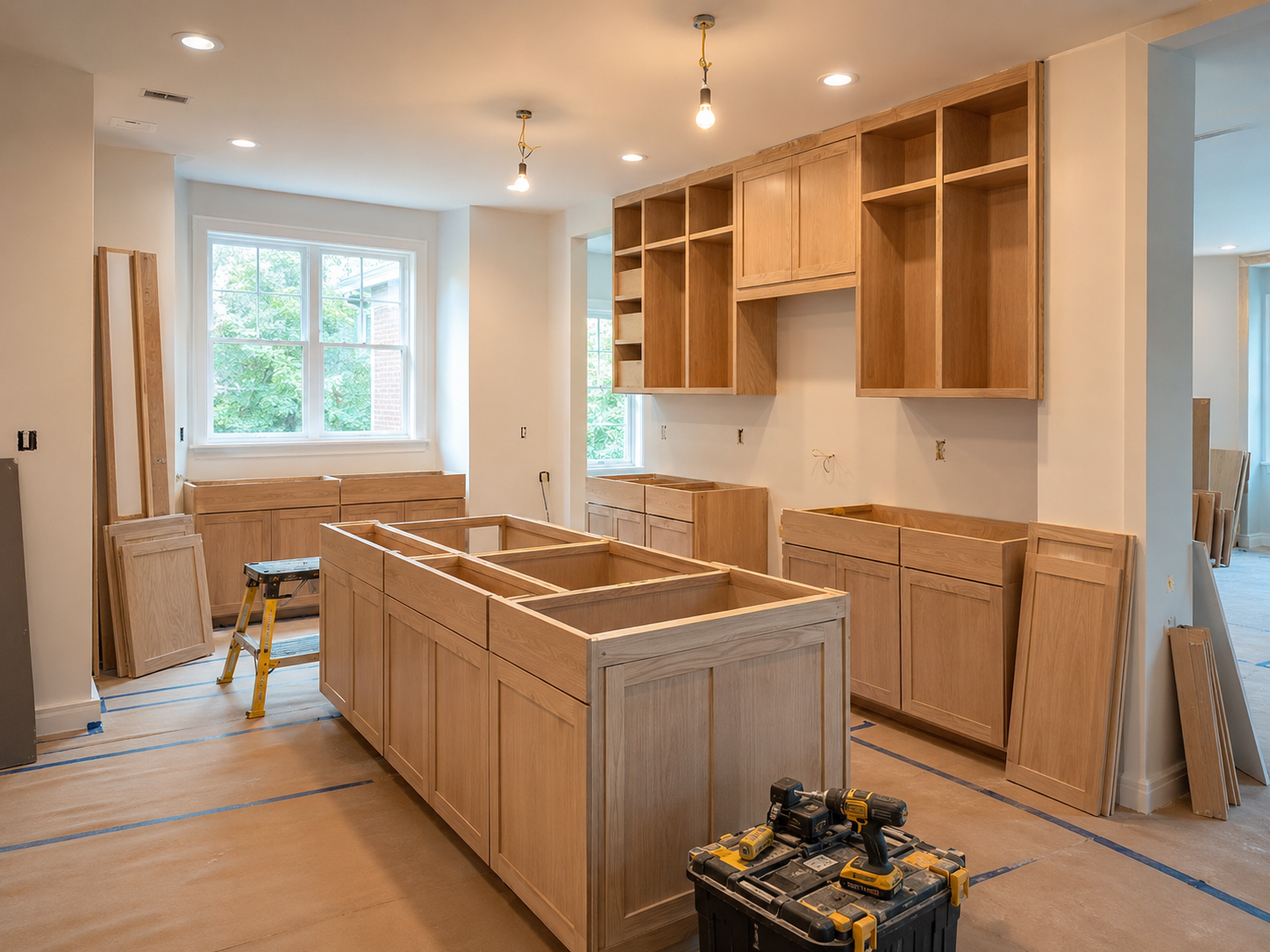
Kitchen remodel timeline in progress in a Maryland home

How Long Does a Home Remodel Take in Maryland and Northern Virginia? A Realistic 2026 Timeline Guide for DMV Homeowners

Timeline is the question every homeowner asks second — right after cost. However, it is also the question most frequently answered with optimistic numbers that don’t reflect the DMV’s specific permitting environment, material lead times, and labor market realities.

In 2026, the gap between what homeowners expect and what projects actually take in Maryland and Northern Virginia is significant. Because of this, the most valuable thing a DMV contractor can give a homeowner is an honest, jurisdiction-specific timeline before they commit — not a revised one midway through.

At H&C Construction Design Build, we build realistic project timelines from the first consultation. Here is the complete 2026 guide to how long every major remodeling project type actually takes across Maryland and Northern Virginia.


The Single Most Important Thing DMV Homeowners Don’t Know

Most homeowners planning a remodel think about the construction timeline. They picture walls opening, tile being set, and cabinets going in — and they ask how long that takes.

However, in Maryland and Northern Virginia, construction is not where the time goes first. Permitting is.

In Montgomery County, Maryland, permit review for a standard residential renovation takes six to eight weeks from complete application submission to issuance. In Fairfax County, Virginia, four to six weeks. In Washington DC, four to twelve weeks depending on scope and historic district involvement.

Because of this, a kitchen renovation with an eight-week construction phase has a total project duration of fourteen to sixteen weeks from permit submission alone — and longer still when the design phase that precedes permitting is factored in.

As a result, DMV homeowners who want their project complete by a specific date need to plan backward from that date accounting for all three phases: design, permitting, and construction. Homeowners who plan only around construction consistently discover they are weeks or months behind target before a single wall opens.


Phase 1 — Design and Planning

Every project begins with design. The timeline for this phase varies directly with project complexity.

Targeted cosmetic projects: 2 to 3 weeks. Projects that keep the existing layout — new cabinet fronts, new countertops, updated fixtures — require fewer decisions and less documentation. In addition, floor plans for permitting are simpler and material selections move quickly.

Mid-range full renovations: 3 to 6 weeks. Full kitchen or bathroom renovations involving layout changes, plumbing relocation, or electrical upgrades require more detailed design work. Specifically, cabinetry specifications must be finalized before a complete permit application goes in. Doing this correctly saves weeks downstream.

Additions and structural projects: 6 to 12 weeks or more. Any project involving new square footage, second-story construction, or load-bearing wall removal requires structural engineering drawings. These drawings take two to four weeks to produce after the design is finalized — and every Maryland and Virginia jurisdiction requires them before permits are issued.

The most important design-phase decision for kitchen timelines: custom cabinetry lead time. Fully custom cabinetry takes 8 to 12 weeks from order placement to delivery. Therefore, if cabinetry goes on order after permit approval rather than during design, the construction timeline extends by weeks waiting on delivery. The right move is finalizing cabinetry specifications and placing the order during design — before permit submission — so delivery aligns with the construction start.


Phase 2 — Permitting Across DMV Jurisdictions

Here is the jurisdiction-specific permitting data every DMV homeowner needs before planning a project.

Montgomery County, Maryland

Montgomery County’s Department of Permitting Services processes building, electrical, and plumbing permits on separate tracks. All three require approval before the relevant trades can begin work.

Standard residential renovation: 6 to 8 weeks from complete, correct application to permit issuance. In practice, plan for 7 to 9 weeks when all permit types are included. The most common delay is an incomplete application — missing a structural engineer’s stamp, incorrect MHIC license information, or absent scope documentation triggers resubmission and resets the review clock entirely.

Rockville City and Gaithersburg City

Both incorporated cities process their own permits — separate from Montgomery County DPS. Standard residential renovation timelines run 4 to 6 weeks. Because each has its own office, homeowners should confirm which jurisdiction covers their address before assuming county DPS handles their project.

Washington DC

DC’s Department of Buildings processes permits through its online Permit Wizard and ProjectDox systems. Standard renovations run 4 to 8 weeks. However, projects in historic districts requiring Historic Preservation Review Board (HPRB) approval can add 6 to 12 weeks or more — the HPRB meets on a set schedule and projects must appear on the agenda in advance.

Fairfax County, Virginia

Fairfax County processes residential renovation permits in 4 to 6 weeks for standard scopes. Addition projects requiring structural drawings typically run 6 to 8 weeks. For most mid-range kitchen and bathroom renovations, plan on 5 to 7 weeks total from submission to permit.

Arlington County, Virginia

Arlington offers an Express Track for minor work — with approval in approximately two business days. Major renovations requiring zoning review take two weeks or longer. For most mid-range renovation projects, plan on 3 to 5 weeks.

Alexandria, Virginia

Standard renovation permits from the City of Alexandria run 4 to 6 weeks. For properties in Old Town’s historic district, Board of Architectural Review (BAR) approval adds 4 to 8 weeks before the building permit is issued. Importantly, BAR approval must come before the building permit application — running them in parallel creates rework when BAR requires design changes after submission.

Loudoun County, Virginia

Standard residential renovation permits through Loudoun County’s Department of Building and Development take 4 to 6 weeks. Beyond this, HOA architectural committee approval is required in most Ashburn planned communities before the permit application goes in.


Phase 3 — Construction Timelines by Project Type

Once permits are in hand, construction begins. Below are realistic construction timelines for the DMV market in 2026.

Kitchen Remodel: 3 to 14 Weeks of Construction

Cosmetic refresh (no layout change): 3 to 5 weeks. New countertops, cabinet doors, backsplash, and fixtures proceed quickly when the layout stays unchanged and cabinetry was pre-ordered during design.

Mid-range full renovation (new cabinetry, countertops, appliances, updated electrical): 6 to 10 weeks. The critical path is cabinetry delivery timing. Countertop fabrication follows cabinetry installation by one to two weeks. Final fixtures and appliances close out the sequence last.

Full renovation with structural changes: 8 to 14 weeks. Wall removal, plumbing relocation, and structural beam installation each add time. Because these trades must sequence correctly — structural work before mechanical rough-in, rough-in before drywall — and each milestone requires inspection, the sequencing adds days throughout.

The Kitchen Remodeling team at H&C provides project-specific schedules that account for cabinetry lead times and trade sequencing before construction begins.

Bathroom Remodel: 3 to 10 Weeks of Construction

Secondary or hall bathroom (same footprint): 3 to 5 weeks. Demolition, waterproofing, tile, vanity, and fixtures proceed in sequence. Tile work carries cure time requirements that determine when the next phase can begin.

Primary suite bathroom with curbless shower: 5 to 8 weeks. Curbless entry requires subfloor recessing, membrane installation, and linear drain placement — each phase needs cure time before the next starts. Custom glass enclosures are measured and fabricated after tile completion, which adds one to two weeks at the end of the sequence.

Primary bathroom with layout reconfiguration: 6 to 10 weeks. Plumbing relocation, extended waterproofing scope, and structural subfloor work each extend the construction timeline further.

Similarly, the Bathroom Remodeling team builds phase-specific schedules with realistic cure-time buffers from day one.

Basement Finishing: 8 to 16 Weeks of Construction

A full basement finishing project — framing, insulation, electrical, plumbing rough-in, egress window installation, drywall, flooring, and finish work — runs 8 to 16 weeks depending on size and scope. If egress window installation reveals unexpected foundation conditions, allow one to two additional weeks for remediation before finishing proceeds.

For lower-level projects, the Basement Remodeling service covers full scope finishing across Maryland and Northern Virginia.

Deck and Screened Porch: 4 to 10 Weeks of Construction

Open composite deck: 4 to 6 weeks. Foundation, framing, decking, and railings proceed quickly once permits are in hand.

Screened porch with roofline tie-in: 6 to 10 weeks. Roofline structural integration is the critical path item — it must be carefully sequenced with existing framing before enclosure work can proceed.

Decks & Porches projects cover outdoor living across Maryland and Northern Virginia.

Home Additions: 12 to 30+ Weeks of Construction

Single-room bump-out: 8 to 14 weeks. New foundation section, basic framing, roofline tie-in, and interior finish.

Single-story full addition: 14 to 22 weeks. New foundation, full framing, roofline integration, mechanical systems connection, and complete interior finish.

Second-story addition: 16 to 30 weeks. Roof removal, upper-floor framing, new roofline, mechanical extension through two levels, and complete finish work on the new floor. Most families need temporary relocation during at least part of this scope.

The Home Additions team provides detailed phased schedules for every addition scope before any contract is signed.

Whole-Home Renovation: 12 to 40+ Weeks of Construction

Multi-room renovation without structural changes: 12 to 22 weeks. Coordinating multiple rooms simultaneously under one sequenced schedule is more efficient than doing them one at a time.

Comprehensive renovation with structural changes and system upgrades: 22 to 35 weeks. Structural work, panel replacement, HVAC redesign, and plumbing updates run alongside full interior renovation in a carefully managed sequence.

Whole-home transformation with addition: 30 to 50+ weeks for the most comprehensive scopes. Because these projects combine major interior renovation with significant new construction, they represent the most complex residential building projects available.

The Full Home Remodeling service manages phasing to minimize household disruption while maintaining efficient construction sequencing throughout.


The Complete Timeline — First Call Through Final Walkthrough

Adding all three phases gives DMV homeowners the realistic total duration from first conversation to completed project.

ProjectDesignPermitsConstructionTotal
Kitchen cosmetic refresh2–3 wks6–8 wks3–5 wks 3–4 months
Kitchen full renovation4–6 wks6–8 wks6–10 wks4–6 months
Bathroom — secondary2–3 wks6–8 wks3–5 wks3–4 months
Bathroom — primary suite3–5 wks6–8 wks5–8 wks4–5 months
Basement finishing3–5 wks6–8 wks8–16 wks4–7 months
Deck addition2–4 wks6–8 wks4–10 wks3–5 months
Single-story addition6–10 wks8–12 wks14–22 wks6–10 months
Second-story addition8–12 wks8–12 wks16–30 wks8–14 months
Whole-home renovation6–10 wks6–10 wks12–35 wks6–12 months

Montgomery County DPS timelines are used above. Northern Virginia jurisdictions typically run 2 to 4 weeks shorter. DC projects involving historic district review can run 4 to 8 weeks longer.


What Consistently Extends Timelines — and How to Avoid It

First, not ordering custom cabinetry during the design phase. This is the most common and most avoidable kitchen timeline extension. Place custom cabinetry orders before permits are submitted so delivery aligns with the post-approval construction start.

Second, submitting incomplete permit applications. Resubmission resets the review clock entirely. Working with a Licensed Contractor in Maryland who prepares correct, complete applications from the first submission is the most reliable way to avoid this.

Third, unexpected structural or hazardous material discoveries. These happen in older homes throughout Bethesda, Silver Spring, and established Northern Virginia neighborhoods. Budget a 10% to 15% time contingency for any project in a home built before 1990.

Fourth, underestimating HOA review timelines. In Ashburn, Kingstowne, Kentlands, and many Fairfax and Loudoun County communities, HOA architectural review must happen before permit submission. Missing this sequence adds weeks to any exterior or addition scope.

Finally, not confirming long-lead material delivery dates before the construction start. Custom tile, natural stone, specialty fixtures, and custom millwork all carry lead times. Identify these early in the design phase and order them well before construction begins.


How to Use This Timeline to Plan Your Project

Work backward from your target completion date. If you want a kitchen finished before a specific event or home listing, count the total months backward from that date. Because permitting and design together often take three to four months before construction begins, the answer is almost always: start planning sooner than feels necessary.

Ask your contractor for a written project schedule. Before signing any contract, request a phase-by-phase schedule specific to your project and your jurisdiction — not a national average. In addition, ask specifically how cabinetry lead times and permit timelines are built into that schedule. A contractor who cannot produce this information during the pre-contract conversation is telling you something important about how the project will be managed.

Build in a time contingency. Beyond the base timeline, add a 10% to 15% buffer for discoveries — both material and structural — that arise once walls open in older homes. This is not pessimism. It is accurate planning based on what older DMV housing stock consistently reveals.


Ready to Get Your Realistic Project Timeline?

H&C Construction Design Build serves homeowners across Maryland, Washington DC, and Northern Virginia — including Rockville, Bethesda, Potomac, Silver Spring, Chevy Chase, Gaithersburg, Montgomery County, Arlington, Alexandria, Fairfax, McLean, and Ashburn. At the first consultation, every homeowner receives a realistic, phase-by-phase timeline for their specific project — before any commitment.

Browse completed projects in our Our Remodeling Projects portfolio and then request a consultation to start planning your project today.

Posted on

Best Home Improvement ROI in Maryland & Northern Virginia: 2026 Data | H&C Construction

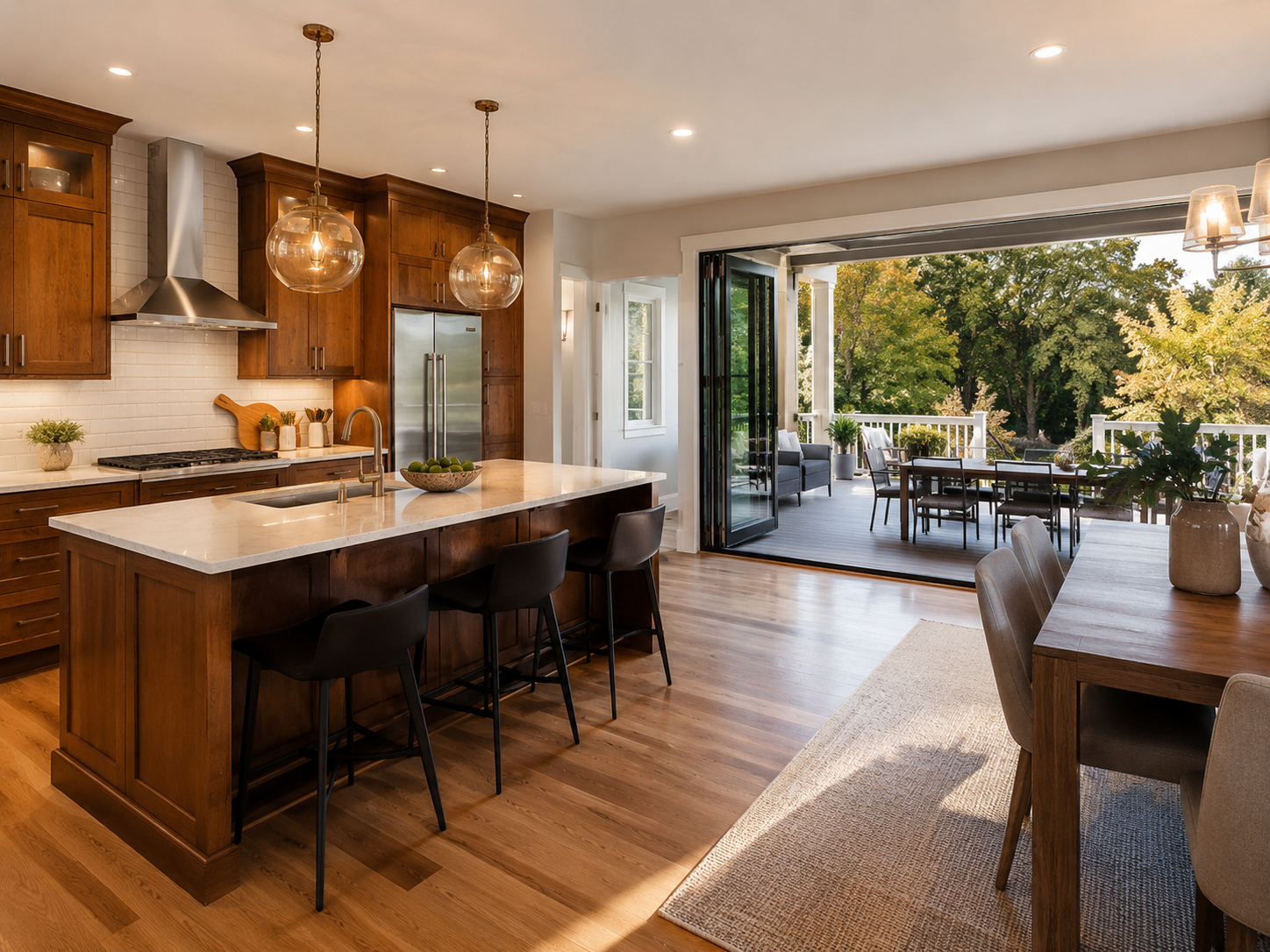
High ROI kitchen and deck remodel in a Maryland home

Best Home Improvements for ROI in Maryland and Northern Virginia: What the DMV Data Says for 2026

Every homeowner planning a renovation eventually asks the same question. Which projects are actually worth it? Not worth it in a vague, aspirational sense — but worth it financially, in this market, given how long you plan to stay, and relative to what your neighborhood’s buyers actually pay premium prices for.

In most markets, that question has a reasonably predictable answer. In the DMV, it’s more nuanced. Because of this, relying on national ROI data to plan a Maryland or Northern Virginia renovation is one of the most common — and most costly — planning mistakes homeowners make. The DMV’s high home values, elevated labor costs, strict permitting environment, and premium buyer expectations all produce returns that differ meaningfully from national averages. In some categories, DMV returns exceed the national average. In others, the premium cost of labor and materials here reduces the percentage return even while delivering a better absolute dollar gain.

At H&C Construction Design Build, we help homeowners across Maryland, Washington DC, and Northern Virginia make renovation investments that deliver real value. Here is what the 2026 data actually says about ROI in this specific market.


The Right Framework Before You Look at Any Number

Before diving into specific ROI figures, one framing principle matters enormously.

ROI is not the only measure that matters. A project that returns 65% of its cost at resale while also transforming how your family lives for the next fifteen years delivers far more total value than a number suggests. Conversely, a project that returns 80% of its cost but doesn’t solve a meaningful daily problem may be the wrong investment despite the stronger percentage.

The most useful ROI framework for DMV homeowners separates projects into two categories based on timeline. If you plan to sell within three to five years, prioritize projects with strong resale-focused returns — minor kitchen refreshes, bathroom updates, exterior improvements, and deck additions. If you plan to stay seven years or longer, the calculus shifts decisively toward projects that improve daily function and lifestyle quality, where the accumulated daily value over years of use often exceeds what a resale percentage captures.

Because of this, the ROI figures below are most useful when read in the context of your specific timeline.


Kitchen Remodeling: The Highest-Impact Interior Investment

The kitchen remains the single most impactful interior renovation for both daily quality of life and resale performance in Maryland and Northern Virginia.

Minor kitchen remodels — updating cabinet doors and hardware, replacing countertops, refreshing fixtures and lighting without moving plumbing — return 70 to 80% of their cost in the DMV area, according to regional remodeling data. In fact, the National Association of Realtors’ Remodeling Impact Report shows that a minor kitchen remodel can yield 70 to 80% ROI, while a major upscale kitchen remodel recovers only 54%. The reason is important: minor remodels solve functional problems that buyers universally value. Major luxury remodels add finishes that some buyers value highly but that don’t generate premium offers from all buyers across all price points.

Mid-range full kitchen remodels — complete cabinet replacement, new countertops, updated appliances and electrical — return 60 to 75% in the DMV’s established suburban markets. For neighborhoods where median values sit in the $700,000 to $1.2 million range — Bethesda, Potomac, Rockville, Arlington, and Fairfax — this return produces substantial absolute value gains. On a $120,000 kitchen remodel in a home valued at $900,000, a 70% return represents $84,000 in added value — while also making the home significantly more competitive with renovated inventory when it does eventually sell.

In addition, Montgomery County kitchen and bath permits are up 8% since 2023, confirming active demand in this market that supports strong project values.

Our Kitchen Remodeling service covers every scope across the DMV — from targeted refreshes through full custom kitchen transformations.


Bathroom Remodeling: High Return, Low Risk

Bathroom remodeling consistently ranks among the most reliable return categories for DMV homeowners. The combination of high daily use, strong buyer sensitivity to bathroom quality, and relatively contained project scope makes bathrooms one of the most dependable investments in this market.

Mid-range bathroom remodels return 60 to 70% in Maryland and Northern Virginia, according to regional remodeling data. For primary bathrooms specifically — where spa-style upgrades, curbless showers, and premium finishes are expected by buyers in Bethesda, Arlington, and Chevy Chase — the return is at the upper end of this range or above, because competing homes in these neighborhoods have set a quality standard that buyers use as a benchmark.

Secondary bathroom refreshes — new tile, updated fixtures, refreshed vanity — deliver similar percentage returns at a lower total investment, making them efficient ways to improve buyer appeal without a major budget commitment.

Beyond resale, bathroom remodeling also ranks among the projects with the highest homeowner satisfaction after completion. Starting and ending every day in a beautifully redesigned space delivers daily value that compounds over years of ownership — a return that doesn’t appear in any cost vs. value report but is nonetheless real.

Our Bathroom Remodeling team serves homeowners across Maryland, DC, and Northern Virginia with projects from secondary bath updates through full primary suite transformations.


Deck Addition: The Strongest Outdoor ROI in the DMV

This is where DMV data diverges most sharply from national averages — in a positive direction for local homeowners.

Wood decks in Maryland deliver 83.3% ROI according to Remodeling Magazine’s annual Cost vs. Value Report — nearly 3% higher than the national average. Composite decks, which have largely replaced wood as the dominant decking choice in the DMV’s premium markets, perform similarly in resale analysis while delivering meaningfully lower lifetime maintenance costs.

Because of this, deck additions represent one of the most reliable and efficient uses of a remodeling budget for Maryland and Northern Virginia homeowners. A quality composite deck investment typically recovers 70 to 83% of its cost at resale, while delivering immediate and consistent use across the DMV’s spring through fall outdoor season.

In addition, when a deck is paired with a screened porch — the combination most commonly built by H&C clients in Montgomery County and Fairfax County — the functional value to daily life and the buyer appeal at resale are both significantly higher than either structure alone.

In Northern Virginia specifically, Fairfax and Loudoun County homes with larger lots show particularly strong returns on outdoor living investments, because buyers in these neighborhoods specifically seek outdoor space as a differentiator that urban and walkable Arlington and Alexandria homes often can’t provide.

Our Decks & Porches service covers custom deck and screened porch projects across Maryland, DC, and Northern Virginia.


Basement Finishing: Best Cost-Per-Square-Foot Value

Finishing an unfinished basement is consistently one of the most cost-efficient ways to add livable square footage in the DMV — particularly when compared to the cost of moving to a larger home in the same neighborhood.

The national benchmark suggests finished basements return approximately 71% of project cost at resale. In the DC metro area, this benchmark applies reliably for mid-range basement finishing projects that include proper egress windows, a full bathroom, and quality finishes throughout.

However, the more compelling return argument for basements is not the resale percentage alone. It’s the cost-per-square-foot comparison against the alternatives. Building an addition to add 1,000 square feet in Bethesda might cost $300,000 to $500,000 or more at current DMV rates. Finishing a 1,000 square foot basement that already exists costs $55,000 to $110,000 at mid-range to premium finish levels. Both add 1,000 square feet of livable space. The basement does it at a fraction of the cost.

Furthermore, a legal bedroom in the basement — enabled by a code-compliant egress window — changes how the home is described and marketed at resale. Adding a bedroom count to a property in a market where bedroom count directly affects price per square foot comparables can produce value gains that exceed the basement project cost significantly in high-value DMV neighborhoods.

Our Basement Remodeling team handles every scope of basement project across Maryland, DC, and Northern Virginia, including egress window installation and legal bedroom creation.


Home Additions: When the Math Works — and When It Doesn’t

Home additions are the most expensive per-square-foot remodeling investment and, in strict resale ROI terms, typically return the lowest percentage — usually 48 to 65% of project cost nationally. In the DMV, per-square-foot addition costs run even higher than national averages.

However, this national framing misses the point for most DMV homeowners. Because of this, the addition ROI conversation in the DMV must be had differently.

First, the opportunity cost of moving matters enormously in this market. On a $1.3 million Potomac home, realtor commissions, transfer taxes, moving costs, and the rate differential between a locked-in 3.5% mortgage and a new 6.5% loan can easily cost $150,000 to $200,000 or more in total transaction and ongoing housing costs. Against that comparison, an addition that costs $200,000 and solves a genuine space problem can be financially rational even if the strict resale percentage is modest.

Second, additions that address genuine functional deficits — adding a bedroom to a home that’s clearly under-bedroomed for its neighborhood, creating a primary suite in a home that lacks one, or adding a bathroom to a home with too few — often produce resale gains that exceed their stated national ROI percentages, because they bring the home to a competitive baseline that neighboring properties already have.

Third, timing matters. The addition ROI formula yields: 0 to 3 years, prioritize high-ROI projects only; 3 to 7 years, balance ROI and lifestyle value; 7 years or more, build for how you live — lifestyle value over the holding period consistently exceeds the resale percentage.

Our Home Additions team helps homeowners evaluate these tradeoffs honestly before committing to a scope and investment level.


What Reduces ROI — and What to Avoid in the DMV

Understanding what delivers strong returns is only half the picture. Equally important is knowing what reliably reduces return on investment in this market.

Over-improving beyond neighborhood norms. The 30% rule — investing no more than approximately 30% of your home’s current value in a single remodeling project — is a useful planning benchmark for the DMV. Exceeding this risks creating a property that’s priced above what the neighborhood will support, regardless of the quality of the improvements.

Highly personalized luxury features. Extremely specialized upgrades — niche appliance choices, unusual material selections, or room configurations driven by personal taste rather than broad buyer appeal — consistently deliver lower resale returns than functional, broadly appealing improvements of similar cost. This is especially true in neighborhoods where the buyer pool, while affluent, has diverse preferences.

Swimming pools in Maryland and Virginia. Regional data is consistent on this point. Swimming pools in the DMV’s climate rarely increase home value proportionally to their installation cost, and many buyers actively avoid the maintenance commitment. In most DMV neighborhoods, a pool is a lifestyle amenity, not a value driver.

Additions that look like additions. An addition that doesn’t match the original home’s roofline, exterior materials, and window proportions undermines the visual appeal that drives buyer premiums in neighborhoods where architectural quality is expected. In Bethesda, Chevy Chase, and McLean, a poorly integrated addition can actually reduce buyer perception of value relative to a home that simply hasn’t been expanded.


The Geographic Dimension in the DMV

ROI is not consistent across the DMV. Where your home is located directly affects which projects deliver the strongest return.

Montgomery County (Bethesda, Chevy Chase, Potomac, Rockville): Kitchen and bathroom renovations deliver the strongest interior returns. Outdoor living investments perform well due to strong buyer demand. Kitchen and bath permits in this county are up 8% since 2023, reflecting active market demand.

Northern Virginia (Arlington, Alexandria, Fairfax County): In Arlington and Alexandria, where lot sizes tend to be smaller and walkability is a primary value driver, interior renovations — kitchen, bathroom, and basement — outperform additions on a strict ROI basis. In Fairfax County and Loudoun County, where lots are larger, outdoor living and addition projects deliver stronger comparative returns.

Washington DC: Interior renovations consistently outperform additions in most DC neighborhoods, where lot constraints, historic restrictions, and the premium on interior square footage favor high-quality kitchen and bathroom investments over structural expansion.


Putting It Together: A Decision Framework for DMV Homeowners

Here’s a practical synthesis for homeowners deciding where to invest.

For maximum resale ROI within three years: Minor kitchen remodel, mid-range bathroom updates, composite deck addition, curb appeal and exterior improvements. These projects consistently perform in the 70 to 83% return range in the DMV.

For maximum daily value and long-term lifestyle improvement: Full kitchen transformation, primary bathroom spa upgrade, basement finishing with bedroom and home office, first-floor suite addition for aging-in-place planning. These projects deliver strong daily returns over years of use, even where the resale percentage is lower.

For the strongest overall investment: Coordinating multiple improvements under one Full Home Remodeling project typically delivers better total value than the same improvements executed piecemeal, because material consistency, permit coordination, and construction sequencing are all handled efficiently under one plan.


Ready to Plan Your Highest-ROI Remodel?

H&C Construction Design Build serves homeowners across Maryland, Washington DC, and Northern Virginia — including Rockville, Bethesda, Potomac, Silver Spring, Chevy Chase, Gaithersburg, Montgomery County, Arlington, Alexandria, and Fairfax. Whether you’re planning a kitchen remodel, a deck addition, or a comprehensive whole-home renovation, our design-build team helps you invest where the return — financial and daily — is strongest for your specific home, neighborhood, and timeline.

Explore our Licensed Contractors in Maryland credentials and request a consultation to start planning today.