Posted on

Home Office & Flex Room Remodeling in Maryland & Virginia | H&C Construction

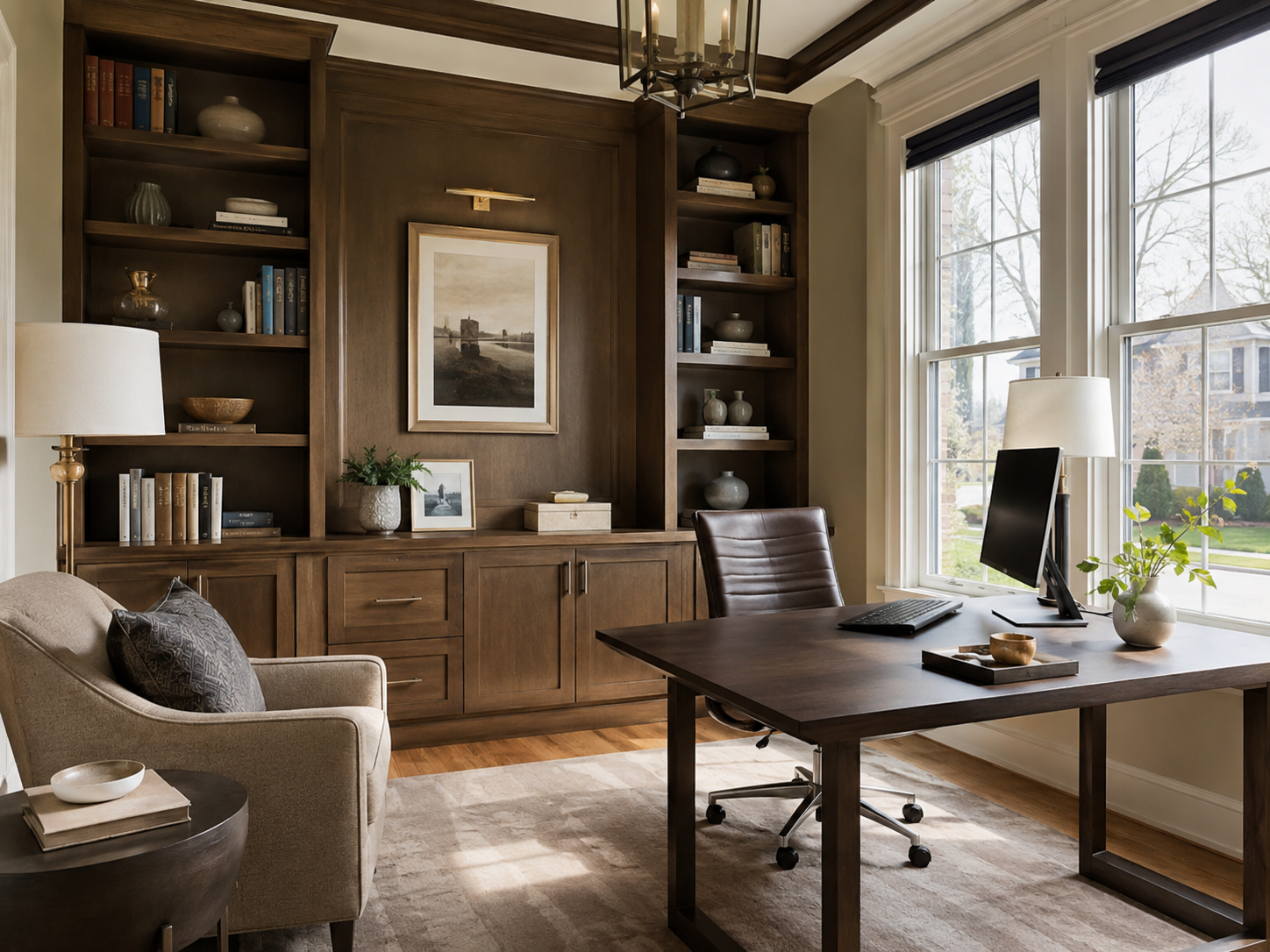
Home office remodel with built-in storage in a Maryland home

Home Office and Flex Room Remodeling in Maryland and Virginia: Designing Spaces That Work for Hybrid Life

For homeowners across Rockville, Bethesda, Potomac, Arlington, and Fairfax, the way homes function has changed permanently. Hybrid and remote work are no longer temporary arrangements — they’re a fixture of daily life for a large share of DMV households. Yet many homes in Maryland and Northern Virginia simply weren’t designed with this reality in mind. A guest bedroom doubles as an office. A kitchen table becomes a workstation between meals. A laptop ends up on the couch because there’s nowhere better to go.

A well-designed home office or flex room solves this mismatch — not with a generic desk-in-a-corner setup, but with a genuinely functional space that supports focus, video calls, and the boundary between work and home life that so many people are still trying to find.

At H&C Construction Design Build, we design and build home offices and flex spaces across Maryland, Washington DC, and Northern Virginia. Here’s what to consider before starting your project.


Why Flex Space Has Become a Top Remodeling Priority

The shift toward flex space didn’t happen overnight, but it has become deeply embedded in how homeowners think about their houses. Surveys of homeowners planning renovations consistently show flex rooms — spaces that can serve as an office, guest room, or playroom depending on the day — among the most requested additions and reconfigurations heading into 2026.

Part of this is practical. Many households now have more than one person working from home at least part of the week, and a single shared office no longer cuts it. Part of it is about resale value: a dedicated, well-designed home office has become an expected feature for many buyers, not a bonus.

And part of it is about quality of life. Working from a kitchen table or a corner of a bedroom creates a low-grade friction that adds up over months and years. A properly designed space — with the right lighting, acoustics, and storage — measurably improves how people feel about their workday.


What Makes a Home Office Actually Work

Not every room with a desk in it functions as a real home office. The difference comes down to a handful of design decisions that are easy to get right when planned from the start, and expensive to fix later.

Separation and Acoustics

The single biggest complaint we hear from homeowners with an existing “home office” is noise — from kids, from household activity, from the rest of the home bleeding into video calls. Solid-core doors, added wall insulation, and thoughtful placement away from high-traffic areas of the home make an enormous difference. If your flex room shares a wall with a bedroom or living area, acoustic insulation should be part of the plan, not an afterthought.

Natural Light Without Glare

Natural light is one of the most requested features in 2026 home office design — but it has to be positioned correctly. A window directly behind a desk creates a silhouette effect on video calls; a window to the side provides flattering, even light. We plan window placement and orientation specifically around how the room will be used, not just for the room’s appearance.

Built-In Storage

Visible clutter is one of the fastest ways to make a home office feel chaotic rather than functional. Built-in shelving, closed cabinetry, and dedicated storage for files, equipment, and supplies keep the space organized and presentable — particularly important for anyone doing regular video calls.

Wiring and Connectivity

A home office needs more electrical capacity than a typical bedroom — multiple outlets, dedicated circuits for equipment if needed, and strong, reliable network connectivity. This is far easier and less expensive to plan during a remodel than to retrofit afterward, especially if walls are already open.

Flexibility for Multiple Uses

Many of the flex rooms we design aren’t single-purpose. A room might function as a primary office on weekdays and a guest bedroom on weekends, or a playroom today that transitions to an office as kids get older. Designing with this flexibility in mind — Murphy beds, modular furniture-ready layouts, closets sized for varied use — protects the value of the investment over time.


Where to Put a Home Office or Flex Room

The right location depends on your home’s existing layout and what other spaces are available. We typically see a few common approaches across the homes we work on in Bethesda, Rockville, and Northern Virginia.

Converting an Underused Room

Many homes have a formal dining room, a rarely used guest bedroom, or an oversized closet or storage room that’s a strong candidate for conversion. This is often the most cost-effective path to a dedicated office, since it works within the home’s existing footprint and systems.

Finishing the Basement

A basement is one of the most popular locations for a home office or flex room, offering natural separation from the rest of the household and the ability to create a genuinely quiet, focused environment. Our Basement Remodeling team frequently incorporates dedicated office space into broader basement finishing projects — often alongside a guest suite, gym, or media area.

Adding the Space

For homes without an obvious room to convert, a home addition can create purpose-built office space without compromising other parts of the house. This approach allows for ideal window placement, acoustic design, and a layout built specifically around how the space will be used. Our Home Additions service handles projects of this scope from design through completion.

Outdoor-Adjacent Flex Space

Some homeowners are extending their flex space outward — converting a portion of a deck or porch project into a connected outdoor-adjacent workspace, particularly appealing during Maryland’s milder months. If you’re already planning an outdoor living project, it’s worth discussing how a flex space might tie in. Explore our Decks & Porches service for related ideas.


Beyond the Home Office: Flex Rooms for the Whole Household

Home offices are the most common driver of flex room remodeling, but the same design principles apply to other flexible-use spaces homeowners are increasingly requesting:

Playrooms that transition over time. A room designed for young children’s play can be planned with future flexibility in mind — easily reconfigured into a study space, a teen hangout, or an office as family needs change.

Multi-purpose guest and hobby rooms. A room that serves as a guest bedroom most of the year can also support a sewing space, a music corner, or a fitness nook, with smart storage solutions that allow quick transitions between uses.

Shared family command centers. Some households want one larger flex space that supports multiple people working or studying simultaneously — requiring more careful planning around acoustics, lighting, and layout than a single-occupant office.


Structural and Planning Considerations

Converting or adding flex space touches more of the home’s systems than homeowners often expect.

Electrical capacity. Older homes throughout Chevy Chase, Silver Spring, and other established DMV neighborhoods may need panel upgrades or additional circuits to support modern office equipment and connectivity needs.

HVAC. A converted room — particularly a basement space or a room with limited existing ductwork — may need supplemental heating and cooling to stay comfortable year-round.

Permits. Depending on scope, projects involving electrical work, structural changes, or additions require permits from the relevant Maryland, DC, or Virginia jurisdiction. Working with a General Contractor in Maryland ensures this process is handled correctly and efficiently.

Existing structural issues. In older homes, opening up a room for conversion sometimes reveals deferred maintenance — outdated wiring, insufficient insulation, or moisture issues — that should be addressed before finish work begins. Our Restoration & Rebuild team handles this kind of remediation as part of a coordinated project scope.


The H&C Construction Design-Build Process for Flex Space

Our process for home office and flex room projects follows the same structured design-build approach we use across all our remodeling services:

Design consultation. We discuss how you’ll use the space — single-purpose office, multi-use flex room, shared workspace — and assess your home’s existing layout and systems.

Design development. We create a detailed plan addressing layout, lighting, acoustics, storage, and electrical needs specific to the room’s function.

Permitting. We handle any required permit submissions with the relevant county or municipal building department.

Construction. Our licensed crews manage every phase of the project, from framing and electrical to finish work.

Final walkthrough. We review the completed space with you and confirm it meets your functional and aesthetic goals.

If your flex space project is part of a broader renovation — touching multiple rooms or your home’s overall layout — our Full Home Remodeling service coordinates the full scope under one plan.

You can view examples of completed projects across Maryland, DC, and Virginia in our Our Remodeling Projects portfolio.


Planning Your Home Office or Flex Room Project

The homeowners who end up most satisfied with a new home office or flex room are the ones who think beyond the immediate need. A room designed only for how you work today may not serve you well in three or five years. Planning for adaptability — in storage, layout, and even electrical capacity — pays off as your household’s needs inevitably shift.

If hybrid work, a growing family, or simply the daily friction of an improvised workspace has you considering a change, now is a good time to start the conversation.


Ready to Design Your Home Office or Flex Room?

H&C Construction Design Build serves homeowners across Maryland, Washington DC, and Northern Virginia — including Rockville, Bethesda, Potomac, Silver Spring, Chevy Chase, Gaithersburg, Montgomery County, Arlington, Alexandria, and Fairfax. Whether you’re converting an existing room, finishing a basement, or adding dedicated space, our design-build team is ready to help you create a space that truly works.

Explore our Full Home Remodeling service and request a consultation to start your project.
Posted on

Spa Bathroom Remodeling in Maryland & Virginia: Wet Rooms & Curbless Showers | H&C Construction

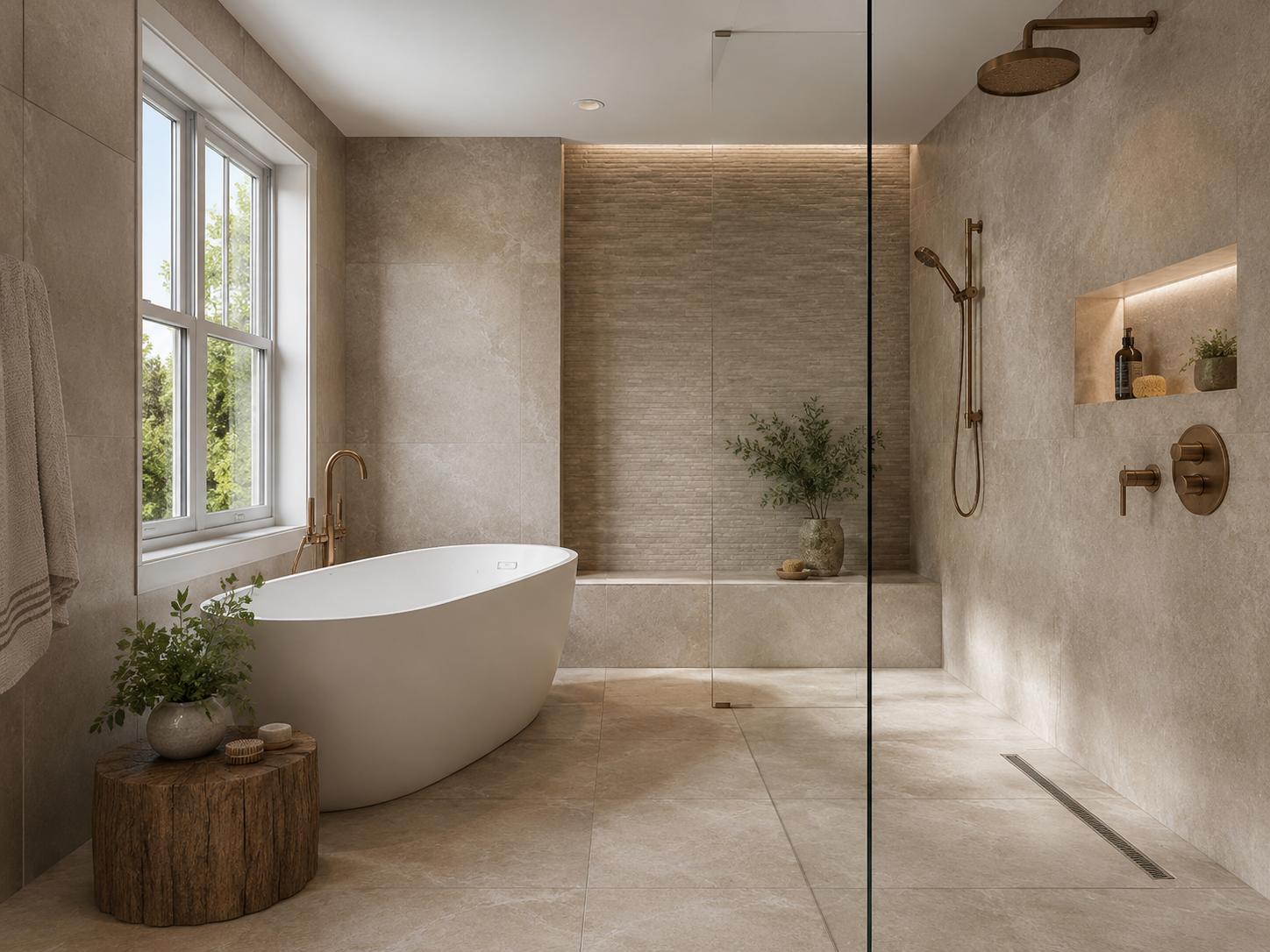
Spa-style wet room bathroom remodel with curbless shower in a Maryland home

Spa Bathroom Remodeling in Maryland and Northern Virginia: How Wet Rooms and Curbless Showers Are Redefining the Primary Bath

The primary bathroom has quietly become one of the most transformed rooms in homes across Bethesda, Potomac, Chevy Chase, Arlington, and Fairfax. What was once a purely functional space — a tub, a shower, a vanity, separated by glass and tile lines — is increasingly being redesigned as a single, fluid environment built around comfort and wellness.

At the center of this shift is the wet room: a layout where the shower and a freestanding soaking tub share one continuous, fully waterproofed zone, rather than being divided into separate fixtures and footprints. Paired with curbless, doorless shower entries and expanded square footage, this approach has moved from a niche luxury feature to a mainstream standard in primary suite design for 2026.

At H&C Construction Design Build, we design and build spa-style bathroom remodels across Maryland, Washington DC, and Northern Virginia. Here’s what homeowners should understand about this trend and how to plan it well.


What Defines a Spa-Style Bathroom in 2026

The shift toward spa bathrooms isn’t about a single feature — it’s a combination of layout, materials, and design philosophy working together.

Expanded shower footprints. Showers are no longer squeezed into 36-inch corners. Homeowners are dedicating significantly more square footage to the bathing area, often eliminating a separate tub enclosure entirely in favor of one generous, open shower space.

The wet room layout. A wet room encloses the shower and a freestanding tub within a single waterproofed zone — no glass divider, no separate footprint for each fixture. This creates a sense of openness and flow that a traditional compartmentalized bathroom simply can’t achieve.

Curbless and doorless showers. Zero-entry showers use a recessed subfloor so tile runs uninterrupted from the dry area into the wet zone, creating a seamless visual transition. This approach serves both an aesthetic purpose and a practical one — it’s a universal design feature that works well for households of any age or mobility level.

Warmth over clinical minimalism. The stark, all-white, high-contrast bathroom aesthetic that dominated for years has given way to warmer palettes — earthy neutrals like taupe, sage, and oatmeal — paired with natural materials and textures that make the space feel more like a furnished living environment than a purely utilitarian room.


Why the Wet Room Has Become the New Standard

Several factors are driving homeowners across the DMV toward this layout.

It maximizes a finite footprint. Most primary bathrooms have a fixed amount of space to work with. A wet room eliminates the redundancy of separate tub and shower enclosures, allowing both fixtures to share one open zone — which often makes the room feel significantly larger without adding square footage.

It reduces maintenance. Removing an underused bathtub eliminates a surface prone to soap scum and ring stains, while open, doorless shower designs reduce the grout lines and glass surfaces that require regular cleaning.

It supports long-term usability. Curbless entries and open floor planes are inherently more accessible than a traditional step-over tub or shower threshold — a feature that benefits homeowners at every stage of life, not just those planning explicitly for aging in place.

It photographs and shows beautifully. For homeowners thinking about resale, a well-executed spa bathroom is one of the most visually compelling spaces in a real estate listing — and one that buyers consistently respond to.


Key Materials and Features in Today’s Spa Bathroom

Natural Stone and Large-Format Tile

Large-format porcelain tile — engineered for high-moisture performance — is replacing smaller tile patterns in many 2026 bathroom designs, reducing grout lines and creating a cleaner, more continuous surface. Natural stone accents, used selectively, add texture and warmth without the maintenance demands of full natural stone installations.

Freestanding Soaking Tubs

Rather than disappearing entirely, the bathtub is being repositioned as a sculptural centerpiece within the wet room rather than a boxed-in fixture. A freestanding tub placed within the open wet zone becomes a visual and functional focal point.

Frameless Glass and Open Sightlines

Where glass is used at all, frameless, low-iron glass panels are preferred — minimizing visual barriers and keeping the room bright and open. Many wet room designs eliminate shower glass entirely in favor of a fully open layout.

Heated Floors and Wellness Features

Heated flooring, controllable via smartphone app in many systems, has become a widely requested feature for primary bathrooms. Steam shower functions, built with proper ventilation and waterproofing systems, are also gaining popularity for homeowners prioritizing at-home wellness.

Layered, Natural Lighting

Maximizing natural light — through larger windows, skylights, or strategic window placement — while maintaining privacy is a key design consideration, paired with layered artificial lighting that supports both function and ambiance.


Structural Considerations Behind a Beautiful Bathroom

A spa-style bathroom remodel involves more engineering than most homeowners initially realize, particularly when the layout changes significantly from what currently exists.

Subfloor reinforcement. Modern freestanding tubs — particularly stone resin and cast iron models — are significantly heavier than older standard tubs. Floor joists need to be evaluated and, in many cases, reinforced to safely support the new fixture.

Waterproofing the entire wet zone. Because a wet room treats the shower and tub area as one continuous waterproofed zone rather than separate enclosures, the waterproofing membrane and drainage system have to be engineered correctly across the full footprint — not just under the shower pan. This is one of the most critical, and most easily under-built, elements of a wet room project.

Linear drains and subfloor recessing. Achieving a curbless, doorless transition requires recessing the subfloor and installing a properly sloped linear drain system — a level of structural planning well beyond a typical surface-level bathroom update.

Plumbing relocation. Repositioning a tub and shower into a unified wet zone often requires relocating supply and drain lines, which needs to be planned early in the design process.

This is exactly where the difference between a surface-level renovation and a true structural bathroom remodel becomes clear. At H&C, our Bathroom Remodeling projects are engineered from the subfloor up, not just finished on the surface.


Is a Wet Room Right for Your Bathroom?

A wet room layout works best in primary bathrooms with adequate existing square footage, since the open design generally requires more space than a traditional compartmentalized layout to feel intentional rather than cramped. For smaller secondary bathrooms, a curbless shower without the full wet room treatment can still deliver many of the same aesthetic and accessibility benefits at a more modest scope.

A professional design consultation is the best way to evaluate whether your specific bathroom’s footprint, plumbing layout, and structural conditions support a full wet room transformation — or whether a more targeted curbless shower update is the better fit.


Connecting Your Bathroom Remodel to a Larger Vision

Many homeowners undertaking a spa bathroom remodel are also reconsidering their broader primary suite — closet layout, bedroom flow, and overall design cohesion between the bedroom and bathroom spaces. If your project extends beyond the bathroom itself, our Full Home Remodeling service can address the full primary suite as one coordinated design.

For homes where the existing bathroom footprint is too constrained to achieve the desired layout, our Home Additions service can expand the available space as part of the same project.


The H&C Construction Design-Build Process for Bathroom Remodeling

Spa bathroom remodels involve plumbing, electrical, structural, and finish work that all need to be carefully sequenced. Our design-build process keeps every phase coordinated:

Design consultation. We assess your existing bathroom’s footprint, structure, and plumbing layout, and discuss your vision for the finished space.

Design development. We create a detailed plan addressing layout, waterproofing strategy, fixture placement, and material selections.

Permitting. We handle permit submissions for plumbing and electrical work with the relevant Maryland, DC, or Virginia jurisdiction, working as a fully Licensed Contractor in Maryland.

Construction. Our licensed crews handle demolition, structural reinforcement, plumbing, waterproofing, and finish work in a carefully sequenced process.

Final walkthrough. We review the completed bathroom with you before closing out the project.

For homes with existing moisture or structural issues uncovered during the renovation process, our Restoration & Rebuild team resolves these issues as part of a coordinated scope, ensuring your new spa bathroom is built on a sound foundation.

You can view examples of completed bathroom transformations across Maryland, DC, and Virginia in our Our Remodeling Projects portfolio.


Planning Your Spa Bathroom Remodel

A spa-style primary bathroom remodel is a significant investment, but it consistently ranks among the projects homeowners are most satisfied with after completion — both for daily quality of life and for long-term home value. For homeowners in Bethesda, Arlington, and across the DMV planning this kind of transformation, the most successful projects start with a clear-eyed assessment of the existing space’s structural realities, paired with a design vision built around how the room will actually be used every day.


Ready to Start Your Spa Bathroom Remodel?

H&C Construction Design Build serves homeowners across Maryland, Washington DC, and Northern Virginia — including Rockville, Bethesda, Potomac, Silver Spring, Chevy Chase, Gaithersburg, Montgomery County, Arlington, Alexandria, and Fairfax. Whether you’re envisioning a full wet room transformation or a curbless shower update, our design-build team handles every phase — from structural engineering to final finishes.

Explore our Bathroom Remodeling service and request a consultation to begin your project.