Bathroom Remodeling in Bethesda, Maryland: What Homeowners Need to Know in 2026
Bethesda is one of the most demanding bathroom renovation markets in the entire DMV. With a median home value exceeding $1.4 million in 2026, Bethesda homeowners expect bathroom renovations that genuinely match the quality of their homes. Because of this, the contractor selection decision in Bethesda carries more weight than in most other Maryland communities. The wrong choice produces a bathroom that looks good at completion but falls short of the standard that Bethesda buyers and homeowners actually expect.
Fortunately, the right approach is clear. Homeowners who understand real 2026 costs, who verify MHIC licensing before the first meeting, and who work with a contractor who manages Montgomery County DPS permits correctly — consistently report the smoothest renovation experiences and the most satisfying results. This guide covers everything Bethesda homeowners need to know before starting a bathroom renovation in 2026.
At H&C Construction Design Build, we serve Bethesda homeowners and all of Montgomery County with Bathroom Remodeling projects from targeted hall bath updates through luxury primary suite transformations.
What Bathroom Remodeling Costs in Bethesda in 2026
Bethesda bathroom renovation costs reflect the premium market position of Montgomery County’s most valuable community. In practice, the 2026 cost picture looks like this:
Powder room update: $5,000 to $15,000. A new vanity, toilet, lighting, and flooring transform a half bath quickly. Because no shower work is involved, this scope moves fast.
Standard hall or secondary bathroom: $15,000 to $35,000. Complete tile replacement, new vanity, new toilet, updated GFCI electrical, and exhaust fan. Furthermore, a 15% contingency is standard for Bethesda homes built before 1985 — because aging plumbing and subfloor conditions commonly surface during demolition.
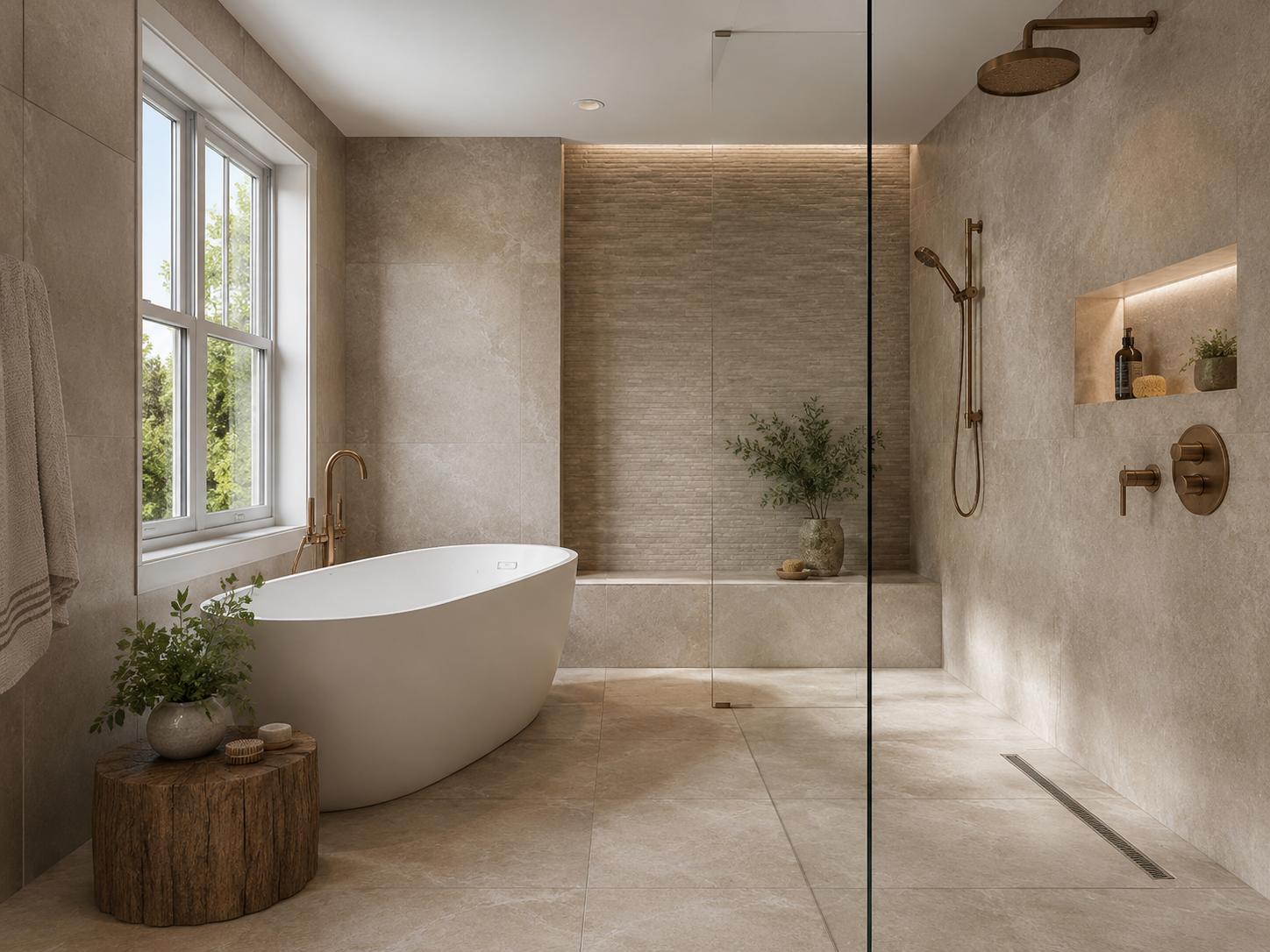
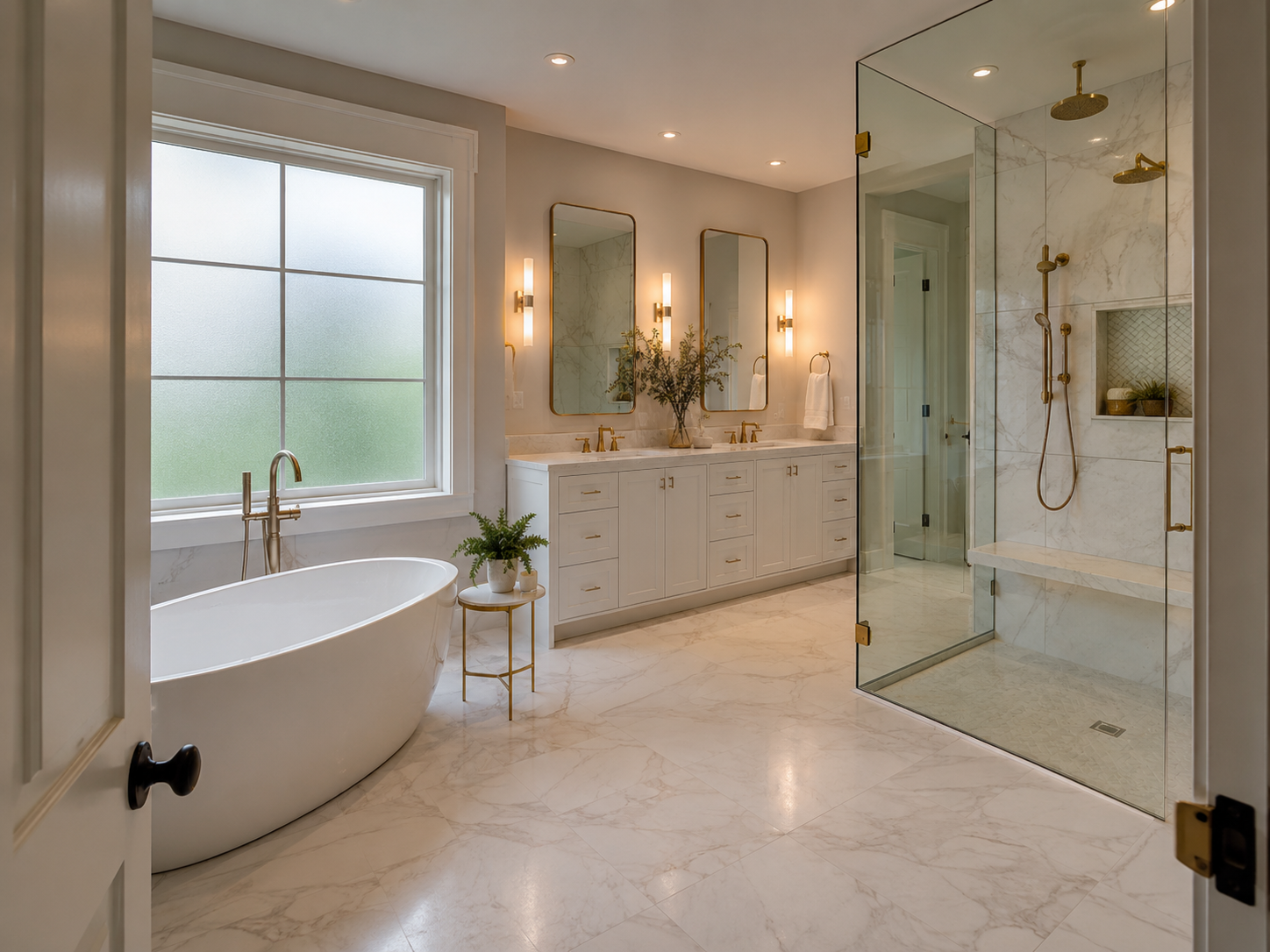
Primary suite bathroom: $35,000 to $80,000. This is the most commonly requested scope in Bethesda’s established neighborhoods. In practice, primary-suite or luxury work runs $35,000 to $80,000 or more in Bethesda. The scope typically includes a custom tile curbless walk-in shower, double vanity, frameless glass enclosure, heated floor, and quality fixtures throughout.
Luxury primary suite: $80,000 to $130,000+. In Edgemoor and Kenwood — where homes trade above $2 million — primary bathroom renovation at spa specification is both appropriate and well-supported by the surrounding market. Steam shower, natural stone throughout, custom vanity cabinetry, and radiant heat characterize this tier.
Permit fees. Bethesda residential bathroom remodels file with Montgomery County DPS. Standard electrical and plumbing permits run $500 to $1,500. However, always budget these fees separately — they represent a real pre-construction cost that contractors sometimes omit from initial estimates.
Bethesda’s Housing Stock — What Your Home Type Means for Bathroom Renovation
Bethesda’s architectural diversity creates meaningfully different renovation conditions by neighborhood.
Mid-century split-levels and Colonials (1950s–1970s). Many Bethesda homes in this era have primary bathrooms that were last updated in the 1970s or 1980s. Specifically, these spaces often have original cultured marble surrounds, single vanities, and plumbing configurations from a different era. For homeowners in Westmoreland Hills, Bradley Hills, and Burning Tree, a full gut renovation is the right scope — not a cosmetic refresh. Importantly, these older homes regularly surface plumbing and electrical conditions during demolition that require attention before finish work begins.
Tudor and Colonial estates (1920s–1940s). Bethesda’s oldest homes carry extraordinary architectural character. However, they also present renovation challenges specific to their era. Plaster walls, original cast iron plumbing, and inadequate electrical capacity are common findings in Kenwood and Battery Park homes. Beyond this, the bathroom tile, fixtures, and layouts in these homes reflect their original decade — making comprehensive gut renovation the natural scope.
1980s–2000s Colonials and newer construction. Newer Bethesda homes have better baseline systems. However, builder-grade finishes now 25 to 40 years old are clearly dated against the contemporary standard. Bathroom renovation in these homes focuses on finish quality upgrade — tile, vanity, and shower configuration — rather than system replacement. As a result, these projects often run faster and closer to the base cost range.
The Bethesda Bathroom Renovation Process — Phase by Phase
Understanding each phase prevents the most common homeowner frustrations.
Design and selection (2 to 5 weeks). First, all tile selections, vanity specifications, fixture choices, and layout decisions are finalized. Specifically, plumbing fixture positions must be decided during design — not during construction. Because moving a shower drain in Bethesda requires saw-cutting a concrete slab in some homes, this decision carries real cost implications. Settling it in design prevents costly mid-project changes.
Permit application (5 to 8 weeks at Montgomery County DPS). Bethesda residential bathroom permits file online through ePlans.MontgomeryCountyMD.gov. The typical cycle runs 5 to 8 weeks for major work and 2 to 3 weeks for straightforward scopes. Because of this, the permit timeline is a fixed part of every Bethesda bathroom renovation timeline — not something that can be compressed by starting early.
Demolition and assessment (3 to 5 days). Once the permit is in hand, demolition reveals what exists behind walls and beneath floors. In Bethesda’s pre-1985 housing stock, this commonly surfaces corroded plumbing, inadequate electrical, or subfloor moisture damage. However, a 15% contingency above the construction estimate accounts for these discoveries without requiring scope changes.
Waterproofing and rough-in (1 to 2 weeks). Plumbing rough-in, electrical rough-in, and shower waterproofing membrane installation happen while walls are open. Each trade requires a county inspection before closing the walls. Furthermore, the waterproofing membrane is the most critical installation in any curbless shower — full WEDI or equivalent system coverage is the correct standard.
Tile installation and finish work (2 to 4 weeks). Large-format tile, vanity setting, fixture installation, and frameless glass fabrication follow in sequence. Frameless glass is measured after tile completion and fabricated in 1 to 2 weeks. Finally, the Montgomery County final inspection closes the project.
What Bethesda Buyers Expect in a Renovated Bathroom
In Bethesda’s competitive resale market, bathroom quality is one of the most closely evaluated features at showings. Buyers comparing Edgemoor and Kenwood listings evaluate bathroom finish quality with the same attention they apply to kitchen specification.
Curbless walk-in showers are now the baseline. In Bethesda’s $1.4M+ market, a tub-and-step shower configuration reads as dated. However, a well-designed curbless walk-in shower with quality tile and frameless glass reads as premium and moves buyers toward offer decisions.
Double vanities are expected in primary suites. Beyond the aesthetic preference, a double vanity signals that the bathroom was designed for two people — the standard expectation in Bethesda’s family-oriented buyer pool. Similarly, quality fixtures in brushed nickel or matte black communicate attention to finish detail that Bethesda buyers notice.
Heated floors have become a baseline feature. Radiant floor heating adds $2,000 to $5,000 to a primary bathroom renovation. In Bethesda, however, buyers now consider this a standard feature rather than a premium upgrade. As a result, installing heated floors during renovation typically recovers its full cost in buyer perception.
How to Choose a Bathroom Remodeling Contractor in Bethesda
MHIC license verification — first, always. Verify at dllr.state.md.us before any design conversation. Because Maryland’s June 2024 insurance requirement mandates minimum $500,000 general liability coverage, request a current certificate and verify it directly with the insurer.
Montgomery County DPS permit knowledge. Ask specifically: “How many Montgomery County permits have you submitted in the past 12 months?” A contractor who regularly works in Montgomery County knows the DPS submission format, the common rejection causes, and how to prepare a first-submission-correct application. Because resubmissions reset the review clock entirely, this experience directly affects your project timeline.
Bethesda-specific portfolio. Ask for completed primary bathroom projects in Bethesda or comparable Montgomery County communities within the past 24 months. Beyond this, ask for three direct reference contacts and call them. Ask specifically whether the final cost matched the original estimate and whether they would hire the contractor again without hesitation.
Written contract with full material specifications. Every tile selection, every fixture model number, every plumbing position, and every scope item should appear in writing before signature. Because vague scope descriptions allow material substitution, a complete written contract protects the homeowner throughout the project.
H&C Construction — Bathroom Remodeling in Bethesda, Maryland
H&C Construction Design Build serves Bethesda homeowners with bathroom renovation projects across Edgemoor, Kenwood, Westmoreland Hills, Bradley Hills, Burning Tree, Battery Park, Woodmont, and all Bethesda neighborhoods.
As Licensed Contractors in Maryland, we hold active MHIC licensure, current EPA Lead RRP certification, and general liability insurance above Maryland’s $500,000 statutory minimum. Furthermore, we manage all Montgomery County DPS permit applications as part of every Bethesda bathroom renovation.
Browse completed bathroom and whole-home renovation projects in our Our Remodeling Projects portfolio.
Ready to Plan Your Bethesda Bathroom Renovation?
Whether you’re planning a secondary bath update, a comprehensive primary suite transformation, or a Full Home Remodeling project that includes multiple bathrooms, our design-build team gives you an honest cost range and a realistic timeline before any commitment.
Explore our Bathroom Remodeling service and request a consultation today.