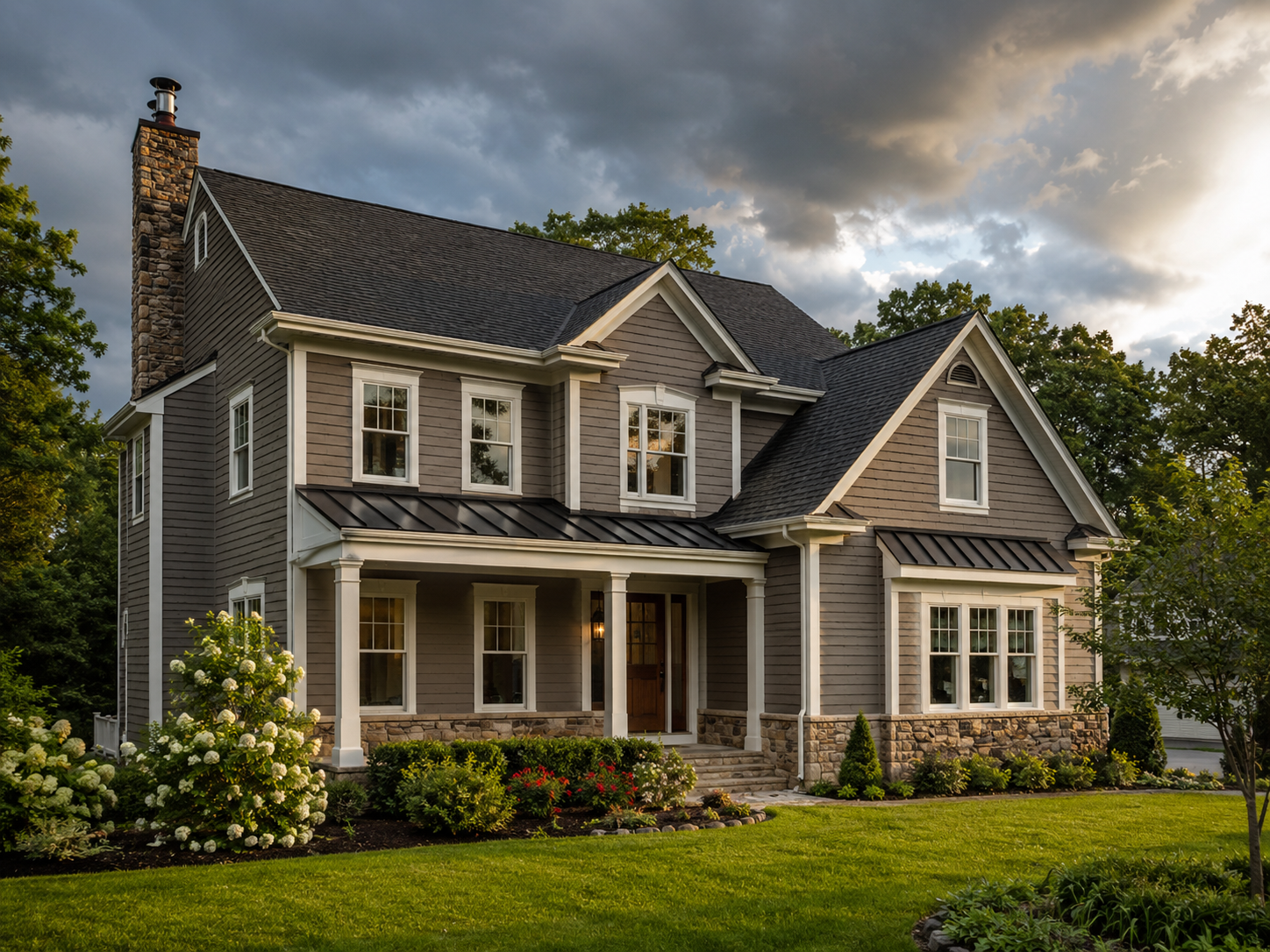

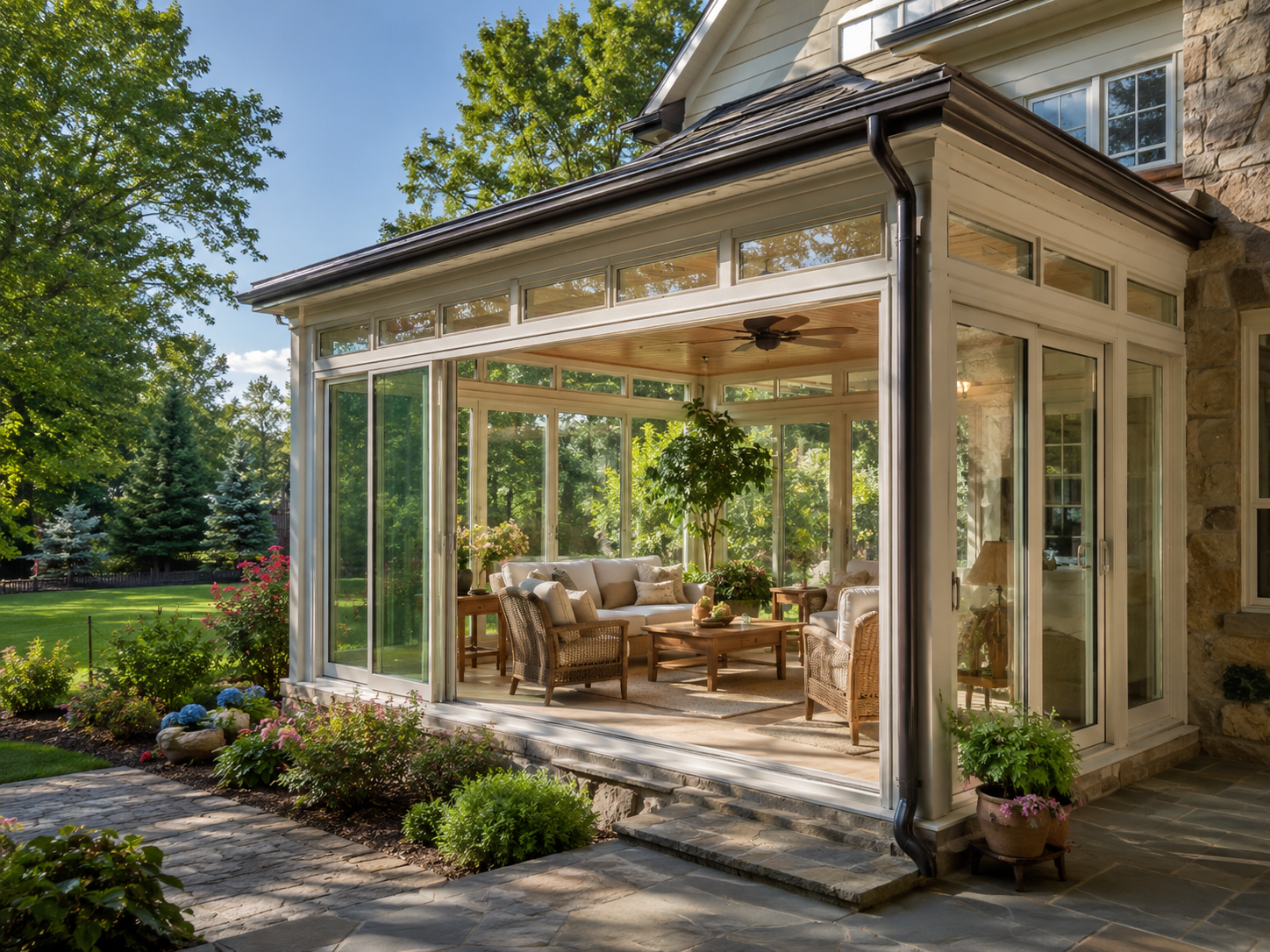
Sunroom and Three-Season Room Additions in Maryland and Northern Virginia: Extending Your Living Space Into Every Season
For homeowners in Bethesda, Potomac, Rockville, and across Montgomery County and Northern Virginia, one of the most appealing remodeling projects in 2026 isn’t a kitchen or a bathroom — it’s a room that doesn’t fit neatly into either category. A sunroom, three-season room, or four-season addition creates a space that blurs the line between indoors and outdoors, giving homeowners a way to enjoy natural light and garden views without contending with Maryland’s humidity, pollen, and unpredictable weather.
These additions have become one of the most requested project types across the DMV — and for good reason. They add genuine living space, increase home value, and create a room that homeowners say they use more than almost any other space in the house.
At H&C Construction Design Build, we design and build sunroom and three-season room additions across Maryland, Washington DC, and Northern Virginia. Here’s what homeowners should understand before starting the planning process.
Why Sunrooms Are a Strong Fit for Maryland and Virginia Homes
The DMV’s climate is part of what makes sunrooms so appealing here. Maryland’s humid subtropical climate brings beautiful spring and fall weather, but also intense summer humidity, seasonal pollen, and unpredictable rain. A sunroom addition gives homeowners a way to be “outside” — surrounded by natural light, garden views, and fresh air — without being directly exposed to those conditions.
For homeowners in Chevy Chase, Silver Spring, and throughout Montgomery County, a sunroom often becomes the most-used room in the house: a morning coffee spot, a reading nook, a home office with a view, or a gathering space for family and guests that doesn’t require heating and cooling the entire home to use comfortably.
Three-Season vs. Four-Season: Understanding the Difference
This is the single most important decision in sunroom planning, and it affects cost, design, and how the space counts toward your home’s official living area.
Three-Season Rooms
A three-season room is designed for use in spring, summer, and fall — generally without a full HVAC system, though many homeowners add a ductless mini-split for additional comfort during shoulder seasons. These rooms typically feature large window systems, sometimes with retractable screens or vinyl panel systems that can be opened in good weather and closed during cooler months.
Three-season rooms in Maryland generally range in cost depending on size and finish level, with typical investments in the tens of thousands of dollars. Despite the lower investment relative to a four-season room, these spaces still require proper foundations, structural framing, electrical systems, and roofing tie-ins — they are permanent additions, not temporary structures.
Four-Season Rooms
A four-season room is built to function as true year-round living space. These additions include full insulation, energy-efficient windows, and a dedicated, independently controlled HVAC system — either an extension of the home’s existing system or a standalone mini-split setup.
The key distinction for Maryland homeowners: a room only counts as official “livable square footage” for appraisal purposes if it is fully insulated and connected to a permanent, independently controlled heating and cooling system. A three-season room, however beautiful, is treated more like an enhanced porch from an appraisal standpoint. A four-season room is treated as genuine additional living space.
For homeowners whose primary goal includes increasing their home’s appraised value — not just adding a place to relax — a four-season room is generally the better long-term investment, despite the higher upfront cost.
What’s Involved in a Sunroom Addition
A sunroom addition is a true construction project, even when it doesn’t involve expanding the home’s existing footprint dramatically. Key components include:
Foundation. Maryland code requires foundations for permanent additions to meet specific depth requirements to account for frost lines — this is one of the often-overlooked cost drivers in sunroom projects.
Structural framing and roofing tie-in. The new structure needs to be properly integrated with the existing home’s roofline and structure — not simply attached to an exterior wall.
Window and glazing systems. This is where three-season and four-season rooms differ most visibly. Three-season rooms often use vinyl panel or screen systems that maximize airflow and views. Four-season rooms use insulated, energy-efficient window systems designed to perform like the rest of the home’s envelope.
Electrical. Lighting, outlets, and — for four-season rooms — wiring to support HVAC equipment all need to be planned as part of the design.
HVAC (for four-season rooms). Whether extending the home’s existing system or adding a dedicated mini-split, climate control needs to be sized appropriately for the room’s glazing and exposure.
Flooring. Durable, moisture-tolerant flooring options are popular in sunrooms given the higher exposure to sunlight and temperature swings compared to interior rooms.
Where a Sunroom Fits on Your Property
One of the most important early design decisions is where the sunroom addition will be located relative to the existing home — and how it connects to your indoor-outdoor living strategy more broadly.
Off the kitchen or family room. This is the most common configuration, creating a natural flow between the home’s main living areas and the new sunroom. If you’re also considering a Kitchen Remodeling project, coordinating the two can create a much more cohesive result than planning them separately.
Connected to an existing deck or patio. Many homeowners build a sunroom adjacent to an existing or new deck, creating layered outdoor living zones — an open deck for sun and grilling, and an adjacent sunroom for shaded, climate-controlled relaxation. Our Decks & Porches team frequently coordinates these combined projects.
Facing the best views on the property. Orientation matters significantly for sunroom enjoyment — and for managing heat gain. A sunroom facing south or west will receive more direct sun and heat than one facing north or east, which affects both comfort and HVAC sizing for four-season designs.
Permits and the Sunroom Addition Process in Maryland and Virginia
Sunroom additions require building permits in Maryland, DC, and Virginia, and local requirements vary by county and municipality. Because these are permanent structural additions — with foundations, framing, and roofing tie-ins — the permit process is similar to that of other home additions, not a simplified process for “accessory structures.”
At H&C, our process for sunroom additions follows the same structured design-build approach we use for all additions:
Design consultation. We assess your property, discuss your goals — three-season versus four-season, location, and how the space will be used — and review site conditions including orientation, grading, and existing structures.
Design development. We create detailed plans including foundation design, framing, window systems, and — for four-season rooms — HVAC integration.
Permitting. We handle permit submissions with the relevant county or municipal building department.
Construction. Our licensed crews manage the full build — foundation, framing, roofing tie-in, glazing, electrical, and finishes.
Final walkthrough. We review the completed addition with you and address any final details.
You can view examples of completed additions and outdoor living projects across Maryland, DC, and Virginia in our Our Remodeling Projects portfolio.
Older Homes and Structural Considerations
Many homes across Bethesda, Chevy Chase, and parts of Northern Virginia have existing exterior walls, rooflines, or foundations that require careful evaluation before a sunroom addition can be properly integrated. In some cases, this reveals existing issues — deteriorated framing, drainage problems, or aging exterior materials — that should be addressed as part of the project.
Our Restoration & Rebuild team works alongside our additions projects when existing structural issues need to be resolved before new construction begins, ensuring the final result is built on a solid foundation — literally and figuratively.
Is a Sunroom Addition Right for Your Home?
A sunroom or three-season room addition tends to be the right fit for homeowners who:
- Want more living space without the disruption of a full home addition or second story
- Value natural light and a connection to their outdoor space, especially during Maryland’s milder months
- Are looking for a project with strong resale appeal — sunroom additions are widely recognized by buyers as desirable features
- Want a space that can serve multiple purposes over time — a sitting room today, a home office tomorrow, a playroom for grandchildren down the road
If your goals extend beyond a single room — perhaps a sunroom paired with a kitchen update, or a broader reconfiguration of your home’s layout — our Full Home Remodeling and Home Additions services can address the full scope under one coordinated plan.
Planning Your Sunroom Addition This Season
Sunroom additions involve a meaningful planning and permitting timeline — typically several weeks for design and permitting before construction even begins, followed by a construction period that depends on size and complexity. Homeowners who want to enjoy a new sunroom for the back half of this year’s milder season should begin the design conversation as early as possible.
Whether you’re drawn to the simplicity of a three-season room or the year-round usability of a four-season addition, the right choice depends on how you plan to use the space, your budget, and your long-term goals for your home.
Ready to Start Planning Your Sunroom Addition?
H&C Construction Design Build serves homeowners across Maryland, Washington DC, and Northern Virginia — including Rockville, Bethesda, Potomac, Silver Spring, Chevy Chase, Gaithersburg, Montgomery County, Arlington, Alexandria, and Fairfax. Whether you’re considering a three-season room, a four-season addition, or a combined indoor-outdoor living project, our design-build team is ready to help you plan it right.
Explore our Home Additions service and request a consultation to begin your project.