Posted on

5 Costly Remodeling Mistakes Maryland Homeowners Make in 2026 | H&C Construction

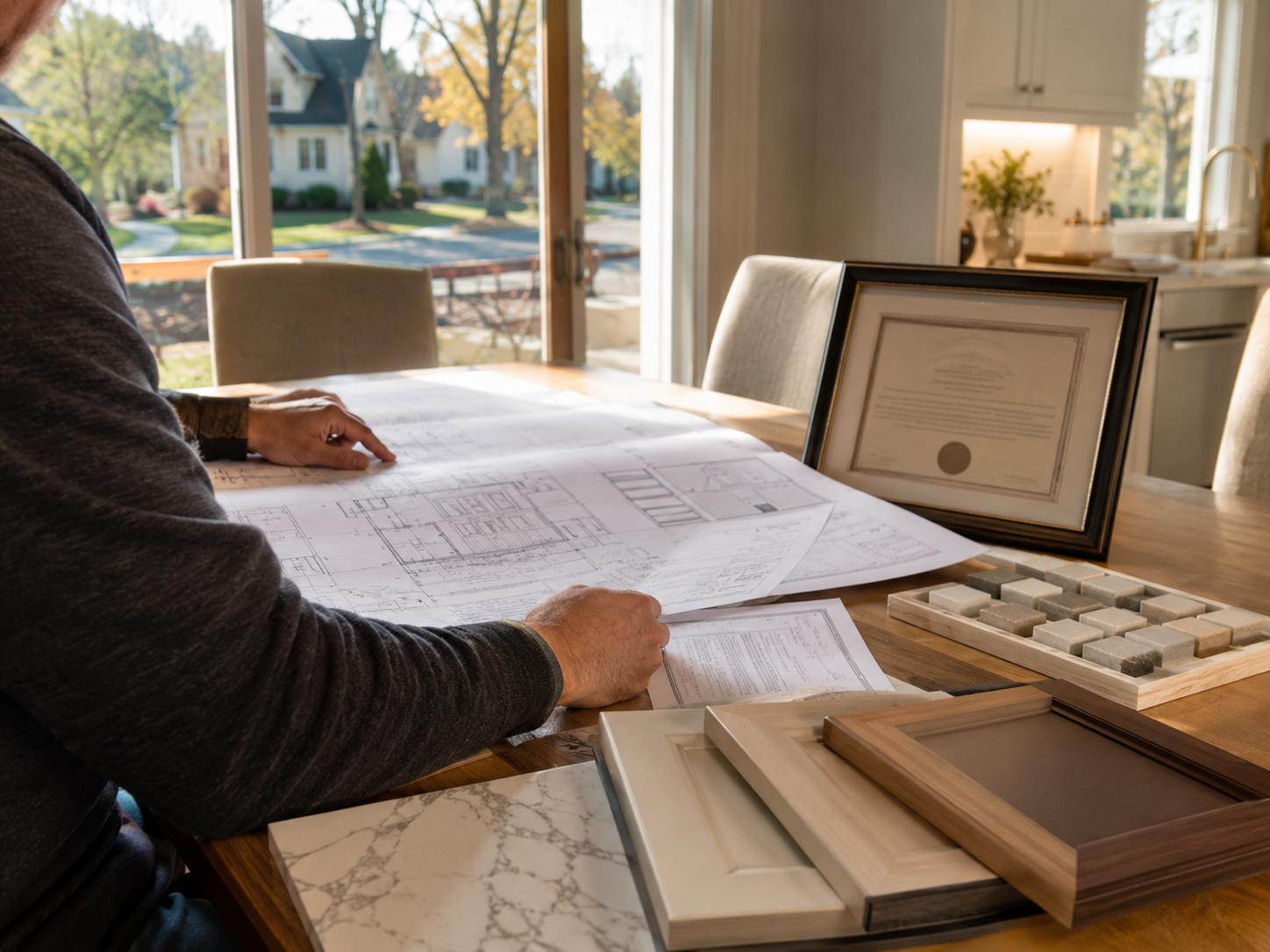
Maryland homeowner reviewing remodeling plans carefully before starting a project

5 Costly Remodeling Mistakes Maryland Homeowners Make in 2026 — and How to Avoid Every One

Maryland homeowners lose thousands every year to remodels that were planned carefully and still went sideways. The projects that go wrong in Maryland are rarely victims of bad intentions. They are victims of planning gaps — gaps between what homeowners assumed about the permit process, the contractor market, and the real cost of renovation in a premium DMV market, and what those things actually involve. Blue Collar Scholars

In 2026, these gaps are wider than ever. A new $500,000 minimum insurance requirement for Maryland contractors took effect June 1, 2024. Montgomery County’s permit review process has specific requirements that differ from Prince George’s County, Howard County, and Charles County. And a 25% tariff on imported cabinetry has added meaningful cost to every Maryland kitchen renovation since October 2025.

Because of this, understanding the specific mistakes Maryland homeowners make most consistently — and why they make them — is one of the most valuable investments you can make before starting a kitchen remodel, bathroom renovation, addition, or whole-home project in Bethesda, Rockville, Silver Spring, Chevy Chase, Gaithersburg, or anywhere across Montgomery County.

At H&C Construction Design Build, we serve homeowners across Maryland, Washington DC, and Northern Virginia. We see these mistakes consistently. More importantly, we see how easily they are avoided when homeowners understand what to look for before any contract is signed.


Mistake 1 — Hiring an Unlicensed or Underinsured Contractor

This is the most serious and most consequential mistake a Maryland homeowner can make — and the one that causes the most irreversible financial damage.

Maryland law requires every contractor performing home improvement work to hold an active Maryland Home Improvement Commission (MHIC) license. Unlicensed contractors can cost consumers thousands of dollars resulting from poor or incomplete workmanship. State law protects the consumer by screening contractors for criminal records, requiring them to have trade experience, and testing contractors to ensure they know how to comply with Maryland’s home improvement laws. Medium Bloggers

The consequences of hiring unlicensed are severe. The work cannot receive proper permits or inspections. The unlicensed contractor is not bonded or licensed to protect your home against damage or incomplete work. At resale, unpermitted work creates legal disclosure obligations that can derail or significantly devalue the transaction. And insurance claims related to work done by unlicensed contractors are frequently denied by homeowner’s insurance policies.

In 2023–2024, MHIC suspended major contractors including Elite Remodeling LLC, Liberty Garages, and Stone Guys, leaving hundreds of homeowners with incomplete projects. While Maryland’s Guaranty Fund provided compensation up to $30,000 per homeowner, prevention through proper contractor vetting remains your best protection. Montgomery County Government

The new 2024 insurance requirement matters significantly. Effective June 1, 2024, Maryland law requires all home improvement contractors to maintain general liability insurance of at least $500,000 — a tenfold increase from the previous $50,000 requirement. Always request a current certificate of insurance directly from the contractor and verify it with the insurance company. Expired or fraudulent certificates are more common than homeowners expect. Montgomery County Government

The fix: Verify every contractor’s MHIC license independently at dllr.state.md.us before any other step. Request a current certificate of insurance and call the insurance company to verify it’s active. The most importantly, if you suffer a loss when doing business with a licensed contractor, consumers can file a claim of up to $15,000 from the Home Improvement Guaranty Fund. That protection is entirely unavailable when you hire unlicensed. Medium Bloggers

As fully Licensed Contractors in Maryland, H&C Construction holds active MHIC licensure and maintains all required insurance at or above Maryland’s current statutory minimums.


Mistake 2 — Underestimating What Montgomery County’s Permit Process Actually Involves

This is the mistake that creates the most timeline surprises in Maryland remodeling projects. And it is almost entirely avoidable when homeowners understand the process before design begins.

Another common mistake: underestimating the permit process. Montgomery County requires permits for most structural work, electrical updates, and plumbing changes. The permit review can take 6–8 weeks, and starting work without permits can result in serious consequences. Montgomery County Government

In practice, Montgomery County’s permit process is more layered than most homeowners anticipate before their first project.

What triggers a permit in Montgomery County: A permit is required prior to reconstruction or renovation to an existing structure other than a repair. A permit is not required for painting, wallpapering, replacing a faucet, installing countertops, installing hardwood floors or tiles or carpeting if no structural changes are performed. Everything else — wall removal, electrical work, plumbing changes, HVAC modifications — requires a permit. Irongateusa

The permit application is more complex than a form. A permit application for a Maryland remodel isn’t a simple form. It needs structural drawings, MEP documentation, energy compliance details. When design and construction are handled by separate teams, those packages are frequently incomplete on first submission. Getting them returned, revised, and resubmitted adds weeks. Sometimes 6 to 10 of them. Blue Collar Scholars

Montgomery County’s Fast Track program can help — when it applies. Eligible applications will be reviewed through Montgomery County’s Fast Track program, which can result in a permit in three to five days. DPS is committed to completing code reviews within 17 days for adequately prepared applications. However, Fast Track eligibility is limited to specific project types and requires a complete, correctly prepared application. An incomplete submission misses Fast Track and enters standard review. Irongateusa

The HOA and municipality layer adds another step. Many of the subdivisions and developments in Montgomery County have private deed restrictions and covenants regulating construction. The County does not enforce covenants and deed restrictions. You may need a permit or other permission if you live in a Montgomery County municipality that requires it. This means Rockville, Gaithersburg, and Chevy Chase Village all have their own municipal permit processes that operate separately from Montgomery County DPS. A contractor who doesn’t know which authority governs your specific address can submit to the wrong jurisdiction — delaying your project significantly.

The fix: Start the permit process during the design phase, not after it is complete. Work with a licensed Maryland contractor who manages Montgomery County DPS submissions regularly, knows when Fast Track applies, and confirms the correct permitting jurisdiction before any application is submitted.


Mistake 3 — Fragmented Teams and the Design-Construction Gap

Permit requirements vary significantly across Montgomery, Prince George’s, Howard, and Charles counties. HOA approvals, zoning rules, and state energy codes all need tight coordination to avoid rejection and resubmission. When design and construction teams aren’t talking regularly, these details fall through the cracks more often than not. Blue Collar Scholars

This coordination failure is the primary driver of the most frustrating Maryland remodeling outcomes — beautiful designs that are expensive or impossible to build as drawn, budget overruns discovered when construction bids come in weeks after design fees were spent, and mid-project disputes between designer and contractor that land in the homeowner’s lap.

The most specific version of this problem in Maryland: design changes that nobody prices correctly. A designer picks materials based on aesthetics, not current supplier lead times or market pricing. In 2026’s specific market — with a 25% tariff on imported cabinetry, skilled labor costs rising 4.5 to 6%, and Montgomery County permit fee increases from mid-2025 — a designer working from 2024 material costs will produce a project budget that is significantly wrong before construction begins. Blue Collar Scholars

Furthermore, a permit application for a Maryland remodel isn’t a simple form. When design and construction are handled by separate teams, those packages are frequently incomplete on first submission. A designer who doesn’t work with a specific contractor regularly may not know that contractor’s specific permit submission format requirements — producing drawings that require revision before a permit can even be submitted. Blue Collar Scholars

The fix: A design-build firm integrates design and construction under one contract and one accountable team. Because of this integration, design decisions are made with full awareness of their construction cost implications in real time — not weeks later when bids reveal the gap. Permit applications are managed by the same team that produced the drawings. Field conditions are communicated immediately to the design team and resolved without escalating through multiple separate parties.


Mistake 4 — Planning Budgets Around National Averages

Maryland renovation costs differ from national averages more than most homeowners realize before receiving their first contractor quote.

The key is understanding what drives costs in Maryland: permit fees in Montgomery County can reach $8,000 to $12,000 for major additions, skilled labor commands premium wages, and material delivery costs more due to traffic and accessibility challenges. Montgomery County Government

In practice, the Maryland cost premium over national averages runs 15 to 30% depending on the project type and location. Bethesda, Chevy Chase, and Potomac operate at the top of this premium — where kitchen renovations regularly reach $150,000+ at high-end specification and primary bathroom renovations pass $80,000 for spa-quality builds.

Despite higher upfront costs, Maryland home improvements typically return 70–85% of their cost at resale, compared to 60–70% nationally. A $150,000 kitchen remodel in Bethesda might add $120,000 to $130,000 in home value. This superior return reflects the premium market position of Maryland’s most sought-after communities — where renovation investment aligns with buyer expectations that are themselves elevated above national norms. Montgomery County Government

The hidden cost categories Maryland homeowners most often miss:

Montgomery County permit fees for major renovation projects — which can reach $8,000 to $12,000 for additions. Structural engineering drawings required for wall removal or load-bearing modifications — $1,500 to $5,000 depending on complexity. Behind-the-walls discoveries in older Maryland homes — aging galvanized plumbing, out-of-code electrical panels, cast iron drain lines, lead paint remediation — can add $10,000 to $30,000 in a home built before 1978. Cabinetry lead times of 8 to 12 weeks for custom work that must be ordered during design, not after permits are approved.

The fix: Build a genuine 15 to 20% contingency — not 10%. Maryland’s older housing stock reliably surfaces discoveries once walls are opened. Start cost research with DMV-specific data from experienced local contractors rather than national cost guides. And plan for total project cost — including permits, engineering, and contingency — not just construction cost.


Mistake 5 — Starting Construction Without a Complete, Approved Permit

This is the mistake with the most severe consequences — and the one that creates the most visible downstream problems at resale.

In Montgomery County, starting construction on a project that requires a permit without first obtaining that permit creates a series of compounding problems. The work cannot receive required inspections at structural milestones. If discovered by a county inspector, a stop-work order is issued, a violation is cited, and completed work may need to be opened for inspection or demolished. The contractor is exposed to license jeopardy. And most consequentially, the unpermitted work becomes a disclosure obligation at resale that sophisticated buyers’ agents — particularly in Bethesda, Chevy Chase, and Potomac where buyer representation is experienced and thorough — will identify through permit history searches.

Starting work without permits can result in serious consequences. The full list includes: stop-work orders, monetary fines, mandatory demolition of completed work, permit violation disclosures that reduce sale prices, insurance claim denials for damage occurring during unpermitted work, and MHIC license complaints against the contractor. Montgomery County Government

The most common unpermitted work scenario in Maryland: A homeowner hires a contractor who suggests skipping permits to save time or money. The contractor collects payment and completes work. The homeowner lists the house several years later. The buyer’s agent requests a permit history. The unpermitted kitchen addition, bathroom rough-in, or electrical upgrade shows up as work done without a permit — creating either a required permit application after the fact (expensive and time-consuming) or a price negotiation that costs more than the permit would have.

The fix: Never begin any structural, electrical, plumbing, or mechanical work without a properly issued permit in hand. Montgomery County DPS strongly suggests that if a contractor is to perform the work, the contractor be listed on the permit as the party responsible for the work. A contractor must have an MHIC license to obtain a permit. A properly licensed contractor manages permit applications as a standard part of every project — not as an optional addition. Montgomery County Maryland


Avoiding All Five — The H&C Construction Approach

H&C Construction Design Build serves homeowners across Maryland — including Rockville, Bethesda, Potomac, Silver Spring, Chevy Chase, Gaithersburg, and all of Montgomery County — with a design-build process specifically built to address each of these five failure modes.

We hold active MHIC licensure and the required $500,000+ general liability insurance. We manage Montgomery County DPS permit applications, know when Fast Track applies, and confirm the correct permitting jurisdiction before any application is submitted. We integrate design and construction under one accountable team that prices projects with current Maryland market costs — not national averages. We conduct pre-design structural assessments before drawings begin. And we never start construction without a properly approved permit in hand.

As Licensed Contractors in Maryland with project experience across Bethesda, Rockville, Silver Spring, Potomac, Chevy Chase, and Gaithersburg, we bring the same professional standards to every Maryland project.

Browse completed projects across Maryland and the full DMV in our Our Remodeling Projects portfolio.


Ready to Plan Your Maryland Remodel the Right Way?

Whether you’re planning a Kitchen Remodeling project, a Bathroom Remodeling renovation, a Home Additions scope, or a comprehensive Full Home Remodeling across your Maryland home, our design-build team gives you the honest planning guidance this market demands.

Request a consultation to start your project with the right foundation today.

Posted on

5 Costly Remodeling Mistakes Northern Virginia Homeowners Make in 2026 | H&C Construction

Northern Virginia homeowner reviewing remodeling plans to avoid mistakes

5 Costly Remodeling Mistakes Northern Virginia Homeowners Make in 2026 — and How to Avoid Every One

Most home remodels in Northern Virginia don’t fail during construction. They fail during the planning phase — weeks or months before the first wall opens. In 2026, the most expensive mistake a Northern Virginia homeowner can make isn’t buying the wrong property. It’s managing a major renovation with a fragmented team, a budget built on national averages, or a timeline that didn’t account for Fairfax County’s permit process.

Because of this, understanding the specific mistakes that Northern Virginia homeowners make most consistently — and why they make them — is one of the most valuable things you can do before starting a kitchen remodel, bathroom renovation, addition, or whole-home project in Fairfax County, Arlington, Alexandria, McLean, Ashburn, or Vienna.

At H&C Construction Design Build, we serve homeowners across Northern Virginia and the full DMV. We see these mistakes regularly. More importantly, we see how easily they’re avoided when homeowners know what to look for before any money is committed.


Mistake 1 — Planning a Budget Around National Averages

This is the most widespread mistake in the DMV remodeling market. It is also the most predictable and the most avoidable.

National remodeling cost data — the figures that appear in home improvement publications, online calculators, and magazine articles — reflects the median across thousands of markets, including rural areas with dramatically lower labor costs, simpler permit requirements, and far less competitive contractor schedules than Northern Virginia. Applying these figures to a Fairfax County or Arlington kitchen remodel consistently produces budgets that are 30 to 40% below what projects actually cost here.

The average kitchen remodel in Northern Virginia is approximately $75,000 — nearly 40% above the national average. Northern Virginia trade rates run 35 to 45% above national averages, driven by the DC metro area’s cost of living premium and the extraordinary demand for skilled tradespeople from both residential and commercial construction. Furthermore, Fairfax County permit fees rose 12.5% in 2026 — a real cost increase that doesn’t appear in any national cost guide.

The hidden cost categories that most Northern Virginia homeowners miss:

Beyond trade labor and materials, Northern Virginia remodels consistently surface several cost categories that homeowners planning on national averages don’t account for. Permit fees run $800 to $1,500+ for full bathroom renovations in Fairfax County. Engineering and architectural drawings for structural changes — required for any wall removal or load-bearing modification — add $1,500 to $5,000 depending on complexity. Behind-the-walls surprises in older Falls Church or Fairfax Station homes — knob-and-tube wiring, galvanized plumbing, asbestos — can add $10,000 to $30,000 in remediation. Custom cabinetry carries an 8 to 12 week lead time that must be ordered before permits are approved. Disposal fees, dumpster rentals, and temporary facility costs add $1,500 to $5,000 for larger projects.

The fix: Build a 15 to 20% contingency into your budget — not 10%. Older Northern Virginia homes routinely uncover surprises that eat the smaller buffer. And start your cost research with DMV-specific data from experienced local contractors, not national cost guides.


Mistake 2 — Treating the Permit as an Afterthought

Nothing delays a Northern Virginia remodel more consistently than a homeowner who treated the permit as something to deal with after design is finalized.

In 2026, Fairfax County permit applications can take up to 12 weeks to process when not managed with meticulous detail. Arlington County runs faster for minor scopes but still requires 3 to 5 weeks for most meaningful renovation permits. Loudoun County varies by project type, as does Alexandria’s City permit office. Beyond county variation, projects in Alexandria’s Old Town historic district or in Arlington neighborhoods with specific zoning constraints add additional review layers that extend the timeline further.

The permit mistakes that Northern Virginia homeowners make most consistently include:

Starting construction before a permit is approved. This is the single most costly permit mistake. When a county inspector arrives to find work underway without approved permits, they issue a stop-work order, cite a violation, and often require that completed work be opened for inspection or demolished. This costs far more — in time, money, and stress — than the timeline saved by starting early.

Assuming small projects don’t need permits. A homeowner assumes that a bathroom remodel is cosmetic and doesn’t require a permit. However, the new plumbing and electrical work that the project involves trigger a full permit requirement. Unpermitted work creates disclosure obligations at resale that can derail or devalue a sale years later.

Submitting incomplete applications. Missing a structural engineer’s stamp, an incorrect contractor DPOR license number, or an outdated property survey causes the application to be returned for revision — resetting the review clock entirely. A well-prepared, first-submission-correct application can save 3 to 6 weeks compared to a resubmitted one.

Not obtaining HOA approval before permit submission. In planned communities across Ashburn, Reston, and parts of Fairfax County, HOA architectural review approval is required before county permits are submitted. Reversing this sequence — or skipping HOA review — creates permit conditions or rejections that require design changes after submission.

The fix: Start the permit process during the design phase, not after it is complete. Work with a licensed, Virginia DPOR-credentialed contractor who manages Fairfax County or Arlington permit submissions regularly and who knows how to prepare complete, first-submission-correct applications.


Mistake 3 — Hiring a Fragmented Team Instead of One Accountable Partner

In 2026, the most expensive mistake a Northern Virginia homeowner can make isn’t choosing the wrong material or wrong layout. It’s attempting to manage a major renovation with a fragmented team — a separate architect, a separate general contractor, and separate subcontractors who have no formal accountability to each other.

This fragmentation is the primary driver of the most frustrating remodeling outcomes: designs that are beautiful but impossible or extremely expensive to build as drawn, budget overruns discovered when construction bids come in weeks after design fees were spent, and mid-project disputes between designer and contractor that land in the homeowner’s lap because no one entity is accountable for both.

In Northern Virginia’s demanding regulatory environment — where Fairfax County, Arlington, and Loudoun County each have their own specific code requirements, fee structures, and inspection protocols — the cost of this fragmentation is amplified. A designer unfamiliar with Fairfax County’s specific submittal requirements produces drawings that fail permit review. A contractor unfamiliar with Arlington’s zoning setbacks begins an addition that requires a variance. A homeowner managing these disputes without a single accountable partner spends months resolving them.

The alternative: A design-build firm integrates design and construction under one contract and one accountable team. Because of this integration, design decisions are made with full awareness of their construction cost implications — in real time during the design process, not weeks later when bids come in. Permit applications are managed by the same team that produced the drawings. Field conditions discovered during construction are communicated immediately to the design team and resolved without escalating through multiple separate contractors.

Because design-build firms carry single-point accountability, they also carry single-point incentive to resolve problems rather than assign blame. For Northern Virginia’s complex regulatory and housing stock environment, this integration is not simply convenient — it consistently produces better results at lower total cost than the alternative.


Mistake 4 — Underestimating Structural Reality in Older Northern Virginia Homes

Many Northern Virginia Colonials and split-level homes from the 1960s and 1970s feel segmented and dark. Homeowners plan to open the main level, combining the kitchen and family room into one flowing space. However, they don’t discover until weeks into construction that the wall they planned to remove is load-bearing — and that removing it requires a steel beam, temporary shoring, structural engineering, and a building permit.

This discovery doesn’t have to be a surprise. A thorough pre-design structural assessment — walking the home with an experienced contractor before drawings begin — identifies load-bearing conditions, evaluates aging mechanical systems, and surfaces likely behind-the-walls conditions based on the home’s construction era. Because of this, the renovation design is built around structural reality from day one, not revised to accommodate it after construction begins.

The specific structural discoveries most common in Northern Virginia homes built before 1985:

Knob-and-tube wiring or cloth-wrapped electrical cables — a safety hazard requiring full panel and circuit replacement. Galvanized steel water supply pipes — corroded from the inside, reducing pressure and water quality, requiring replacement. Cast iron drain lines — functional but aging, sometimes cracked or root-infiltrated, requiring evaluation before new plumbing fixtures are connected. Inadequate subfloor thickness — below the 1.5-inch minimum for large-format tile in bathrooms and kitchens without reinforcement. Insufficient insulation — well below current Virginia energy code requirements, most efficiently addressed when walls are already open for renovation.

For Northern Virginia projects in homes built before 1985, a 15 to 20% contingency exists for a specific reason: these systems surface regularly, and the cost of addressing them correctly is lower during a planned renovation than after finishes are installed. In addition, addressing them during renovation prevents the need to reopen recently finished spaces for repairs within a few years.


Mistake 5 — Choosing a Contractor Based on the Lowest Bid

This mistake appears in every remodeling market. However, in Northern Virginia’s premium cost environment, its consequences are particularly severe.

A bid 25 to 35% below all other estimates in the Northern Virginia market is not a discovery of better value. It is a signal that something material differs about what is being quoted — typically lower-quality materials, unlicensed subcontractors, an incomplete scope that will generate change orders mid-project, or a contractor planning to abandon the project once the deposit clears.

Northern Virginia’s licensed contractor market is well-regulated. Every contractor performing renovation work must hold a valid Virginia DPOR license. Specifically, for Full Home Remodeling and addition projects, the appropriate Virginia credential is a Class A contractor license. Verifying this independently at dpor.virginia.gov before signing any contract is a 3-minute step that eliminates the most common contractor fraud risk.

Beyond licensing, the contractor evaluation questions that Northern Virginia homeowners should ask before committing include:

Can you name the project manager assigned to my project? A firm that can’t name this person during the sales conversation is communicating something important about how the project will be managed once the contract is signed.

Can you show me completed projects similar to mine, in Northern Virginia, within the past two years? Portfolio images from other markets don’t confirm competence in Fairfax County’s specific permitting environment or Northern Virginia’s specific housing stock.

Can I speak with three references from recent projects in my area? Call them. Ask specifically how the contractor handled unexpected discoveries, whether the final cost was close to the estimate, and whether they would hire the firm again without hesitation.

What is your Virginia DPOR license number? Provide it immediately and encourage you to look it up. Any hesitation about this question is a significant red flag.


Avoiding All Five — The H&C Construction Approach

H&C Construction Design Build serves homeowners across Northern Virginia — including Fairfax County, Arlington, Alexandria, McLean, Ashburn, Reston, Vienna, and Falls Church — with a design-build process specifically built to address each of these five failure modes.

We provide detailed, Virginia-specific cost estimates that reflect actual Northern Virginia labor rates, current permit fee schedules, and realistic contingency allowances. We manage all permit applications — Fairfax PLUS, Permit Arlington, Loudoun LandMARC, and Alexandria’s city permit office — as an integrated part of every project. We conduct pre-design structural assessments before drawings begin. And we hold all required Virginia DPOR credentials across every project type.

Browse completed projects across Northern Virginia and the full DMV in our Our Remodeling Projects portfolio.


Ready to Plan Your Northern Virginia Remodel the Right Way?

H&C Construction Design Build serves homeowners across Fairfax County, Arlington, Alexandria, McLean, Vienna, Reston, Ashburn, and all of Northern Virginia. Whether you’re planning a Kitchen Remodeling project, a Bathroom Remodeling renovation, a Home Additions scope, or a comprehensive whole-home renovation, our design-build team gives you the honest planning guidance this market demands.

As Licensed Contractors in Maryland with active Virginia DPOR credentials throughout Northern Virginia, we bring the same professional standards to every project across the full DMV.

Request a consultation to start your project with the right foundation today.
Posted on

Remodel or Move? Why Maryland & Virginia Homeowners Are Staying Put in 2026 | H&C Construction

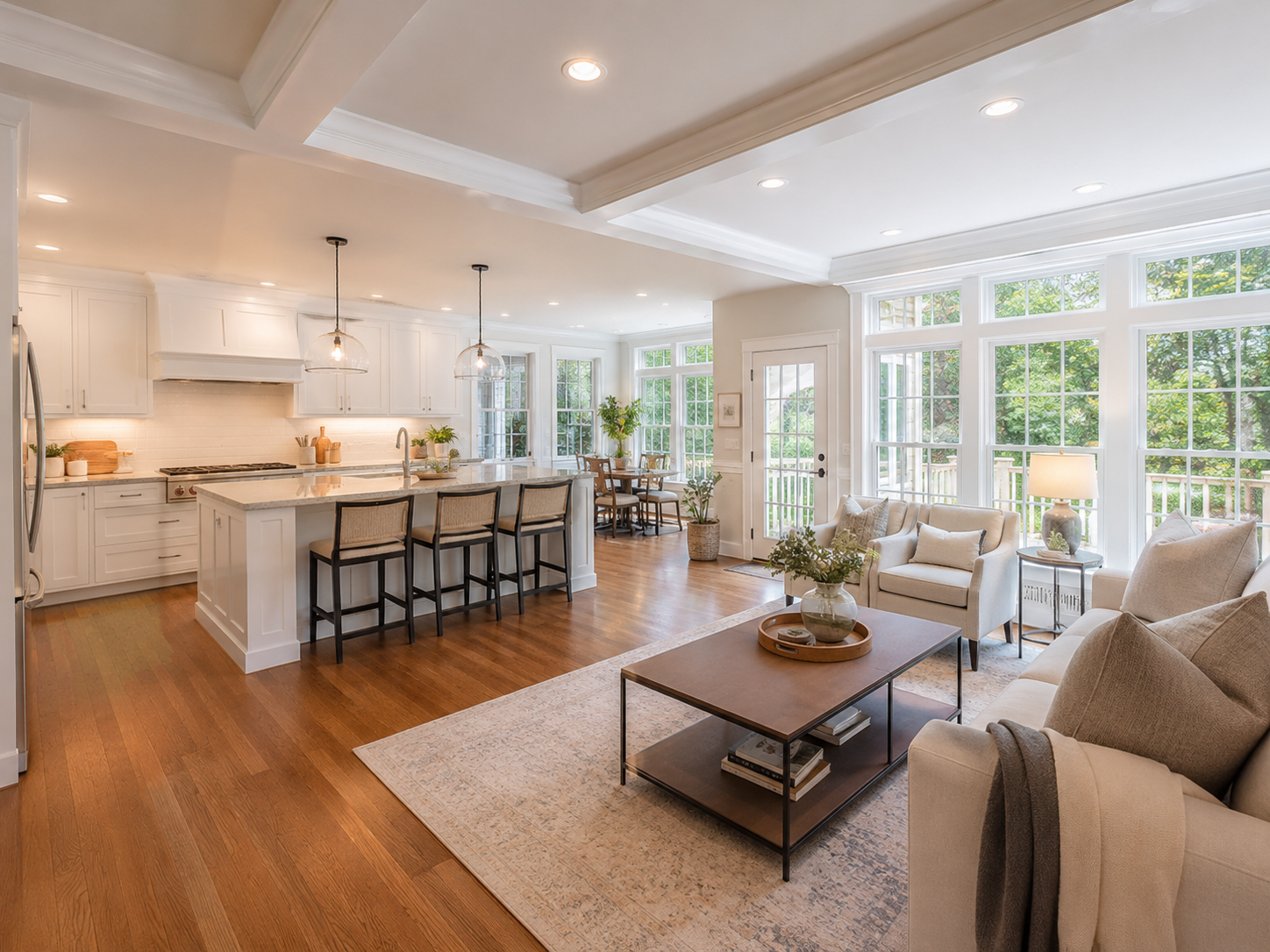
Remodeled open-concept living space in a Maryland home instead of moving

Remodel or Move? Why Most Maryland and Northern Virginia Homeowners Are Choosing to Stay in 2026

At some point, almost every homeowner in Bethesda, Rockville, Potomac, or Fairfax has the same conversation. The house feels too small, or the layout no longer fits the family, or the kitchen needs to be completely different. The question that follows is almost always the same: should we remodel, or should we move?

In 2026, that question has a clearer answer than it has in years. Most homeowners — when they run the full math — are choosing to stay. Because of a combination of market forces specific to Maryland and Northern Virginia, remodeling has become the financially and logistically superior option for the large majority of DMV households.

This isn’t sentiment. It’s numbers. Here’s why.


The Real Cost of Moving in the DMV in 2026

Moving sounds simpler than a renovation. In reality, it is among the most expensive financial transactions most homeowners make — and the costs are front-loaded, often invisible until closing day.

Agent commissions. Selling a home in Maryland or Northern Virginia typically costs 5% to 6% of the sale price in realtor commissions. On a $700,000 home, that’s $35,000 to $42,000 — gone before you’ve purchased a single square foot of new space.

Transfer taxes and closing costs. Maryland imposes transfer and recordation taxes on both buyer and seller. In Montgomery County specifically, these add meaningfully to the total transaction cost. Closing costs on the new home purchase typically run an additional 2% to 5% of the purchase price.

The mortgage rate problem. This is the most significant factor in 2026. More than 80% of Maryland homeowners with mortgages currently hold interest rates below 6%, with many locked in at 3% to 4% during 2020 and 2021. Selling that home and buying another means giving up that rate permanently. For a homeowner carrying a $400,000 mortgage balance, the monthly payment difference between a 3% and a 6.5% rate on a comparable home can exceed $800 to $900 per month — more than $10,000 per year, every year, indefinitely. This is what housing economists call the “lock-in effect,” and it is keeping hundreds of thousands of homeowners in place across the DMV.

The cost of the move itself. Professional moving costs, temporary storage, replacing furniture that doesn’t fit the new space, and the disruption to daily routines add thousands more to the total transaction before you’ve even begun to address whatever deficiencies the new home has.

Add these together. The true cost of moving for a typical Maryland or Northern Virginia homeowner in 2026 — before buying anything at all — commonly reaches $80,000 to $120,000 or more in transaction friction, lost rate advantages, and associated expenses. Against that number, a thoughtfully planned remodeling project begins to look very different financially.


The Market Reality in Maryland and Northern Virginia

The housing market picture in 2026 adds additional weight to the stay-and-remodel case.

Inventory remains constrained. While active listings have grown modestly across the Mid-Atlantic compared to 2024, the supply of move-in-ready, spacious homes in desirable Montgomery County, Fairfax County, and Northern Virginia neighborhoods remains well below historical norms. In other words, the home you’d want to move into may not exist at a price that makes the move worthwhile — especially when transaction costs are factored in.

Home values in the DMV are holding. Housing economists project modest appreciation of 2% to 4% annually across Maryland in 2026. Because of this, the equity you’ve built in your existing home continues to compound. Investing that equity in a thoughtful remodel — rather than surrendering a significant portion of it to transaction costs — directly adds to that asset’s value rather than depleting it.

Buyers are choosing remodeling over moving at historic rates. Survey data from Redfin shows that 71% of homeowners planning to renovate in the next year say they’re remodeling instead of buying a new home. Nationally, homeowners are staying in their homes for roughly twelve years on average — more than double the historical rate — and investing in the homes they already own.


What You Can Build Instead of Moving

Here’s where the conversation shifts from defensive to genuinely exciting. Because rather than asking what you’re giving up by not moving, the better question is what you can actually create by staying.

An open-concept kitchen you’ve always wanted. Rather than hoping the next house happens to have the kitchen layout you’re picturing, a Kitchen Remodeling project builds it specifically for how your family cooks, gathers, and lives.

A primary bathroom that functions as a genuine retreat. A Bathroom Remodeling project delivers the spa-style layout, the heated floors, and the curbless shower that speculative house-hunting rarely produces.

More bedrooms without changing your address. A Basement Remodeling project adds legal bedroom and living space below. A Home Additions project adds it above or beside. Both keep you in your neighborhood, your school district, and your community.

A whole-home transformation. For homeowners whose frustrations span multiple rooms, a coordinated Full Home Remodeling project addresses the full scope under one plan — eliminating the piecemeal disruption of tackling rooms one at a time over years.


The ROI Argument: When Remodeling Also Makes Financial Sense

For homeowners considering resale within the next three to seven years, the ROI picture for strategic remodeling in the DMV is compelling.

Kitchen remodeling in Maryland and Virginia consistently returns 70% to 80% of project cost in increased home value, according to regional remodeling data. Bathroom remodeling returns 60% to 70%. Well-designed deck additions return upwards of 83%. Crucially, these returns come on top of the equity already held in the home — and on top of the $80,000 to $120,000 in transaction costs that were avoided by not moving.

The math is not complicated. For many DMV homeowners, remodeling is simply the better financial decision — even before considering the lifestyle value of getting exactly the home you want rather than the best available compromise on the market.


When Moving Is Still the Right Answer

In the interest of a complete and honest picture: there are situations where moving is the right call.

Your location no longer fits your life. If you need to be in a different school district, closer to a new job, or in a different part of the DMV entirely, no renovation can solve a location problem.

Your lot is the limitation. If your primary need is more land, more outdoor space, or a fundamentally different setting, an addition can add interior space but cannot change what’s outside the property line.

The home’s bones are fundamentally wrong. Some homes have layouts, orientations, or structural realities that make renovation prohibitively expensive relative to moving. This is worth assessing honestly — a professional design consultation helps clarify this before you commit.

You have no remaining rate advantage. If you purchased recently at a market rate, the mortgage rate lock-in argument doesn’t apply with the same force.


How to Think About This Decision Clearly

Before making either choice, a few questions help clarify the right path.

Is your frustration with the house, or with the location? These are genuinely different problems. A renovation can solve the house. It can’t solve the location.

Have you run the full cost of moving? Most homeowners underestimate total transaction costs. Running the real number — including the rate differential over the expected years of ownership — often shifts the calculation decisively.

What would you actually build? The most useful step is usually a professional consultation with a design-build contractor to understand what’s realistically possible in your current home and at what cost. That conversation replaces speculation with actual data.


The H&C Construction Approach

At H&C Construction Design Build, we’ve helped homeowners across Maryland, Washington DC, and Northern Virginia work through exactly this decision. We bring honest, professional perspective — not a sales pitch — to what is usually one of the biggest financial and lifestyle decisions a household makes.

We are Licensed Contractors in Maryland with deep experience across Montgomery County, Fairfax County, and the entire DMV. Our design-build model handles every phase — design, permitting, and construction — under one accountable team.

Browse completed projects across Maryland, DC, and Virginia in our Our Remodeling Projects portfolio. Then request a consultation — and let’s have an honest conversation about what your home can become.


The Bottom Line for Maryland and Northern Virginia Homeowners

Moving costs more than most people realize. The homes available to move into are fewer and more expensive than most expect. And the rate you’re protecting by staying is worth far more than most people calculate.

In addition, remodeling gives you something moving rarely delivers: a home built precisely for your family — in the neighborhood you chose, near the schools and community you value, without starting over.

That’s why most Maryland and Northern Virginia homeowners are choosing to stay. And it’s why this is the right moment to have a serious conversation about what staying could look like for you.


Ready to Make Your Home Work for Your Life?

H&C Construction Design Build serves homeowners across Maryland, Washington DC, and Northern Virginia — including Rockville, Bethesda, Potomac, Silver Spring, Chevy Chase, Gaithersburg, Montgomery County, Arlington, Alexandria, and Fairfax. Whether you’re planning a single-room upgrade or a full home transformation, our licensed design-build team is ready to help.

Explore our Full Home Remodeling service and request a consultation to start the conversation.