Posted on

5 Costly Remodeling Mistakes Maryland Homeowners Make in 2026

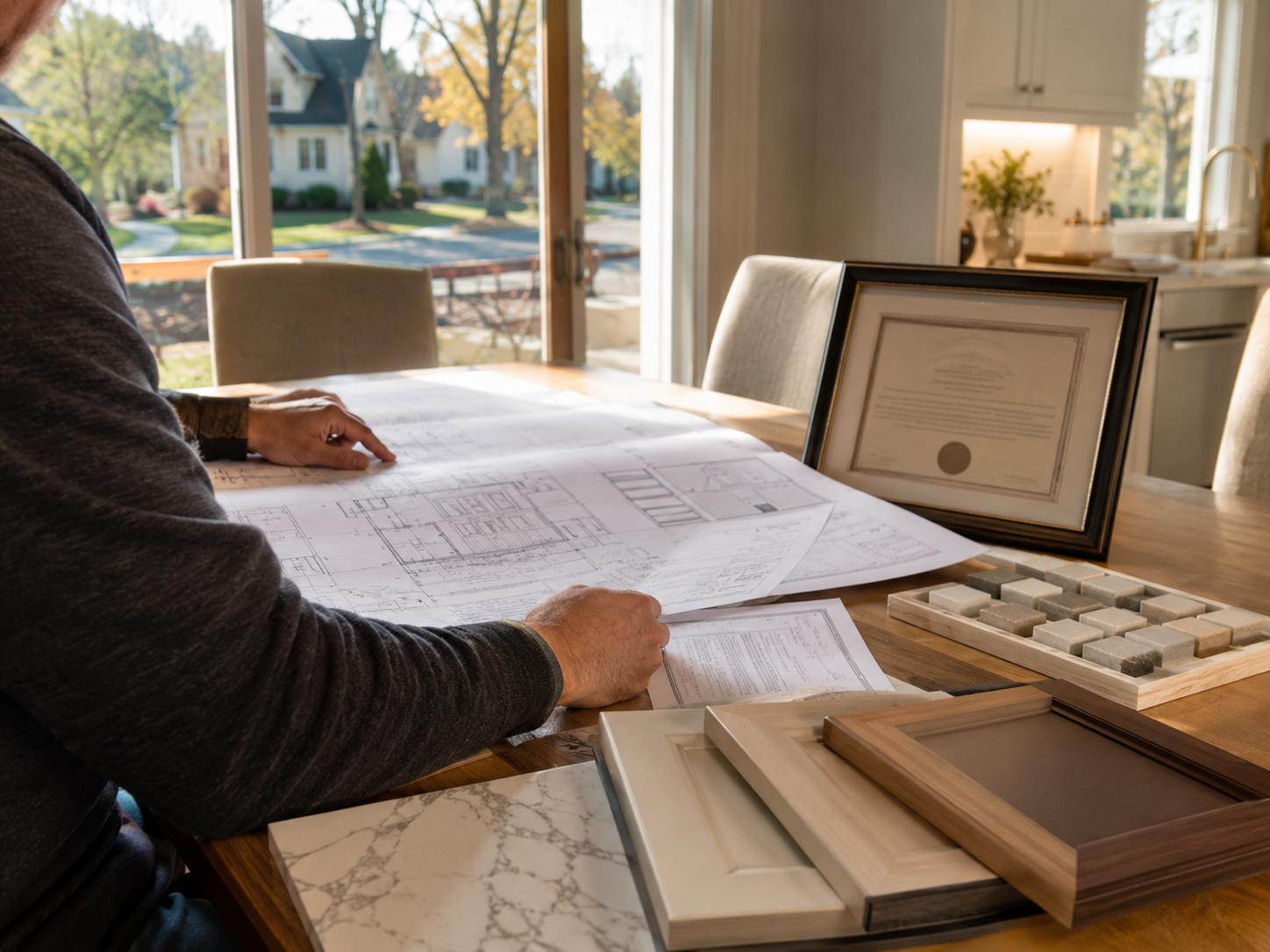
Maryland homeowner reviewing remodeling plans carefully before starting a project

5 Costly Remodeling Mistakes Maryland Homeowners Make in 2026 — and How to Avoid Every One

Maryland homeowners lose thousands every year to remodels that were planned carefully and still went sideways. The projects that go wrong in Maryland are rarely victims of bad intentions. They are victims of planning gaps — gaps between what homeowners assumed about the permit process, the contractor market, and the real cost of renovation in a premium DMV market, and what those things actually involve. Blue Collar Scholars

In 2026, these gaps are wider than ever. A new $500,000 minimum insurance requirement for Maryland contractors took effect June 1, 2024. Montgomery County’s permit review process has specific requirements that differ from Prince George’s County, Howard County, and Charles County. And a 25% tariff on imported cabinetry has added meaningful cost to every Maryland kitchen renovation since October 2025.

Because of this, understanding the specific mistakes Maryland homeowners make most consistently — and why they make them — is one of the most valuable investments you can make before starting a kitchen remodel, bathroom renovation, addition, or whole-home project in Bethesda, Rockville, Silver Spring, Chevy Chase, Gaithersburg, or anywhere across Montgomery County.

At H&C Construction Design Build, we serve homeowners across Maryland, Washington DC, and Northern Virginia. We see these mistakes consistently. More importantly, we see how easily they are avoided when homeowners understand what to look for before any contract is signed.


Mistake 1 — Hiring an Unlicensed or Underinsured Contractor

This is the most serious and most consequential mistake a Maryland homeowner can make — and the one that causes the most irreversible financial damage.

Maryland law requires every contractor performing home improvement work to hold an active Maryland Home Improvement Commission (MHIC) license. Unlicensed contractors can cost consumers thousands of dollars resulting from poor or incomplete workmanship. State law protects the consumer by screening contractors for criminal records, requiring them to have trade experience, and testing contractors to ensure they know how to comply with Maryland’s home improvement laws. Medium Bloggers

The consequences of hiring unlicensed are severe. The work cannot receive proper permits or inspections. The unlicensed contractor is not bonded or licensed to protect your home against damage or incomplete work. At resale, unpermitted work creates legal disclosure obligations that can derail or significantly devalue the transaction. And insurance claims related to work done by unlicensed contractors are frequently denied by homeowner’s insurance policies.

In 2023–2024, MHIC suspended major contractors including Elite Remodeling LLC, Liberty Garages, and Stone Guys, leaving hundreds of homeowners with incomplete projects. While Maryland’s Guaranty Fund provided compensation up to $30,000 per homeowner, prevention through proper contractor vetting remains your best protection. Montgomery County Government

The new 2024 insurance requirement matters significantly. Effective June 1, 2024, Maryland law requires all home improvement contractors to maintain general liability insurance of at least $500,000 — a tenfold increase from the previous $50,000 requirement. Always request a current certificate of insurance directly from the contractor and verify it with the insurance company. Expired or fraudulent certificates are more common than homeowners expect. Montgomery County Government

The fix: Verify every contractor’s MHIC license independently at dllr.state.md.us before any other step. Request a current certificate of insurance and call the insurance company to verify it’s active. The most importantly, if you suffer a loss when doing business with a licensed contractor, consumers can file a claim of up to $15,000 from the Home Improvement Guaranty Fund. That protection is entirely unavailable when you hire unlicensed. Medium Bloggers

As fully Licensed Contractors in Maryland, H&C Construction holds active MHIC licensure and maintains all required insurance at or above Maryland’s current statutory minimums.


Mistake 2 — Underestimating What Montgomery County’s Permit Process Actually Involves

This is the mistake that creates the most timeline surprises in Maryland remodeling projects. And it is almost entirely avoidable when homeowners understand the process before design begins.

Another common mistake: underestimating the permit process. Montgomery County requires permits for most structural work, electrical updates, and plumbing changes. The permit review can take 6–8 weeks, and starting work without permits can result in serious consequences. Montgomery County Government

In practice, Montgomery County’s permit process is more layered than most homeowners anticipate before their first project.

What triggers a permit in Montgomery County: A permit is required prior to reconstruction or renovation to an existing structure other than a repair. A permit is not required for painting, wallpapering, replacing a faucet, installing countertops, installing hardwood floors or tiles or carpeting if no structural changes are performed. Everything else — wall removal, electrical work, plumbing changes, HVAC modifications — requires a permit. Irongateusa

The permit application is more complex than a form. A permit application for a Maryland remodel isn’t a simple form. It needs structural drawings, MEP documentation, energy compliance details. When design and construction are handled by separate teams, those packages are frequently incomplete on first submission. Getting them returned, revised, and resubmitted adds weeks. Sometimes 6 to 10 of them. Blue Collar Scholars

Montgomery County’s Fast Track program can help — when it applies. Eligible applications will be reviewed through Montgomery County’s Fast Track program, which can result in a permit in three to five days. DPS is committed to completing code reviews within 17 days for adequately prepared applications. However, Fast Track eligibility is limited to specific project types and requires a complete, correctly prepared application. An incomplete submission misses Fast Track and enters standard review. Irongateusa

The HOA and municipality layer adds another step. Many of the subdivisions and developments in Montgomery County have private deed restrictions and covenants regulating construction. The County does not enforce covenants and deed restrictions. You may need a permit or other permission if you live in a Montgomery County municipality that requires it. This means Rockville, Gaithersburg, and Chevy Chase Village all have their own municipal permit processes that operate separately from Montgomery County DPS. A contractor who doesn’t know which authority governs your specific address can submit to the wrong jurisdiction — delaying your project significantly.

The fix: Start the permit process during the design phase, not after it is complete. Work with a licensed Maryland contractor who manages Montgomery County DPS submissions regularly, knows when Fast Track applies, and confirms the correct permitting jurisdiction before any application is submitted.


Mistake 3 — Fragmented Teams and the Design-Construction Gap

Permit requirements vary significantly across Montgomery, Prince George’s, Howard, and Charles counties. HOA approvals, zoning rules, and state energy codes all need tight coordination to avoid rejection and resubmission. When design and construction teams aren’t talking regularly, these details fall through the cracks more often than not. Blue Collar Scholars

This coordination failure is the primary driver of the most frustrating Maryland remodeling outcomes — beautiful designs that are expensive or impossible to build as drawn, budget overruns discovered when construction bids come in weeks after design fees were spent, and mid-project disputes between designer and contractor that land in the homeowner’s lap.

The most specific version of this problem in Maryland: design changes that nobody prices correctly. A designer picks materials based on aesthetics, not current supplier lead times or market pricing. In 2026’s specific market — with a 25% tariff on imported cabinetry, skilled labor costs rising 4.5 to 6%, and Montgomery County permit fee increases from mid-2025 — a designer working from 2024 material costs will produce a project budget that is significantly wrong before construction begins. Blue Collar Scholars

Furthermore, a permit application for a Maryland remodel isn’t a simple form. When design and construction are handled by separate teams, those packages are frequently incomplete on first submission. A designer who doesn’t work with a specific contractor regularly may not know that contractor’s specific permit submission format requirements — producing drawings that require revision before a permit can even be submitted. Blue Collar Scholars

The fix: A design-build firm integrates design and construction under one contract and one accountable team. Because of this integration, design decisions are made with full awareness of their construction cost implications in real time — not weeks later when bids reveal the gap. Permit applications are managed by the same team that produced the drawings. Field conditions are communicated immediately to the design team and resolved without escalating through multiple separate parties.


Mistake 4 — Planning Budgets Around National Averages

Maryland renovation costs differ from national averages more than most homeowners realize before receiving their first contractor quote.

The key is understanding what drives costs in Maryland: permit fees in Montgomery County can reach $8,000 to $12,000 for major additions, skilled labor commands premium wages, and material delivery costs more due to traffic and accessibility challenges. Montgomery County Government

In practice, the Maryland cost premium over national averages runs 15 to 30% depending on the project type and location. Bethesda, Chevy Chase, and Potomac operate at the top of this premium — where kitchen renovations regularly reach $150,000+ at high-end specification and primary bathroom renovations pass $80,000 for spa-quality builds.

Despite higher upfront costs, Maryland home improvements typically return 70–85% of their cost at resale, compared to 60–70% nationally. A $150,000 kitchen remodel in Bethesda might add $120,000 to $130,000 in home value. This superior return reflects the premium market position of Maryland’s most sought-after communities — where renovation investment aligns with buyer expectations that are themselves elevated above national norms. Montgomery County Government

The hidden cost categories Maryland homeowners most often miss:

Montgomery County permit fees for major renovation projects — which can reach $8,000 to $12,000 for additions. Structural engineering drawings required for wall removal or load-bearing modifications — $1,500 to $5,000 depending on complexity. Behind-the-walls discoveries in older Maryland homes — aging galvanized plumbing, out-of-code electrical panels, cast iron drain lines, lead paint remediation — can add $10,000 to $30,000 in a home built before 1978. Cabinetry lead times of 8 to 12 weeks for custom work that must be ordered during design, not after permits are approved.

The fix: Build a genuine 15 to 20% contingency — not 10%. Maryland’s older housing stock reliably surfaces discoveries once walls are opened. Start cost research with DMV-specific data from experienced local contractors rather than national cost guides. And plan for total project cost — including permits, engineering, and contingency — not just construction cost.


Mistake 5 — Starting Construction Without a Complete, Approved Permit

This is the mistake with the most severe consequences — and the one that creates the most visible downstream problems at resale.

In Montgomery County, starting construction on a project that requires a permit without first obtaining that permit creates a series of compounding problems. The work cannot receive required inspections at structural milestones. If discovered by a county inspector, a stop-work order is issued, a violation is cited, and completed work may need to be opened for inspection or demolished. The contractor is exposed to license jeopardy. And most consequentially, the unpermitted work becomes a disclosure obligation at resale that sophisticated buyers’ agents — particularly in Bethesda, Chevy Chase, and Potomac where buyer representation is experienced and thorough — will identify through permit history searches.

Starting work without permits can result in serious consequences. The full list includes: stop-work orders, monetary fines, mandatory demolition of completed work, permit violation disclosures that reduce sale prices, insurance claim denials for damage occurring during unpermitted work, and MHIC license complaints against the contractor. Montgomery County Government

The most common unpermitted work scenario in Maryland: A homeowner hires a contractor who suggests skipping permits to save time or money. The contractor collects payment and completes work. The homeowner lists the house several years later. The buyer’s agent requests a permit history. The unpermitted kitchen addition, bathroom rough-in, or electrical upgrade shows up as work done without a permit — creating either a required permit application after the fact (expensive and time-consuming) or a price negotiation that costs more than the permit would have.

The fix: Never begin any structural, electrical, plumbing, or mechanical work without a properly issued permit in hand. Montgomery County DPS strongly suggests that if a contractor is to perform the work, the contractor be listed on the permit as the party responsible for the work. A contractor must have an MHIC license to obtain a permit. A properly licensed contractor manages permit applications as a standard part of every project — not as an optional addition. Montgomery County Maryland


Avoiding All Five — The H&C Construction Approach

H&C Construction Design Build serves homeowners across Maryland — including Rockville, Bethesda, Potomac, Silver Spring, Chevy Chase, Gaithersburg, and all of Montgomery County — with a design-build process specifically built to address each of these five failure modes.

We hold active MHIC licensure and the required $500,000+ general liability insurance. We manage Montgomery County DPS permit applications, know when Fast Track applies, and confirm the correct permitting jurisdiction before any application is submitted. We integrate design and construction under one accountable team that prices projects with current Maryland market costs — not national averages. We conduct pre-design structural assessments before drawings begin. And we never start construction without a properly approved permit in hand.

As Licensed Contractors in Maryland with project experience across Bethesda, Rockville, Silver Spring, Potomac, Chevy Chase, and Gaithersburg, we bring the same professional standards to every Maryland project.

Browse completed projects across Maryland and the full DMV in our Our Remodeling Projects portfolio.


Ready to Plan Your Maryland Remodel the Right Way?

Whether you’re planning a Kitchen Remodeling project, a Bathroom Remodeling renovation, a Home Additions scope, or a comprehensive Full Home Remodeling across your Maryland home, our design-build team gives you the honest planning guidance this market demands.

Request a consultation to start your project with the right foundation today.
Posted on

Montgomery County Remodeling 2026: What 173,000 Permits Reveal

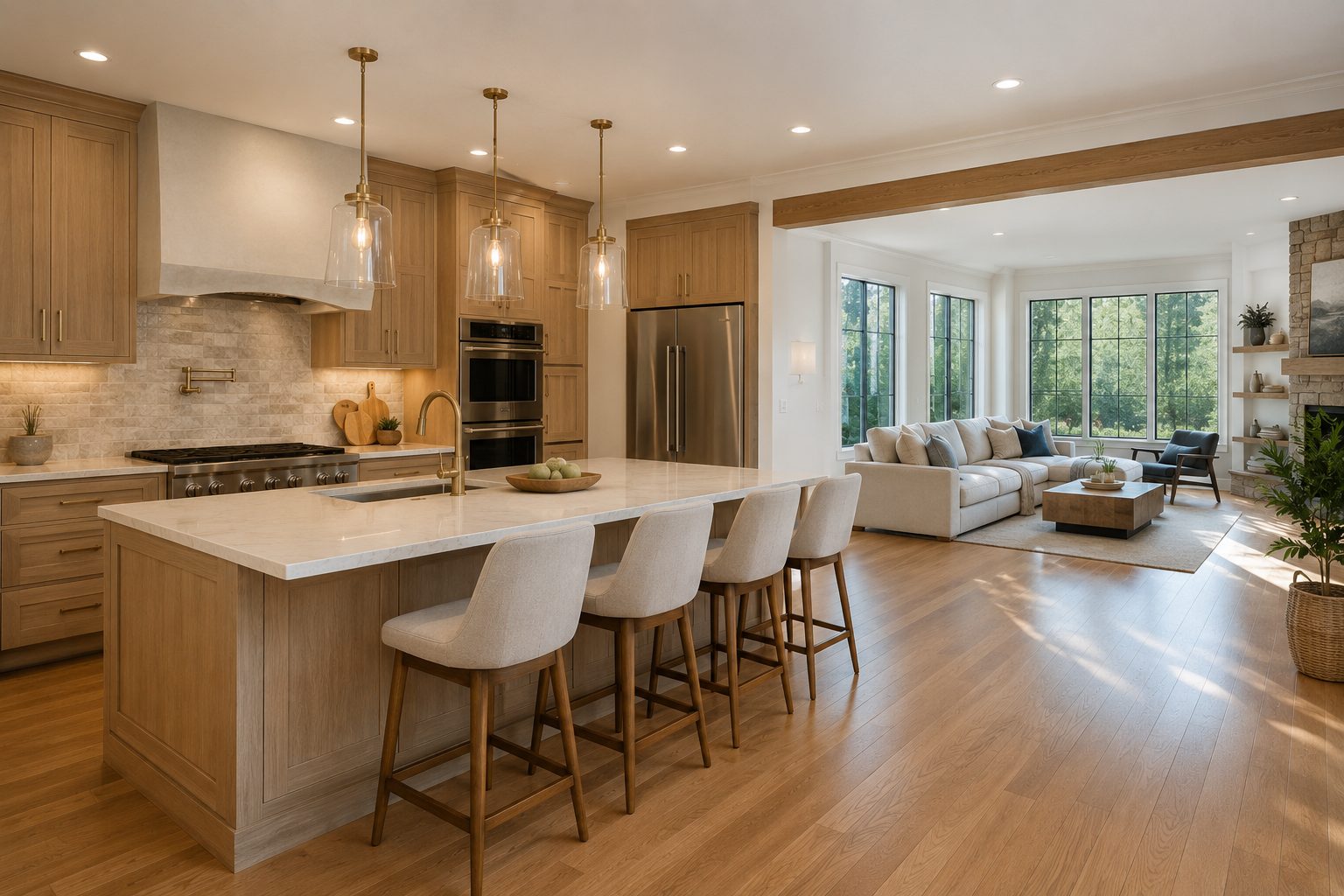
Record home remodeling investment in a Montgomery County Maryland home in 2026

Montgomery County Remodeling by the Numbers: What 173,000 Permits Reveal About How DMV Homeowners Are Investing in 2026

When homeowners ask whether now is the right time to remodel in Maryland, the honest answer isn’t an opinion. It’s data. And in Montgomery County, the data is unambiguous.

Montgomery County’s total remodeling economy reached $1.19 billion in permitted value in 2025 — an all-time record and more than double the pre-pandemic baseline of $479 million. This analysis is drawn from 173,411 building permits from the Montgomery County Department of Permitting Services spanning January 2000 through March 2026. The picture these permits paint is specific, locally grounded, and deeply relevant to any homeowner in Bethesda, Silver Spring, Rockville, Potomac, Chevy Chase, or Gaithersburg planning a renovation project in 2026. HC development

At H&C Construction Design Build, we work within this market every day. Because of this, we find permit data more useful than national surveys or trend reports — because it reflects what actual Montgomery County homeowners are actually building, at actual local costs, under the actual conditions of the most demanding permitting environment in Maryland. Here is what the numbers reveal.


The Big Picture: A Market at a Historic Inflection Point

The first and most important finding from the permit database is the scale of change. Montgomery County’s total permitted remodeling economy more than doubled from its pre-pandemic baseline of $479 million to $1.19 billion in 2025. That is not incremental growth. It is a structural transformation in how Montgomery County homeowners relate to their existing homes. HC development

This shift reflects several forces that have converged simultaneously in 2026.

The mortgage lock-in effect. Millions of homeowners across Montgomery County locked in mortgage rates between 2.5% and 3.5% during 2020 and 2021. With current rates above 6%, selling and buying a comparable home would roughly double their monthly mortgage payment. As a result, the financial incentive to stay and renovate has never been stronger. These homeowners are not moving. They are investing.

Rising home values creating renovation capacity. Montgomery County home values have appreciated significantly since 2020. As a result, homeowners have more equity to draw from — and that equity is being deployed into HELOC-funded renovations at a rate that permit data confirms clearly.

The quality threshold for resale has risen. Montgomery County buyers in 2026 expect move-in-ready homes. Homes with dated kitchens, original bathrooms, and unfinished basements are sitting on market longer and selling at discounts. As a result, the renovation calculus for homeowners who may sell in three to seven years has shifted decisively toward proactive investment.


Where the Money Is Going: Interior Renovation Dominates

The most significant structural shift in Montgomery County’s remodeling economy is the decisive movement from exterior additions toward interior renovation.

In 2005, Montgomery County issued 1,077 permits for home additions. By 2025, that number had fallen to 490 — a 55% decline that represents the longest sustained contraction in any remodeling category over the past two decades. HC development

However — and this is the critical point — total remodeling investment didn’t fall with additions. It surged. The money moved inward.

Interior renovations — kitchens, basements, and bathrooms — doubled from 706 permits in 2019 to over 1,000 in 2025. Outdoor living projects quadrupled in value. Roofing permits nearly doubled. In 2015, homeowners completed 1.4 interior renovations for every addition. By 2024, the ratio reached 2.4 to 1. HC development

In other words, the addition did not decline because homeowners stopped investing in their homes. It declined because they found better ways to use the homes they already own. The interior renovation, the finished basement, and the outdoor living space have together replaced the addition as the primary vehicle for Montgomery County homeowner investment.

This has direct implications for how homeowners should be thinking about their own renovation decisions in 2026. If you’re weighing a home addition against an interior renovation that achieves similar functional goals, the market data is telling you something important.


Community-by-Community Investment: Where Montgomery County Is Building

The permit data also reveals significant variation in investment by community — and this variation matters for homeowners calibrating their project scope against neighborhood norms.

Bethesda alone accounted for $277.5 million in remodeling investment across 920 permits — nearly a quarter of the county’s total. That figure reflects both the high density of renovation activity and the premium investment level in Bethesda’s most desirable neighborhoods — Kenwood Park, Edgemoor, Wildwood Manor, and Bannockburn, where projects regularly exceed $200,000. HC development

Silver Spring led in permit volume with 1,546 permits, reflecting the breadth of its housing stock and the diversity of project types. Silver Spring’s high permit count reflects a community making mid-range to upper-mid-range investments across a wide range of home types — kitchen renovations in 1950s Colonials, bathroom gut renovations in 1960s split-levels, and basement conversions across the full spectrum of Silver Spring’s residential neighborhoods. HC development

Rockville and Gaithersburg — Montgomery County’s two largest incorporated cities — account for significant permit volume in the mid-county region, with particularly strong kitchen and bathroom activity in established communities like King Farm, Fallsgrove, Kentlands, and Crown Farm.

Potomac and Chevy Chase represent the county’s highest-value renovation markets, with average project values that consistently exceed those of any other community. In Potomac, full custom kitchen renovations above $200,000 and primary bathroom projects above $100,000 are not outliers — they reflect the baseline expectation for homes where comparable properties sell above $2 million.


The Kitchen: Montgomery County’s Highest-Volume Interior Renovation

Montgomery County kitchen permit activity is up 8% since 2023, reflecting sustained, growing demand even as the broader real estate market has moderated. This growth is concentrated in the mid-range to premium project tier — not in cosmetic refreshes, but in full gut renovations that address layout, structural, and material quality simultaneously.

In 2026, Montgomery County kitchen remodeling is characterized by several consistent patterns.

Structural layout changes are increasingly standard. The most common kitchen goal across Bethesda, Silver Spring, and Rockville is opening the main level — removing or opening the wall between the kitchen and dining room to create a continuous, open-concept gathering space. Because most of Montgomery County’s housing stock was built before open-concept kitchen design existed, this structural work is not optional for homeowners whose goal is a contemporary layout.

Material expectations have risen. Semi-custom cabinetry that satisfied Montgomery County buyers five years ago increasingly falls short of current expectations. Fully custom cabinetry, natural stone countertops, and professional-grade appliance packages are now the standard against which finished kitchens are measured in Bethesda, Potomac, and upper Rockville sub-markets.

Permit compliance is non-negotiable. Montgomery County enforces permit requirements for kitchen renovations — particularly electrical and plumbing changes — with active inspection scheduling. As a result, the premium for working with a Licensed Contractor in Maryland who manages permit applications correctly is not just a preference. It is the difference between a project that closes cleanly and one that has compliance exposure at resale.

Our Kitchen Remodeling service covers every scope of kitchen renovation across Montgomery County.


Bathroom Permits: Flat Volume, Rising Investment

Bathroom remodel permit volume in Montgomery County has remained relatively flat year-over-year — but investment per project has risen significantly, because homeowners are making more ambitious changes rather than surface updates.

The trend is away from cosmetic bathroom refreshes and toward comprehensive gut renovations that address tile, plumbing, electrical, and layout simultaneously. In particular, the conversion from tub-shower combinations to dedicated curbless walk-in showers has become the dominant project type across primary bathroom renovations — driven by both the aesthetic preference for spa-style layouts and the practical accessibility benefits of curbless entry that resonate with Montgomery County’s aging homeowner population.

Montgomery County bathroom permit activity concentrates in its most established communities, where mid-century and 1960s to 1980s homes carry original bathrooms that have reached or exceeded the end of their practical service life. Because of this, bathroom renovation is often less a discretionary improvement and more a maintenance necessity — with the renovation serving double duty as both a functional upgrade and a system restoration.

Our Bathroom Remodeling team serves homeowners across every Montgomery County community, from targeted secondary bath updates through full primary suite transformations.


The Outdoor Living Surge: Four Times the Investment

The permit data’s most dramatic growth story is outdoor living. Total declared investment in deck and porch projects reached $152.2 million in 2025 — up from $36.4 million in 2019, a fourfold increase. Average project value rose from $28,356 to $107,823 — a 280% increase in average project investment over six years. HC development

This is not simply inflation. It is a structural shift in how Montgomery County homeowners think about outdoor space. Projects that previously consisted of a basic pressure-treated deck are now being replaced by multi-level composite decks with outdoor kitchens, covered pavilions, retractable screen systems, and fire features — projects that function more like outdoor rooms than traditional decks.

The driver of this shift is partly pandemic-era behavioral change — homeowners who invested more time at home discovered the value of functional outdoor space — and partly a recognition that outdoor living investment in Montgomery County delivers some of the strongest returns in the remodeling category, with wood decks returning 83.3% of project cost at resale, above the national average.

Our Decks & Porches service covers custom deck, screened porch, and outdoor kitchen projects across Montgomery County.


Basement Permits: The Highest-ROI Growth Category

Basement finishing permits in Montgomery County are up 5% since 2023 — modest growth in permit count that understates the investment growth, because average basement project values have risen significantly as homeowners pursue more ambitious scopes.

The shift is away from simple “rec room” finishing — basic drywall, carpet, and bar — and toward purpose-built specialty spaces: dedicated home theaters, legal bedroom and guest suite combinations, home gyms, home offices, and wet bars with custom millwork. These are basement projects designed to function as genuine additions to the home’s livable area rather than improved storage.

The financial logic for basement investment in Montgomery County is compelling. Because home additions have declined 55% in Montgomery County since 2005, homeowners seeking additional square footage are increasingly finding that finishing an existing basement delivers similar functional benefit at a fraction of the per-square-foot cost of new construction. HC development

Our Basement Remodeling service serves homeowners across Montgomery County with full basement finishing projects, including egress window installation for legal bedroom creation.


What the Data Means for Homeowners Planning a 2026 Project

For homeowners in Bethesda, Silver Spring, Rockville, Potomac, Chevy Chase, or Gaithersburg planning a renovation, this data communicates several actionable conclusions.

The market rewards proactive investment. Montgomery County homeowners who renovated before the market peaked in quality expectations are consistently commanding better prices and faster sales than those who list unimproved homes. The renovation investment threshold for competitive positioning in Montgomery County’s resale market has risen — and waiting to renovate until listing is increasingly a losing strategy.

Interior over addition for most homeowners. The 2.4-to-1 ratio of interior renovations to additions in current permit data reflects rational decision-making, not fashion. Interior renovation delivers better cost-per-square-foot value than new construction in most scenarios, competes well on ROI at resale, and produces less disruption during construction.

Scope calibration to neighborhood matters. The data shows dramatically different investment levels by community — $277.5 million in Bethesda versus more modest totals in Wheaton or Germantown. Over-improving beyond neighborhood norms consistently reduces return on investment. The right renovation scope is calibrated to the comparable sales in your specific sub-market, not to general county trends.

Licensed, permitted work is non-negotiable. Montgomery County’s active permit enforcement means that unpermitted remodeling work creates real liability at resale. The county’s permit database is accessible to buyers, lenders, and appraisers — and unpermitted work in a completed sale disclosure creates complications that can be expensive to resolve. Working with a licensed General Contractor in Maryland who manages all permits and inspections correctly from the start is not optional in this market.


H&C Construction in the Montgomery County Market

H&C Construction Design Build is based in Rockville, Maryland, and serves homeowners throughout Montgomery County — Bethesda, Silver Spring, Rockville, Potomac, Chevy Chase, Gaithersburg, North Potomac, Germantown, and all Montgomery County communities.

We are Licensed Contractors in Maryland with deep daily experience in Montgomery County’s permitting environment, housing stock, and market standards. Our design-build model — design, permitting, and construction under one accountable team — is specifically suited to this market’s complexity, because it eliminates the coordination gaps that cause most remodeling projects to run over budget or over schedule.

Browse completed projects across Montgomery County and the broader DMV in our Our Remodeling Projects portfolio.


Ready to Join Montgomery County’s Record-Setting Remodeling Economy?

The data is clear. Montgomery County homeowners are investing in their homes at a record rate — because the market rewards it, because moving doesn’t make financial sense, and because the homes they own have decades of value waiting to be realized through thoughtful renovation.

The question isn’t whether to invest. It’s where, how much, and with whom.

H&C Construction Design Build is ready to help you answer those questions specifically for your home, your community, and your goals. Request a consultation to begin the conversation.