
Smart Home Remodeling in Maryland and Northern Virginia: Building Automation Into Your Renovation From the Start
Smart home technology has moved well past the novelty stage. For homeowners in Bethesda, Rockville, Arlington, and across the DMV, automation is now a standard part of how a kitchen, bathroom, or full home remodel gets planned. Because of this shift, the smart home market is projected to grow dramatically over the next decade, and nearly half of recent whole-home remodels already include connected technology.
What’s changed isn’t just the technology itself. It’s when homeowners think about it. In the past, smart features were often added after a renovation was finished — a smart thermostat here, a video doorbell there. Today, the smarter approach is to plan automation into the renovation from day one. This means the wiring, outlets, and infrastructure are built in correctly, instead of retrofitted later at a higher cost.
At H&C Construction Design Build, we integrate smart home planning into kitchen, bathroom, and whole-home remodels across Maryland, Washington DC, and Northern Virginia. Here’s what to know before you start.
Why Planning Smart Technology Early Matters
Retrofitting smart technology into a finished space is always more expensive and more limited than planning for it during construction. Once walls are closed and finishes are installed, running new wiring becomes disruptive and costly.
As a result, the homeowners who get the most value from smart home features are the ones who address it during the design phase — before walls are framed, before tile is set, before cabinetry is installed. This is also when decisions about wiring, outlet placement, and network infrastructure are easiest and least expensive to make correctly.
In addition, because smart home ecosystems are increasingly built around interoperability standards, planning ahead also means your home is more likely to support future devices without requiring another renovation down the road.
Smart Kitchens: Where Automation Has the Biggest Impact
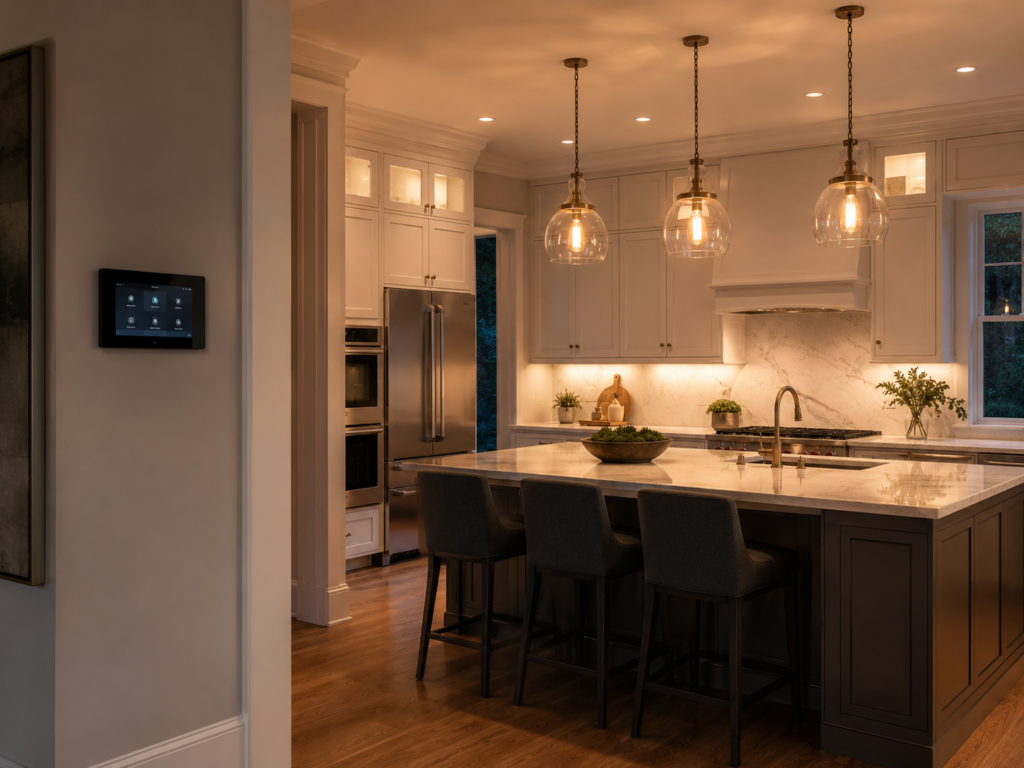
The kitchen is one of the rooms where smart technology delivers the most noticeable, everyday benefit. Our Kitchen Remodeling projects increasingly include features like these.
Adaptive and Scheduled Lighting
Lighting systems that adjust brightness and color temperature throughout the day are becoming standard in kitchen design. For example, brighter, cooler light supports focused cooking tasks during the day, while warmer, dimmer light suits evening meals and gatherings.
Smart Appliances
Refrigerators that track inventory, ovens that adjust cooking settings automatically, and dishwashers that optimize water and energy use are now common requests. Because these appliances often require specific electrical and network connections, planning for them during the remodel avoids awkward retrofits later.
Voice and App Control
Voice assistants and smartphone apps increasingly control kitchen lighting, faucets, and even small appliances. This means outlet placement and network connectivity need to be considered early in the design process, not added as an afterthought.
Concealed Wiring and Charging
A well-planned smart kitchen hides its technology. Built-in charging stations, concealed wiring for under-cabinet lighting, and properly placed network access points keep the space looking clean while still functioning intelligently.
Smart Bathrooms: Comfort Meets Technology
Bathrooms have become one of the fastest-growing categories for smart home integration. Our Bathroom Remodeling team frequently incorporates features like these into spa-style remodels.
Heated flooring with app control. Smart heated floor systems can be scheduled or adjusted remotely, so the bathroom is warm exactly when you need it.
Smart mirrors. Mirrors with built-in lighting, defogging features, and even integrated displays for weather or time are increasingly requested in primary bathroom remodels.
Digital shower controls. Programmable shower systems allow users to save preferred temperature and flow settings, similarly to how a car remembers a driver’s seat position.
Smart ventilation. Humidity-sensing exhaust fans automatically activate based on moisture levels, which helps prevent mold and mildew issues without requiring homeowners to remember to turn on a fan.
Whole-Home Automation: Tying Everything Together
Beyond individual rooms, many homeowners are interested in whole-home automation that coordinates HVAC, lighting, and security as a single connected system. Because this requires more extensive wiring and hub placement, it’s a feature best planned during a full-scope renovation.
Centralized Climate Control
Smart thermostats and zoned HVAC systems can automatically adjust temperature based on time of day, occupancy, or even learned household patterns. This not only improves comfort but also helps reduce energy costs over time.
Integrated Security
Smart locks, video doorbells, and discreetly placed security cameras are now commonly built directly into the design of a remodel, rather than added as visible, bolted-on devices afterward. This approach results in a cleaner look and often better placement for actual security effectiveness.
Unified Lighting Systems
Rather than controlling each room’s lighting separately, many homeowners want one connected system across the entire home. This requires more upfront planning for wiring and hub placement, but it delivers a noticeably more seamless experience.
Energy Monitoring
Smart energy monitoring systems track usage in real time, helping homeowners identify where they can reduce consumption. Because this typically requires installation at the electrical panel level, it’s most efficiently added during a renovation that already involves electrical work.
What Smart Home Planning Actually Requires
Successfully integrating smart technology into a remodel involves more than simply buying devices. A few planning elements make the biggest difference.
Adequate wiring infrastructure. Even wireless smart devices often benefit from nearby wired power and network access points. Planning these locations during construction avoids unsightly cords or weak signal areas later.
Electrical capacity. Smart systems, especially whole-home automation hubs and multiple connected devices, can add meaningful electrical load. As a result, some projects require a panel evaluation or upgrade as part of the renovation.
Network coverage. Reliable Wi-Fi coverage throughout the home is essential for smart systems to function consistently. In larger or older homes, this sometimes means planning for additional access points or wired network drops during construction.
Device compatibility. Choosing devices that work within a unified ecosystem — rather than a collection of incompatible individual gadgets — makes daily use significantly easier and protects the investment as the system grows over time.
A licensed General Contractor in Maryland with experience in smart home integration can help you make these decisions correctly from the start, rather than discovering limitations after construction is complete.
Smart Technology and Home Value
Beyond day-to-day comfort, smart home features can have a measurable effect on resale value. Research indicates that smart home features can improve property value by a modest but meaningful margin, while also increasing buyer interest and marketability. For homeowners in Bethesda, Arlington, and across the DMV planning a renovation with resale in mind, this makes smart technology a worthwhile consideration even for those who aren’t personally tech-focused.
The H&C Construction Design-Build Process
Because smart home integration touches electrical, network, and finish work simultaneously, coordinating it through a single design-build process avoids the gaps that occur when these decisions are made separately or too late.
Design consultation. We discuss your goals for automation, security, and convenience alongside your broader renovation plans.
Design development. We plan wiring, outlet placement, and network infrastructure to support your chosen smart home features, integrated into the overall design.
Permitting. We handle any required permits for electrical work as part of the broader project.
Construction. Our licensed crews install the necessary infrastructure during construction, ensuring smart features are built in rather than bolted on.
Final walkthrough. We review the completed space and confirm your smart systems are functioning as planned.
You can view examples of completed projects across Maryland, DC, and Virginia in our Our Remodeling Projects portfolio.
Is Smart Home Integration Right for Your Renovation?
Smart home features aren’t an all-or-nothing decision. Some homeowners want comprehensive whole-home automation, while others prefer to start with a few targeted features — smart lighting in the kitchen, a heated bathroom floor, or a basic security system. The right approach depends on your budget, your comfort level with technology, and your long-term plans for the home.
What matters most is that the decision gets made during the design phase, when adding the necessary infrastructure is simplest and least expensive. Even if you don’t install every device immediately, planning the wiring and electrical capacity during your remodel keeps future options open.
Ready to Plan Your Smart Home Remodel?
H&C Construction Design Build serves homeowners across Maryland, Washington DC, and Northern Virginia — including Rockville, Bethesda, Potomac, Silver Spring, Chevy Chase, Gaithersburg, Montgomery County, Arlington, Alexandria, and Fairfax. Whether you’re planning a smart kitchen, a spa-style smart bathroom, or whole-home automation, our design-build team integrates the technology correctly from the start.
Explore our Full Home Remodeling service and request a consultation to begin your project.
Free consultation
Ready to Start Your Full Home Remodeling Project?
H&C Construction serves Maryland, Virginia, and Washington DC. Get a free consultation today.
Local service areas
Remodeling Guides Near You
Planning home renovation in Montgomery County? Browse local guides by city — permits, neighborhoods, and recent H&C Construction projects.
City hubs