Posted on

Low-Maintenance Exterior Remodeling in Maryland & Northern Virginia | H&C Construction

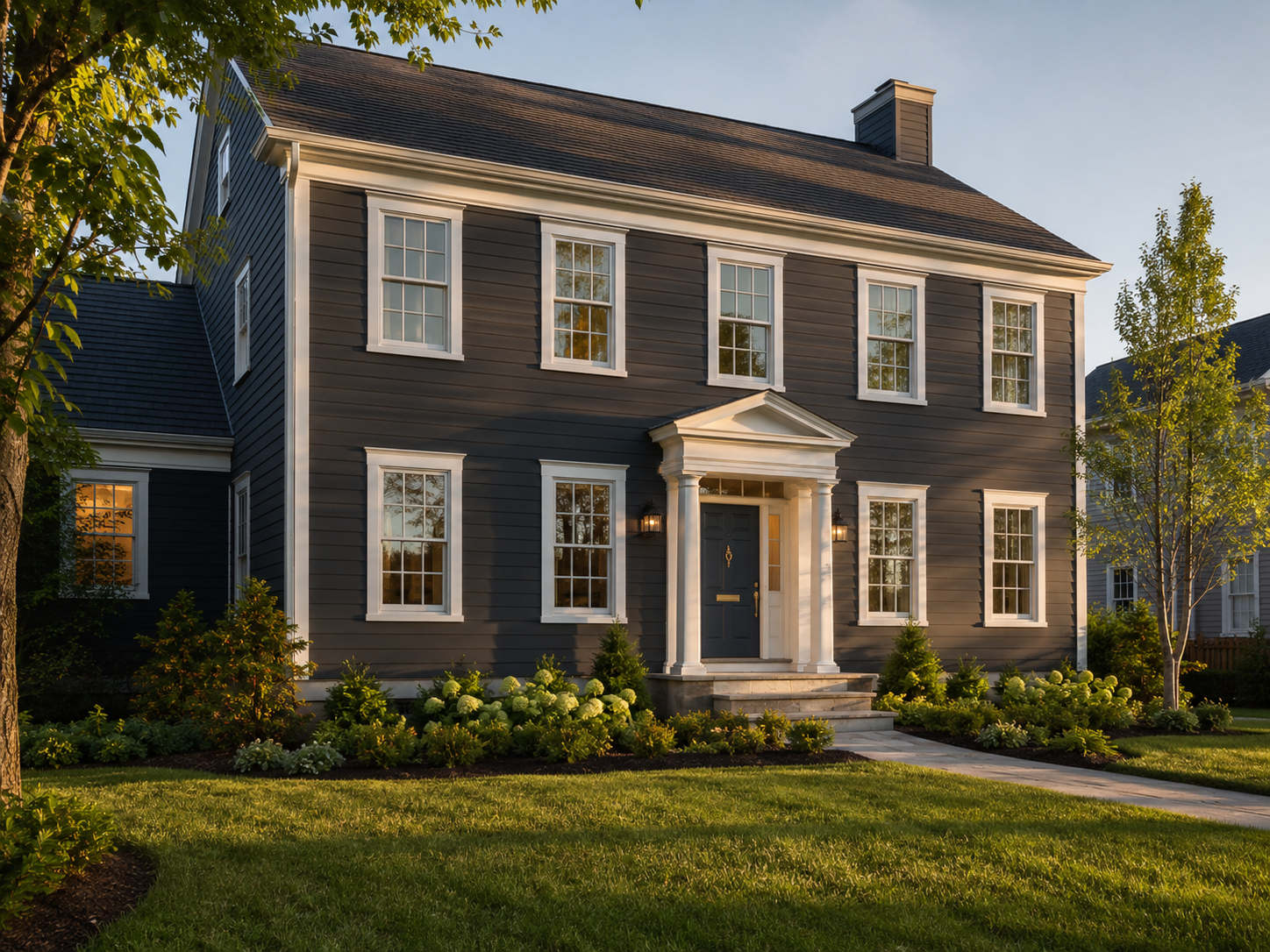
Low-maintenance fiber cement siding on a Colonial home in Maryland

Low-Maintenance Exterior Remodeling in Maryland and Northern Virginia: Siding, Materials, and Upgrades Built for the DMV Climate

Maryland and Northern Virginia put home exteriors through a genuine test. Humid summers push moisture into every material that isn’t properly engineered to resist it. Seasonal freeze-thaw cycles expand and contract siding, trim, and caulking year after year. Summer storms bring wind, hail, and heavy rain that expose weak points in any exterior system. For homeowners in Bethesda, Rockville, Potomac, Silver Spring, Arlington, and Fairfax, the question isn’t just what looks good — it’s what holds up.

Because of this, low-maintenance exterior materials have moved from a premium preference to a mainstream priority across the DMV. Homeowners who spent years repainting wood siding, replacing rotted trim, or watching composite boards warp in Maryland’s summer heat are choosing differently now. The right exterior system, properly installed, protects your home for decades with significantly less upkeep than what many existing homes currently have.

At H&C Construction Design Build, we help homeowners across Maryland, Washington DC, and Northern Virginia plan and execute exterior remodeling projects that perform in this specific climate. Here’s what you need to know.


Why the DMV Climate Demands Better Exterior Materials

Maryland and Northern Virginia homeowners face a combination of weather conditions that are particularly hard on exterior materials.

High humidity and summer moisture. The DC metro area regularly experiences humidity levels above 80% in summer months. As a result, any wood-based siding material that isn’t properly sealed and maintained becomes vulnerable to moisture infiltration, rot, and mold growth. Most wood siding on older DMV homes requires repainting or resealing every three to five years to maintain that protection — and many homeowners fall behind.

Freeze-thaw cycles. Maryland winters produce repeated cycles of freezing and thawing that cause materials to expand and contract. Over time, this movement cracks caulk, opens seams, and creates pathways for moisture intrusion behind siding. Materials with poor dimensional stability — particularly lower-grade vinyl and older composite siding — are especially vulnerable.

Summer storms and wind. As discussed in H&C’s storm-readiness guide, late June through September brings significant storm exposure across the DMV. High winds can loosen or lift inadequately fastened siding panels. Driven rain finds its way through any weak point in the exterior envelope.

Pest pressure. Termites are a genuine concern in Maryland and Northern Virginia. Traditional wood siding and trim is a prime target. Materials that eliminate wood fiber from their composition remove this vulnerability entirely.


Fiber Cement Siding: The Gold Standard for the DMV Market

Fiber cement has become the dominant high-performance siding choice for Maryland and Northern Virginia homes — and the data supports why. Fiber cement appeared on approximately 21% of new single-family homes nationally in recent years, a share that continues growing. In DMV remodeling projects, its market share is higher still, because the climate conditions that make fiber cement valuable are exactly the conditions homeowners here face.

What fiber cement is. Fiber cement is a composite material made from Portland cement, sand, and cellulose fibers — essentially engineered to deliver the aesthetic of natural wood with the structural performance of masonry. It cannot rot, it will not warp or swell with moisture absorption, it resists termites and other pests, and it carries Class A fire resistance. James Hardie’s HardiePlank product line — the most widely specified fiber cement brand — now carries a 30-year non-prorated limited transferable warranty on the substrate.

How it performs in Maryland’s climate. Because fiber cement doesn’t absorb moisture the way wood does, it is resistant to the mold and mildew growth that high humidity accelerates in organic materials. Similarly, its dimensional stability under temperature swings addresses the freeze-thaw vulnerability that deteriorates vinyl and wood. TW Ellis, a Maryland remodeling contractor, describes fiber cement as one of the most durable options for the Maryland climate specifically because of its resistance to moisture and seasonal expansion and contraction.

What it looks like. Modern fiber cement siding — particularly capped and factory-primed products — closely replicates the visual texture and profile of natural wood siding, including wood grain, shake, and board-and-batten profiles. Factory-applied finishes, such as James Hardie’s ColorPlus Technology, bake color directly into the coating for superior adhesion and color retention. The 2026 James Hardie Color of the Year is Iron Gray — a deep, sophisticated charcoal that pairs well with the warm-toned trim details trending across the DMV market.

Maintenance reality. Fiber cement siding requires repainting every 10 to 15 years rather than the 3 to 5 years typical of bare wood siding. Between painting cycles, it requires little more than occasional cleaning. For homeowners accustomed to wood siding’s annual maintenance demands, this is a significant improvement.


Vinyl Siding: When It Works, and When It Doesn’t

Vinyl siding remains the most widely installed siding type in Maryland due to its affordability and availability. However, not all vinyl siding performs equally in the DMV climate — and this distinction matters.

Higher-quality vinyl products with adequate panel thickness — generally 0.044 to 0.046 inches or above — perform well in Maryland and Virginia. They resist rot, insects, and moisture, and they come in a wide range of profiles and colors. For homeowners whose primary priority is an affordable, low-maintenance exterior update, quality vinyl is a legitimate option.

Lower-grade vinyl, however, presents meaningful problems in Maryland’s climate. Standard weight vinyl can become brittle over time under UV exposure. More importantly, it is susceptible to warping in Maryland’s intense summer heat — particularly on south- and west-facing walls. In addition, lower-grade vinyl rattles and loosens in high winds if not properly installed with appropriate expansion gaps.

The installation quality matters as much as the product quality. Vinyl that doesn’t allow adequate expansion and contraction buckles in summer heat. An experienced General Contractor in Maryland who understands these material properties is critical to a vinyl installation that performs long-term.


Engineered Wood Siding: A Middle Ground Worth Considering

Engineered wood siding — such as LP SmartSide — blends wood fiber and resin into a product that resists rot, insects, and swelling better than traditional wood, while providing a more authentic wood grain appearance than vinyl. It is lighter than fiber cement, easier to work with, and typically priced between vinyl and fiber cement.

In the DMV market, engineered wood is most commonly chosen when homeowners want the visual warmth of natural wood with better performance than traditional wood siding. It carries a 5/50 limited warranty — five years of full replacement coverage, then 50 years of prorated coverage. However, it does require that factory-applied primer finishes be maintained with paint, and moisture management around windows, doors, and trim is important to its long-term performance.


Exterior Trim: Where Many Homeowners Underinvest

Siding gets most of the attention in exterior remodeling conversations. In practice, exterior trim — corner boards, window trim, fascia, and soffit — is often the first place a home’s exterior shows age and requires maintenance. Because of this, coordinating trim material upgrades with a siding project delivers meaningfully better long-term results than simply replacing siding while leaving painted wood trim in place.

Non-rot materials for trim — including PVC trim boards and fiber cement trim products — eliminate the wood rot, paint failure, and pest vulnerability that make traditional wood trim a recurring maintenance cost. In Maryland and Northern Virginia, where moisture and temperature swings are constant, non-rot trim materials deliver a low-maintenance exterior system rather than simply a low-maintenance siding.


Exterior Color Trends for Maryland and Northern Virginia Homes in 2026

Along with material selection, color decisions carry significant weight in exterior remodeling — both for curb appeal and for long-term resale value.

In 2026, DMV exterior color trends reflect the same warmth-over-minimalism shift visible in kitchen and bathroom design. The 2026 James Hardie Color of the Year, Iron Gray, is emblematic of this direction — a deep, sophisticated neutral that reads as contemporary without being stark. Warm charcoal tones paired with crisp white or cream trim are dominant across new construction and renovation in Bethesda and Potomac.

Beyond the leading charcoal trend, other popular 2026 exterior palettes for Maryland and Northern Virginia homes include:

  • Warm greige and taupe with deep navy or black trim accents
  • Soft warm white with bronze or dark charcoal trim for a clean contemporary look
  • Sage green for homes with strong landscaping and a more organic aesthetic

Color decisions matter especially for fiber cement siding, because factory-applied finishes come with specific color options and warranty implications. Choosing a factory-applied color — rather than field-painted — delivers superior adhesion, color consistency, and longer intervals between repainting.


What Exterior Remodeling Actually Involves

A quality exterior remodel is a more comprehensive project than most homeowners initially anticipate. Because of this, understanding the full scope helps avoid mid-project budget surprises.

Removing existing siding. In most cases, the right approach is a full tear-off of existing siding down to the sheathing — allowing an inspection of what’s behind the siding and ensuring the new installation begins on a clean, inspected substrate. Siding over existing siding may seem like a shortcut, but it traps moisture and adds weight that can cause problems over time.

Inspecting and replacing sheathing. Removing old siding frequently reveals sheathing damage — particularly around windows, doors, and any penetrations. This is the right time to replace damaged sections and address any moisture-related issues before new siding goes on.

Weather barrier installation. A continuous house wrap or weather-resistive barrier behind the new siding is required by code and critical to long-term performance. This layer manages any moisture that penetrates behind the siding and protects the structural envelope.

Window and door trim integration. New siding must be properly integrated with window and door openings — with correctly applied flashing and caulking at every penetration. This detail work is where many lower-cost installations cut corners, and it’s where water intrusion problems originate.

Final paint and caulking. For field-painted products, color application and careful caulking at all joints, trim intersections, and penetrations complete the installation and are critical to long-term performance.


Exterior Remodeling and H&C’s Design-Build Approach

Because exterior remodeling touches structural conditions, moisture management, and finish details simultaneously, coordinating all of these under one licensed, accountable team produces better results than managing multiple separate contractors.

Our Restoration & Rebuild team handles exterior projects alongside any interior renovation work within the same design-build process. If your exterior project connects to a broader renovation — a Full Home Remodeling scope, an addition that needs exterior materials matched — we coordinate the full project under one plan.

As fully Licensed Contractors in Maryland, we manage all permit applications and inspections required for exterior remodeling projects. We also understand the specific permit requirements in Montgomery County, Fairfax County, and Arlington — which vary in their demands around material specifications, energy compliance, and in some cases historic review.

Browse completed exterior and restoration projects across Maryland, DC, and Virginia in our Our Remodeling Projects portfolio.


The Right Time to Address Your Exterior

For many homeowners in Bethesda, Chevy Chase, Silver Spring, and established Northern Virginia neighborhoods, the exterior remodeling question is not whether but when. Homes built in the 1970s, 80s, and 90s are approaching the end of the practical service life for their original siding systems. The combination of aging materials, accumulated deferred maintenance, and the increasing value of these properties makes exterior remodeling both timely and financially sensible.

The ideal time to address an exterior is proactively — before a storm event forces reactive repairs, and before age-related deterioration allows moisture intrusion that creates broader structural damage.


Ready to Plan Your Exterior Remodel?

H&C Construction Design Build serves homeowners across Maryland, Washington DC, and Northern Virginia — including Rockville, Bethesda, Potomac, Silver Spring, Chevy Chase, Gaithersburg, Montgomery County, Arlington, Alexandria, and Fairfax. Whether you’re planning a full exterior re-skin, a targeted siding replacement, or a comprehensive exterior restoration, our design-build team is ready to give you an honest assessment and a realistic plan.

Explore our Restoration & Rebuild service and request a consultation to start planning today.
Posted on

Outdoor Kitchens & Multi-Level Decks in Maryland & Northern Virginia 2026 | H&C Construction

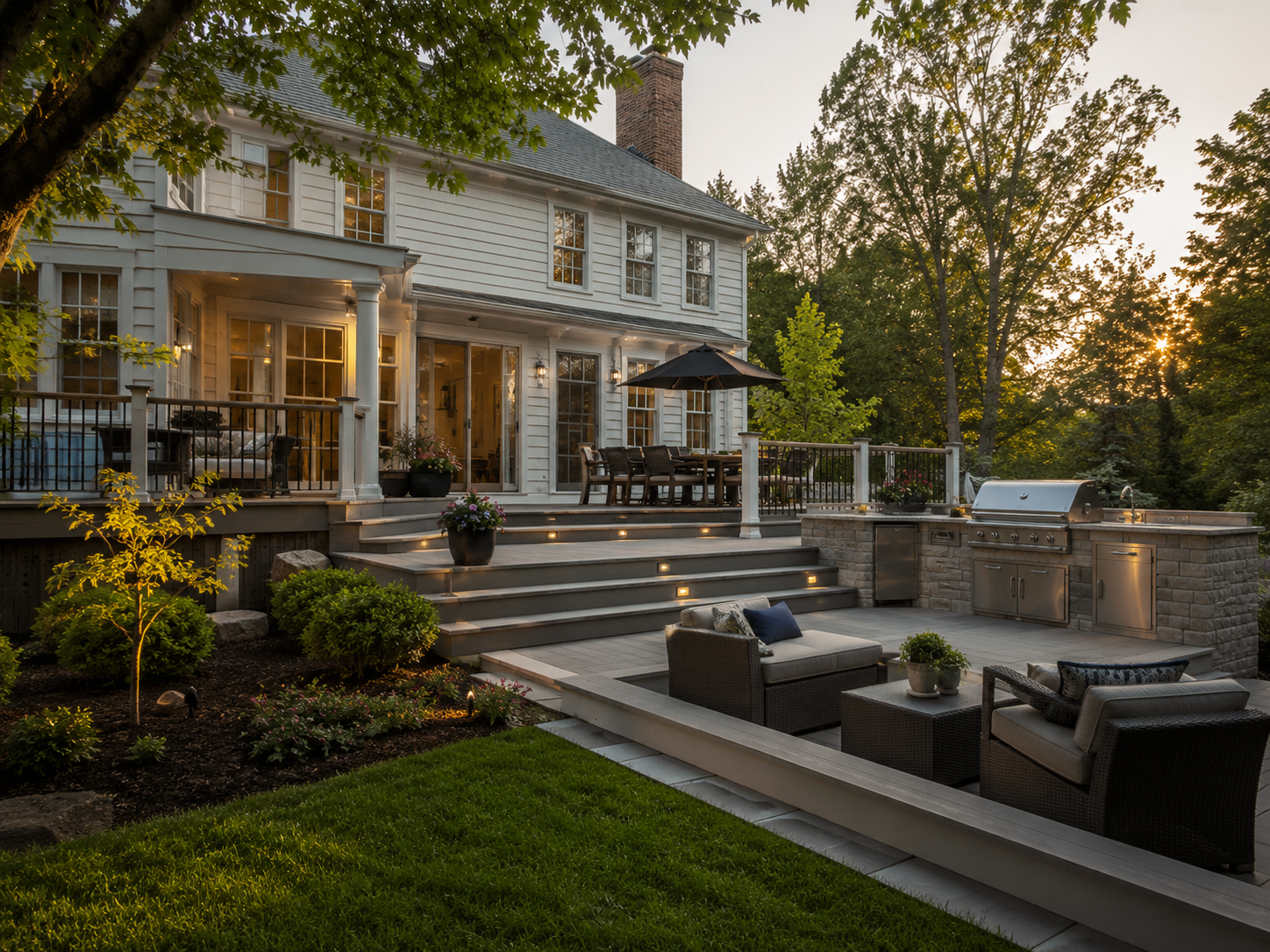
Multi-level deck with outdoor kitchen on a Maryland home

Outdoor Kitchens and Multi-Level Decks in Maryland and Northern Virginia: The 2026 Guide to Building a Complete Outdoor Living Space

Something significant has shifted in how Maryland and Northern Virginia homeowners think about outdoor space. What was once a simple deck with a gas grill has evolved into something far more considered — a designed outdoor environment with distinct zones, purpose-built features, and a level of finish that mirrors the interior of the home. And the numbers tell the story clearly.

An analysis of 36,205 deck and porch permits from the Montgomery County Department of Permitting Services spanning January 2000 through March 2026 reveals a market that has undergone a fundamental transformation. Total declared investment reached $152.2 million in 2025 — up from $36.4 million in 2019, a fourfold increase. Average project value rose 280%, from $28,356 to $107,823. Most tellingly, projects valued at $200,000 or more grew from 2.4% of all deck permits in 2019 to 13.2% in 2025 — meaning one in eight deck projects in Montgomery County now exceeds $200,000 in declared value.

This isn’t simply inflation. The projects driving the $200,000-plus segment are not decks in the traditional sense. They are integrated outdoor living environments that include covered pavilions, outdoor kitchens with gas and electrical connections, fire features, heaters, retractable screens, and weatherproof entertainment systems.

At H&C Construction Design Build, we design and build outdoor living projects across Maryland, Washington DC, and Northern Virginia. Here’s what’s driving this evolution — and how to plan a complete outdoor living space that delivers genuine daily value.


Why Outdoor Kitchens Have Become the Center of the DMV Outdoor Experience

A decade ago, an outdoor kitchen was a premium feature for a subset of homeowners. In 2026, it has moved into mainstream demand across Bethesda, Rockville, Potomac, and Fairfax County. Outdoor kitchens are becoming the primary cooking location from May through October — not just for weekend grilling, but for daily family meals throughout the warmer months. Designbuildersmd

Several forces are driving this shift.

The DMV’s indoor heat problem. Anyone who has run an oven in a Maryland kitchen during a July heat wave understands the motivation. Cooking indoors during peak summer adds meaningfully to cooling loads, makes the kitchen uncomfortable, and pushes the household outside anyway. An outdoor kitchen solves this elegantly — all cooking heat stays outside, and the indoor kitchen becomes a prep station rather than the main event.

The entertaining culture of the DC metro area. Northern Virginia and Montgomery County homeowners entertain frequently and expect their spaces to reflect that. A complete outdoor kitchen — with a built-in grill, side burners, a refrigerator, and proper counter space — transforms outdoor entertaining from casual to genuinely capable.

Remote and hybrid work. With hybrid work now standard across the DMV’s professional workforce, homeowners want flexible outdoor spaces that serve multiple purposes beyond entertaining. An outdoor kitchen paired with a covered porch or pavilion creates an outdoor workspace, dining environment, and social hub that supports daily use rather than just occasional weekends.


What a Complete Outdoor Kitchen Includes

A properly designed outdoor kitchen is a permanent installation — built on a solid substrate, with properly run gas lines, dedicated electrical circuits, and weatherproof finishes throughout. It is not a freestanding grill with a countertop beside it. Because of this, the planning requirements overlap meaningfully with interior kitchen remodeling.

Built-in grill station. The centerpiece of most outdoor kitchens is a built-in gas grill — typically 36 to 48 inches — installed in a stone, tile, or stainless steel cabinet base. Unlike freestanding grills, built-in units are connected to the home’s natural gas line, eliminating propane tanks and providing consistent fuel supply.

Counter space and prep surfaces. Granite, quartzite, and porcelain are all popular outdoor countertop choices, selected for resistance to UV fading, freeze-thaw cycling, and moisture. Concrete countertops are also common in contemporary outdoor kitchen designs. Adequate counter space on both sides of the grill is a practical necessity that many outdoor kitchen concepts underestimate.

Outdoor-rated refrigeration. A dedicated outdoor refrigerator — rated for outdoor temperature swings — keeps beverages and ingredients accessible without requiring trips inside. Some outdoor kitchen designs incorporate a second under-counter refrigerator specifically for beer and wine.

Side burners and accessories. Side burners, warming drawers, and pizza ovens are common additions in larger outdoor kitchen configurations. They expand the cooking capability and make the outdoor kitchen genuinely independent from the indoor one during peak entertaining seasons.

Sink and water connection. An outdoor sink — connected to a plumbed water supply — is a meaningful upgrade that makes food prep, cleanup, and handwashing dramatically more convenient. This requires planning a water supply line extension and a drain during design, before construction begins.

Electrical infrastructure. Dedicated outdoor-rated circuits power the refrigerator, under-counter lighting, outlets for small appliances, and any powered accessories. As with interior kitchens, electrical planning during the design phase is far less expensive than retrofitting later.


Multi-Level Decks: Creating Distinct Outdoor Rooms

Beyond the outdoor kitchen, the 2026 direction in DMV deck design is strongly toward multi-level configurations that create distinct, purposeful zones rather than a single undifferentiated platform.

In 2026, the trend is toward complex, multi-level designs that create distinct outdoor rooms for different activities. Maryland and Virginia’s varied topography means many homes sit on sloped lots — and multi-level decks take advantage of grade changes that a single-level deck would simply cover up. Designbuildersmd

A well-designed multi-level outdoor space typically organizes into two or three distinct areas.

The primary entertaining level — typically at or near the main interior level of the home — connects directly to the kitchen, dining room, or family room through a sliding or folding door. This level usually includes the outdoor kitchen, a dining area for six to twelve people, and primary access to the outdoor space.

The secondary relaxation level — one or two steps down from the primary level — provides a more intimate seating area, typically organized around a fire table or fire pit, with comfortable lounge furniture rather than dining chairs. This zone is where the family gravitates after dinner for conversation and evening use.

The yard-level transition — if the grade allows — connects the deck structure to the lawn through wide stairs, creating a flowing connection between the built structure and the natural landscape.

This zoned approach mirrors how DMV homeowners actually use their outdoor spaces across a typical evening — moving from cooking and dining on the primary level to relaxing and socializing on the secondary level as the evening progresses.


Covered Structures: Extending the Season and the Investment

One of the most significant evolutions in 2026 DMV outdoor living is the integration of covered structures — pergolas, pavilions, and attached screened sections — as standard components of premium outdoor living spaces rather than add-ons.

The motivation is straightforward. Maryland and Northern Virginia’s climate limits the comfortable use of fully open outdoor spaces to perhaps four to five months per year on a consistent basis. Covered structures, shade features, and screening systems extend that usability window significantly — and in some configurations, to nearly year-round.

Covered structures range from simple freestanding pergolas to fully roofed pavilions with insulated ceilings, overhead fan systems, and infrared heating elements. The most sophisticated configurations — which are driving the $200,000-plus project values in Montgomery County permit data — include retractable screen systems that allow the covered area to open fully on perfect evenings and close against insects, rain, and shoulder-season temperatures.

When a covered outdoor space is designed and built alongside the deck structure, rather than added later, the structural integration is seamless and the cost is typically 20% to 30% less than building the two elements as separate projects.


Material Choices for 2026 Outdoor Living in Maryland and Virginia

In 2026, over 80% of clients choose composite decking for its long-term value and low maintenance, making it the dominant material choice in Maryland and Virginia. The data from Montgomery County reflects this: premium composite installations are driving the average project value increases. Designbuildersmd

Within composite options, capped composite — from Trex, TimberTech, and Fiberon — is the default choice for most new decks. A polymer cap encases the board on all four sides, making it highly resistant to staining, fading, moisture, and mold. No sanding, no staining, no annual sealing. Warranties typically run 25 to 50 years. Designbuildersmd

Beyond the decking surface, several material choices define the overall aesthetic quality of the outdoor living space.

Railing systems. Cable railing and glass panel systems — both of which maintain open sightlines — are strongly preferred in Bethesda and Potomac properties where backyard views or landscaping are a meaningful feature. Black aluminum and matte black systems pair well with the warm-toned composite palettes dominating 2026 deck design.

Outdoor flooring options. Porcelain tile, natural stone, and permeable pavers are increasingly used in combination with composite decking — particularly for the outdoor kitchen zone, where a tiled surface performs better than composite around cooking equipment.

Lighting. Deck lighting has evolved from occasional post caps to comprehensive, thoughtfully designed systems that enhance safety, ambiance, and usability. 2026 decks are designed and furnished like interior living rooms — comfortable, stylish, and fully appointed. Designbuildersmd


The Connection Between Outdoor Living and the Interior Kitchen

Because outdoor kitchens operate as extensions of the home’s cooking and entertaining infrastructure, the best projects coordinate the outdoor kitchen design with the interior kitchen. In fact, many DMV homeowners undertaking a Kitchen Remodeling project simultaneously plan an outdoor kitchen — creating a coordinated indoor-outdoor cooking environment rather than two separate, disconnected spaces.

The connection point between the indoor kitchen and the outdoor living area — the door, the transition, the sightlines between the two spaces — is itself a design decision that benefits from being planned as a whole.

Our design-build team coordinates Decks & Porches projects alongside interior remodeling scopes regularly, ensuring the indoor-outdoor relationship is designed intentionally rather than treated as a detail to figure out after construction begins.


Permits and Professional Requirements for Outdoor Living Projects

Outdoor kitchen installations involve gas line extensions, electrical circuits, and sometimes plumbing — all of which require permits in Maryland and Northern Virginia. Deck structures attached to the home also require building permits in every DMV jurisdiction, with structural drawings, engineering stamps where required, and inspections at multiple construction stages.

As fully Licensed Contractors in Maryland, we manage all permit applications and coordinate with the relevant county building departments as part of every project. Gas line and electrical work performed without permits by unlicensed contractors creates liability, safety risk, and resale complications that homeowners discover at the worst possible time.


The H&C Construction Design-Build Process for Outdoor Living

Our outdoor living projects follow the same structured design-build process we use across all our services.

Design consultation. We visit your property, assess the space, discuss how you want to use it, and review material and structure options that match your budget and lifestyle.

Design development. We create a detailed plan addressing layout, outdoor kitchen specifications, structural requirements, electrical and gas planning, lighting, and material selections.

Permitting. We handle all permit submissions with the relevant county building department, including gas, electrical, and structural permits where applicable.

Construction. Our licensed crews build every component — from foundation and framing through decking, outdoor kitchen installation, and lighting — under one coordinated schedule.

Final walkthrough. We review every element of the completed outdoor space with you before closing out the project.

Browse completed outdoor living projects across Maryland, DC, and Virginia in our Our Remodeling Projects portfolio.


Building the Outdoor Space the DMV Market Is Investing In

The Montgomery County data is clear. DMV homeowners are not building simple decks anymore. They are building outdoor environments — designed spaces with distinct zones, quality materials, and features that deliver daily use across six to seven months of the year. The investment levels reflect genuine value: outdoor living quality is now a top-three factor in buyer decision-making in Bethesda, Potomac, and Chevy Chase, according to local real estate professionals.

For homeowners ready to plan that kind of project, the right first step is a professional consultation with a licensed General Contractor in Maryland who has specific experience in the DMV outdoor living market.


Ready to Plan Your Complete Outdoor Living Space?

H&C Construction Design Build serves homeowners across Maryland, Washington DC, and Northern Virginia — including Rockville, Bethesda, Potomac, Silver Spring, Chevy Chase, Gaithersburg, Montgomery County, Arlington, Alexandria, and Fairfax. Whether you’re planning an outdoor kitchen, a multi-level deck, a covered pavilion, or a complete outdoor living environment, our design-build team is ready to help you plan it right.

Explore our Decks & Porches service and request a consultation to start planning your outdoor space.