How to Plan a Whole-Home Remodel in Maryland and Northern Virginia: A Room-by-Room Guide for Homeowners Ready to Go All In
There’s a specific moment many homeowners reach. It isn’t a single room that’s frustrating anymore. It’s the whole house. The kitchen flows wrong. The bathrooms are dated. The basement is wasted. The layout no longer matches how the family lives. At that point, patching problems one room at a time stops making sense — and a comprehensive, coordinated whole-home remodel becomes the cleaner and often smarter path forward.
More homeowners in Maryland, Washington DC, and Northern Virginia are reaching that moment in 2026 than ever before. According to the 2026 Houzz Renovation Plans Report, more than 9 in 10 homeowners plan to move forward with remodeling projects this year, and 67% expect to keep or even expand their planned scope. Nationally, homeowners are staying in their homes longer — now averaging roughly twelve years — and investing in genuine transformations rather than incremental updates. Scope consolidation has become the defining project trend of the year.
At H&C Construction Design Build, we design and build whole-home remodels across Maryland, Washington DC, and Northern Virginia. This guide walks through how to plan one correctly — before a single wall is opened.
What a Whole-Home Remodel Actually Means
A whole-home remodel isn’t simply a collection of individual room renovations. It’s a coordinated transformation of multiple spaces — sometimes the entire interior — under one unified design vision, one sequenced construction plan, and one accountable team.
In practice, this means:
- Flooring and trim are consistent across the home, not chosen room by room at different times.
- Electrical, plumbing, and HVAC systems are evaluated and upgraded during the same construction window, when walls are already open.
- Smart home infrastructure, lighting, and network connectivity are planned across the full home rather than retroactively patched into finished spaces.
- The design language — materials, colors, proportions — reads as intentional throughout the home rather than a series of separately decorated rooms.
Because of this integration, a whole-home remodel typically delivers a more cohesive result, a more efficient construction process, and a better total value than the same work done piecemeal over several years.
Step One: Define Your Goals Before You Define Your Budget
The most common planning mistake in whole-home remodeling is starting with a number rather than starting with a vision. A budget without a clear scope is just a guess. A scope without a clear sense of priority is a list of everything you’ve ever wanted, with no framework for deciding what matters most.
Start instead with these foundational questions.
Are you remodeling for daily life, or for eventual sale? The answer shapes which projects to prioritize and which materials make sense. Homeowners planning to stay for ten or more years have different calculus than homeowners planning to sell in three to five.
Which rooms affect your daily life most? The kitchen and primary bathroom typically score the highest “joy impact” after remodeling. As a result, they’re almost always included in whole-home projects — not because someone told you to, but because they deliver the most noticeable daily improvement.
What are the home’s structural or system limitations? Older homes across Bethesda, Chevy Chase, and Silver Spring frequently have electrical panels that need upgrading, plumbing that needs updating, or insulation levels that fall below modern standards. A whole-home project is the optimal time to address these, because trades are already on-site and walls are already open.
What’s non-negotiable, and what’s aspirational? Separating must-haves from nice-to-haves early helps guide budget decisions when trade-offs become necessary.
Step Two: Understand What Drives Whole-Home Remodeling Costs in Maryland and Virginia
Whole-home remodeling costs in the DMV vary significantly based on scope, materials, home size, and structural conditions. Several factors move costs in meaningful ways.
Finish level. The single largest variable in a whole-home remodel is material and finish selection. Builder-grade cabinetry, entry-level countertops, and standard fixtures cost a fraction of custom millwork, natural stone, and premium hardware — but they deliver a fundamentally different result.
Structural changes. Projects that involve removing walls, reconfiguring floor plans, or addressing load-bearing elements require structural engineering and add meaningfully to the budget. However, because these changes are most efficiently made during a whole-home project — when construction is already underway — the per-impact cost is often lower than it would be in a standalone structural project.
System upgrades. Electrical panel replacement, full plumbing repiping, HVAC replacement, and insulation upgrades are major cost drivers in whole-home projects — but they also protect the investment long-term by ensuring the home’s systems can support the upgraded interior for years to come.
Contingency. Any experienced contractor in the DMV recommends budgeting a 15% to 20% contingency on top of the construction estimate. Older homes reveal realities — outdated wiring behind walls, unexpected moisture damage, undersized joists — that can only be confirmed once construction begins. A contingency is not an expectation of problems. It’s honest financial planning.
For high-quality whole-home remodels in the DMV, expect investment levels that reflect the market’s cost of labor, materials, and permitting. A Licensed Contractor in Maryland with relevant project experience can provide detailed estimates once the scope is defined.
Step Three: Build a Room-by-Room Scope
A whole-home remodel is planned room by room and system by system before it’s executed. Here’s how each major area typically contributes to the full scope.
Kitchen
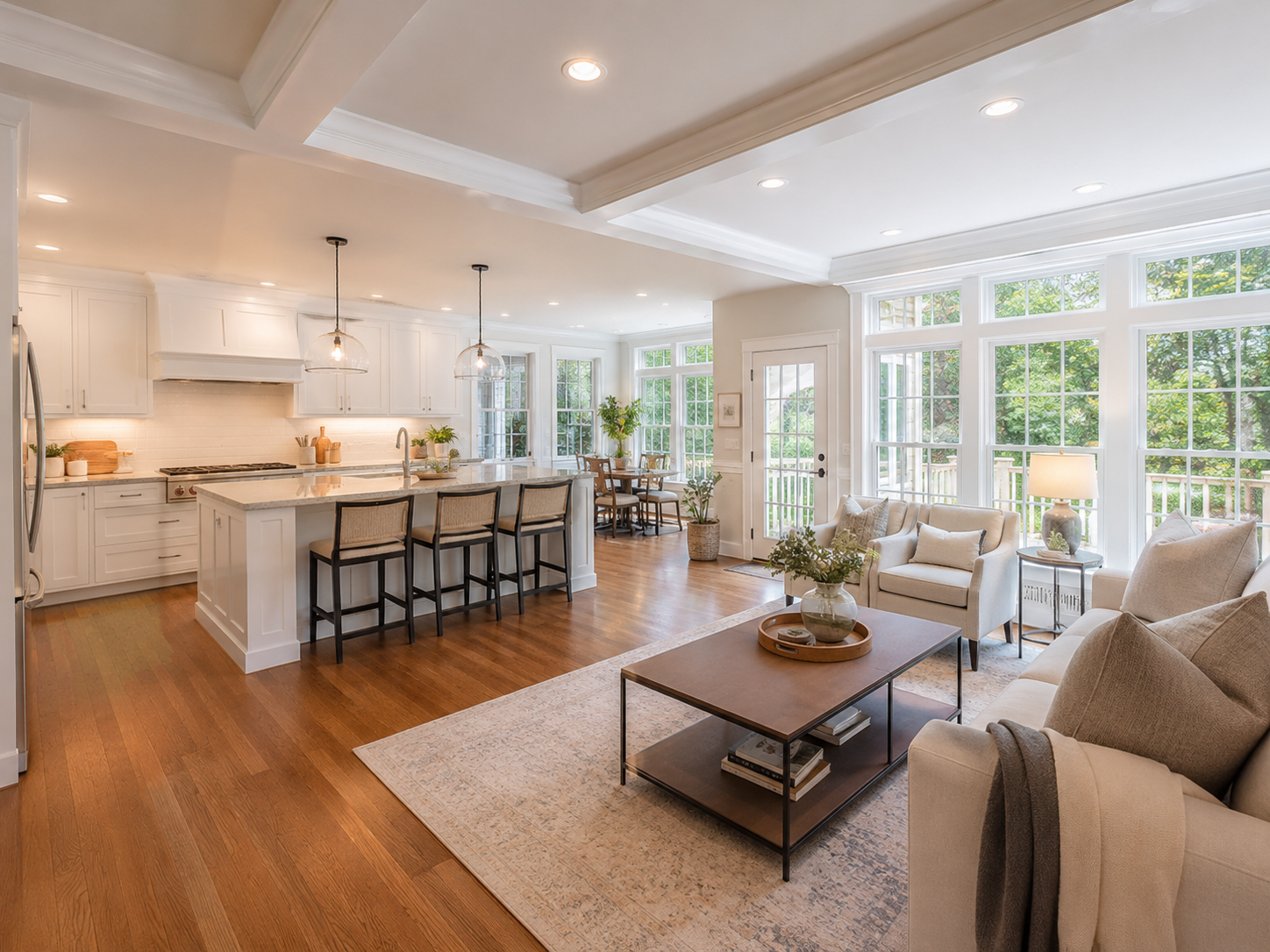
The kitchen anchors the whole-home project for most DMV homeowners. Because it connects to the main living area and sees more daily use than any other room, it typically receives the most design investment. Layout changes, expanded square footage, open-concept configurations, and high-quality finishes all belong in the planning conversation here.
Our Kitchen Remodeling team handles projects from targeted layout changes through full kitchen transformations as part of a coordinated whole-home scope.
Primary Bathroom
The primary bathroom is almost universally included in whole-home remodels, and for good reason. It’s the space most homeowners use twice daily, every day — and in many Maryland and Virginia homes, it hasn’t been touched since the home was built. Spa-style layouts, curbless showers, freestanding tubs, and heated floors all belong in this conversation.
Our Bathroom Remodeling service handles primary bathroom transformations as part of a whole-home project or as a standalone scope.
Secondary Bathrooms
Guest bathrooms and hall baths often receive a scope reduction relative to the primary — updated tile, new fixtures, and a refreshed vanity rather than a full layout change. However, consistency of design language between all bathrooms matters in a whole-home remodel. Coordinating secondary bathroom finishes with the primary creates a cohesive result throughout the home.
Basement
A finished basement adds legal living space, improves the home’s total appraisal value, and provides flexibility for a guest suite, home office, gym, or home theater. In a whole-home project, the basement scope typically shares a permit application and construction window with the upper levels — making it more efficient than a separate project.
Our Basement Remodeling team designs and builds finished basement spaces as part of coordinated whole-home scopes.
Living and Family Rooms
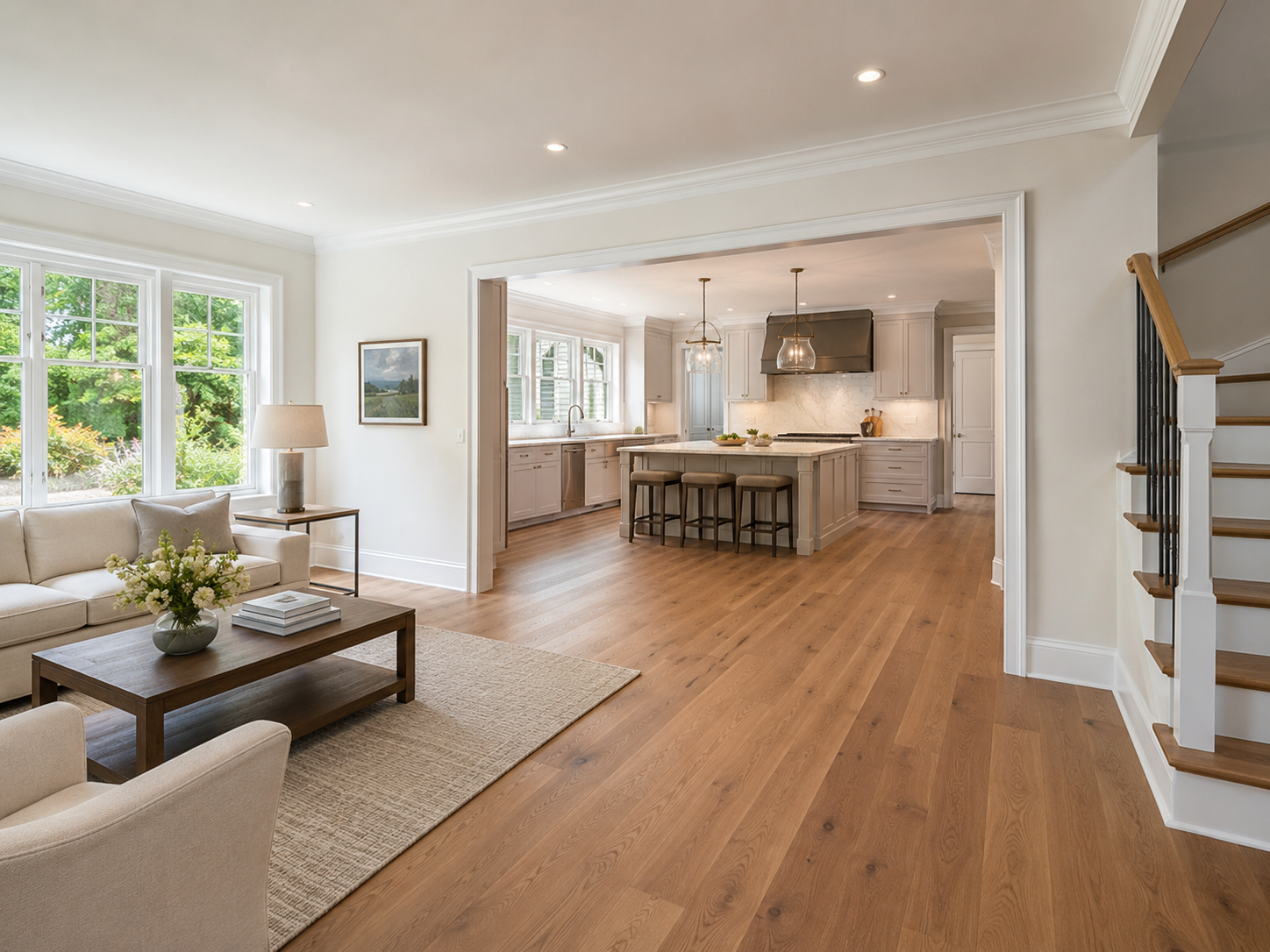
These spaces often see targeted updates in a whole-home remodel — new flooring consistent with the rest of the home, updated trim and millwork, improved lighting, and sometimes layout changes that connect them more effectively to the kitchen or outdoor living areas.
Home Office or Flex Space
As discussed earlier this week, flex rooms and home offices are a top priority for DMV homeowners in 2026. Including this scope in a whole-home project ensures wiring, acoustic treatments, and layout decisions are coordinated from the start.
Outdoor Living
Many whole-home projects extend to the exterior — a new deck, screened porch, or outdoor kitchen that connects to the remodeled interior through consistent design and materials. Our Decks & Porches team coordinates outdoor scope alongside interior projects regularly.
Home Additions
For homeowners whose goals require more square footage than the existing structure provides, Home Additions — whether a first-floor suite, a second story, or a sunroom — are naturally included in a whole-home scope. Coordinating an addition with interior renovations under one contract delivers a more seamless architectural result than planning them separately.
Step Four: Sequence the Work Correctly
Sequencing matters enormously in a whole-home remodel. Work done in the wrong order causes rework, cost overruns, and timeline delays. Here’s the general logic of correct sequencing.
Structural work first. Any walls being removed, beams being added, or floor systems being modified happen before mechanical work begins.
Mechanical rough-in second. Electrical, plumbing, and HVAC rough-in happen with walls open, before insulation and drywall. This is also when smart home wiring, data cables, and any in-wall speaker or security infrastructure are installed.
Insulation and drywall third. Once mechanical inspections pass, insulation is installed and drywall closes the walls.
Finish carpentry and cabinetry fourth. Trim, built-ins, cabinetry, and millwork follow once drywall is complete and painted.
Tile and flooring fifth. Tile work in kitchens and bathrooms, and flooring installation throughout the home, happen after cabinetry is set.
Fixtures and final finishes last. Plumbing fixtures, electrical fixtures, hardware, appliances, and paint touch-ups are the final phase before the completed project is turned over.
A General Contractor in Maryland who manages this sequence and coordinates all trades is the single most important variable in whether a whole-home project is delivered on time and on budget.
Step Five: Plan Your Life During Construction
A whole-home remodel is a significant disruption to daily life, and planning for it honestly is part of planning the project itself.
Kitchen projects typically render the kitchen unusable for eight to twelve weeks minimum. Families commonly set up a temporary kitchen in a different room — a microwave, a mini fridge, and a hot plate.
Bathroom projects require either scheduling sequentially so at least one bathroom remains usable, or planning for temporary facilities.
Full-scope projects sometimes require temporary relocation, particularly when structural work involves opening exterior walls or when the scale of disruption makes living in the home genuinely untenable.
Budget for temporary living costs, meals out, and storage as part of the total project investment. These costs are real, and homeowners who plan for them in advance are significantly less stressed mid-project than those who discover them as surprises.
The H&C Construction Design-Build Process for Whole-Home Remodeling
A whole-home remodel requires one integrated team, not a series of separate contractors coordinating loosely. Our design-build model provides exactly that.
Design consultation. We assess the full home, discuss your goals room by room, and develop a clear sense of the overall scope, priority, and budget range.
Design development. We create a unified design plan across all spaces — ensuring consistent materials, proportions, and finishes throughout, along with detailed plans for any structural changes.
Permitting. We handle all permit applications across every trade — structural, electrical, plumbing, mechanical — with the relevant Maryland, DC, or Virginia jurisdiction.
Sequenced construction. Our licensed crews execute the project in the correct sequence, coordinating trades, managing schedules, and maintaining communication with you at every phase.
Final walkthrough. We conduct a comprehensive review of every room before closing out the project and addressing any remaining punch-list items.
Browse completed whole-home and multi-room projects across Maryland, DC, and Virginia in our Our Remodeling Projects portfolio.
The Right Time to Plan Is Before You Think You’re Ready
The families who are most satisfied with their whole-home remodels are almost universally the ones who started planning well before they expected to begin construction. A whole-home project needs time: time to develop a cohesive design, time to navigate permits, and time to make the material decisions that, if rushed, become regrets.
Because of this, the best investment you can make right now — if a whole-home remodel is anywhere in your medium-term horizon — is a professional design consultation. Not a commitment. Not a signed contract. Simply a conversation that replaces speculation with real information about what’s possible, what it costs, and what the timeline looks like.
Ready to Plan Your Whole-Home Remodel?
H&C Construction Design Build serves homeowners across Maryland, Washington DC, and Northern Virginia — including Rockville, Bethesda, Potomac, Silver Spring, Chevy Chase, Gaithersburg, Montgomery County, Arlington, Alexandria, and Fairfax. Whether you’re planning a full interior transformation or a coordinated multi-room renovation, our design-build team handles every phase from vision through final finish.
Explore our Full Home Remodeling service and request a consultation to start planning today.