
Aging-in-Place Bathroom Remodeling in Maryland: Safer, Smarter Bathrooms for Long-Term Home Value
Bathroom remodeling is changing in Maryland. Homeowners are no longer thinking only about tile, vanities, mirrors, and luxury finishes. They are asking a more important question:
Will this bathroom still work for my family five, ten, or fifteen years from now?
That question is the foundation of aging-in-place bathroom remodeling in Maryland.
An aging-in-place bathroom is designed to make daily routines safer, easier, and more comfortable for people at different stages of life. It can support older adults, multigenerational families, homeowners recovering from injury, and anyone who wants a bathroom that feels more accessible without looking institutional.
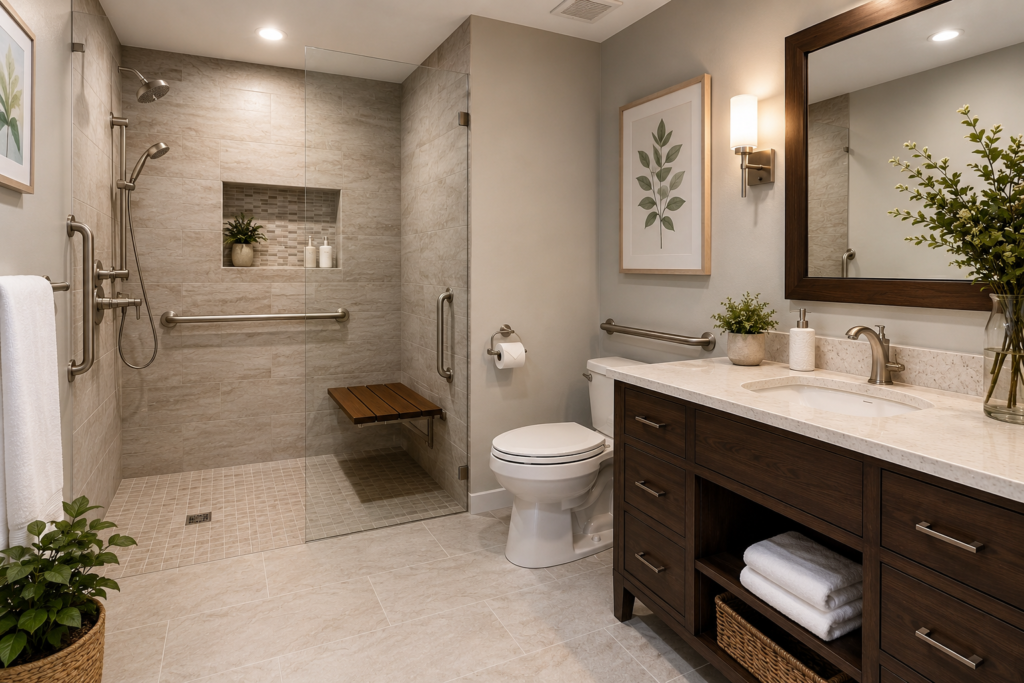
Modern aging-in-place design does not mean sacrificing beauty. Many of the same features that improve safety also make a bathroom feel more elegant: walk-in showers, curbless entries, wider clearances, better lighting, built-in niches, slip-resistant flooring, comfort-height fixtures, shower benches, and thoughtful storage.
Bathroom renovation trends continue to show strong homeowner interest in walk-in showers, wet rooms, better accessibility, and comfort-driven design. Houzz bathroom trend data reported by Real Simple showed that shower expansions, wet rooms, system upgrades, and accessibility-friendly layouts are important priorities in recent bathroom renovations.
At H&C Construction Design Build, we help homeowners across Maryland, Washington, D.C., and Northern Virginia remodel bathrooms that are safer, more functional, and built for long-term value.
If your bathroom feels outdated, unsafe, too narrow, poorly lit, or difficult to use, this may be the right time to explore Bathroom Remodeling with a future-ready design strategy.
Why Aging-in-Place Bathroom Remodeling Matters
The bathroom is one of the most important rooms in the home, but it is also one of the most common areas where poor design creates risk.
Traditional bathrooms often include high tub walls, slippery tile, weak lighting, narrow clearances, low toilets, limited storage, and awkward layouts. These problems may seem small at first, but they can become serious obstacles over time.
Aging-in-place remodeling solves this problem by designing the bathroom around safety, movement, comfort, and long-term use.
For Maryland homeowners, this is especially relevant because many families want to remain in their current homes instead of moving. A well-designed bathroom remodel can help a homeowner stay comfortable in the home longer while also improving the daily function and resale appeal of the property.
This does not mean the bathroom needs to look medical or plain. In 2026, accessible bathroom design can look modern, warm, and high-end. Current bathroom design coverage points toward warmer materials, natural textures, spa-like comfort, and more personal spaces instead of cold, sterile bathrooms.
For larger home updates, aging-in-place bathroom design can also connect with Full Home Remodeling, especially when the goal is to make the entire home safer, more comfortable, and better prepared for long-term living.
What Is an Aging-in-Place Bathroom?
An aging-in-place bathroom is a bathroom designed to support safety, comfort, mobility, and independence over time.
A strong aging-in-place bathroom may include:
- Walk-in shower
- Curbless shower entry
- Slip-resistant flooring
- Grab bars or reinforced walls for future grab bars
- Better lighting
- Wider doorway where possible
- Comfort-height toilet
- Lever-style faucets
- Handheld showerhead
- Shower bench
- Built-in wall niches
- Easy-access storage
- Improved ventilation
- Clear floor space
- Low-maintenance materials
The best aging-in-place bathrooms do not look clinical. They look clean, modern, and intentional.
A homeowner in Rockville may want a walk-in shower with warm tile and built-in seating. A family in Bethesda may need a first-floor bathroom that works better for aging parents. A homeowner in Potomac may want a luxury primary bathroom with universal design features hidden inside a spa-like layout.
That is the value of professional design-build work: the bathroom can be safer and more beautiful at the same time.
Why Walk-In Showers Are One of the Best Bathroom Remodeling Upgrades
One of the most important upgrades in aging-in-place bathroom remodeling is the walk-in shower.
Traditional tubs can be difficult to enter and exit. The high threshold creates a tripping risk, especially when the floor is wet. A walk-in shower reduces that problem and creates a more open, comfortable layout.
A strong walk-in shower design may include:
- Low-threshold or curbless entry
- Frameless or semi-frameless glass
- Slip-resistant tile
- Linear drain
- Handheld showerhead
- Built-in bench
- Recessed niche
- Grab bar or reinforced wall blocking
- Clear turning space
- Warm lighting
- Easy-to-clean surfaces
Walk-in showers are also popular because they fit both safety and luxury. A bathroom can feel more open, more modern, and easier to use with the right shower design.
For homeowners planning Bathroom Remodeling, a walk-in shower is often one of the strongest investments because it improves safety, visual appeal, and long-term usability at the same time.
Curbless Showers: Modern, Accessible, and High-End
A curbless shower has no raised step at the entrance. The bathroom floor transitions smoothly into the shower area, creating a cleaner and more accessible design.
This upgrade is especially valuable for homeowners who want:
- Easier shower entry
- A more open bathroom layout
- Less visual clutter
- Better accessibility
- A modern spa-like appearance
- Long-term flexibility
Curbless showers require careful construction. The floor must be properly sloped, waterproofed, drained, and tiled. If the slope or waterproofing is poorly done, water can escape into the rest of the bathroom and create damage.
That is why curbless shower remodeling should be handled by experienced professionals, not treated as a cosmetic tile project.
A properly built curbless shower requires coordination between design, demolition, plumbing, waterproofing, tile installation, drainage, and inspection standards. Homeowners should work with Licensed Contractors in Maryland who understand both the design and technical requirements.
Slip-Resistant Flooring: Safety Without Sacrificing Style
Flooring is one of the most important safety decisions in a bathroom remodel.
Bathrooms are naturally wet spaces. A beautiful floor that becomes slippery when wet can create unnecessary risk. For aging-in-place bathroom remodeling, homeowners should consider materials with better slip resistance, texture, durability, and maintenance performance.
Good options may include:
- Textured porcelain tile
- Smaller-format tile with more grout lines
- Matte-finish tile
- Slip-resistant luxury vinyl tile
- Natural stone with the right finish
- Mosaic shower flooring
- Heated flooring with safe surface selection
The goal is to choose flooring that looks premium but also supports safe movement.
Large polished tiles may look attractive, but they may not be the best choice for every bathroom. A professional remodeling team can help balance design, safety, cleaning, and long-term durability.
This is one reason homeowners should consider bathroom updates as part of a broader Full Home Remodeling strategy when multiple areas of the home need safer flooring, better lighting, or improved accessibility.
Better Bathroom Lighting for Safety and Comfort
Lighting is often underestimated in bathroom remodeling.
Poor lighting can make a bathroom feel smaller, older, and less safe. It can also make daily routines more difficult, especially for older homeowners or anyone with reduced vision.
A strong bathroom lighting plan may include:
- Recessed ceiling lights
- Vanity lighting at face level
- Shower-rated lighting
- Night lighting
- Motion-sensor lighting
- LED mirror lighting
- Accent lighting
- Natural light improvements
- Dimmers for comfort
The goal is to remove shadows, improve visibility, and create a more comfortable environment.
For aging-in-place bathrooms, night lighting can be especially useful. A softly lit path to the bathroom can reduce risk during nighttime use.
Lighting also supports design quality. A bathroom with layered lighting feels more refined, more relaxing, and more valuable.
Grab Bars and Reinforced Walls: Practical Safety With Better Design
Many homeowners resist grab bars because they associate them with hospitals or institutional spaces. That perception is outdated.
Modern grab bars can be sleek, minimal, and integrated into the bathroom design. They can be installed near toilets, inside showers, near shower benches, and along key movement points.
Even if a homeowner does not want visible grab bars immediately, the contractor can add wall blocking during the remodel. This allows grab bars to be installed later without opening the wall again.
This is one of the smartest aging-in-place decisions because it gives the homeowner flexibility.
A bathroom remodel should not only solve today’s needs. It should make future updates easier and less expensive.
For homeowners planning to stay in their home long-term, this kind of preparation is valuable. It can also be coordinated with Home Additions when creating a first-floor suite, guest bathroom, or multigenerational living area.
Comfort-Height Toilets and Accessible Fixtures
Small changes can make a major difference in daily comfort.
A comfort-height toilet is slightly taller than a standard toilet, making it easier for many people to sit and stand. Lever-style faucets can be easier to operate than small knobs. A handheld showerhead improves flexibility for bathing, cleaning, and seated shower use.
Useful fixture upgrades include:
- Comfort-height toilet
- Lever-handle faucets
- Handheld showerhead
- Thermostatic shower valve
- Anti-scald controls
- Easy-turn controls
- Touchless or single-handle faucets
- Accessible towel bars
- Easy-reach storage
These details may seem simple, but they directly affect how comfortable the bathroom feels every day.
Good remodeling is not only about what visitors see. It is also about how the room works when the homeowner uses it every morning and every night.
Bathroom Layout: The Hidden Factor Behind Safety
A bathroom can have beautiful finishes and still function poorly.
Layout is one of the most important parts of aging-in-place bathroom remodeling. If the doorway is too narrow, the toilet is poorly placed, the vanity blocks movement, or the shower entry is awkward, the bathroom may not support long-term comfort.
A better layout may include:
- Wider entry where possible
- More open floor space
- Better shower access
- Improved toilet placement
- Vanity with practical clearance
- Storage that does not block movement
- Door swings that improve safety
- Clear pathway from bedroom to bathroom
In some cases, layout improvements may require moving plumbing, removing walls, changing door placement, or expanding the bathroom footprint.
When the existing bathroom is too small, homeowners may need to consider Home Additions or a larger Full Home Remodeling plan to create a bathroom that truly supports the household’s needs.
First-Floor Bathrooms and Multigenerational Living
Aging-in-place remodeling is not limited to primary bathrooms.
Many Maryland homeowners are also thinking about first-floor bathrooms, guest bathrooms, and bathrooms connected to multigenerational living spaces.
A first-floor bathroom can be especially valuable when:
- Aging parents visit or live in the home
- A homeowner wants to reduce stair use over time
- The home needs a more accessible guest area
- A first-floor bedroom or office may become a future suite
- The family wants long-term flexibility
This is where bathroom remodeling connects with larger construction planning.
A first-floor bathroom may be part of a Home Addition, a converted office, a basement-to-suite remodel, or a full layout redesign.
The key is to think ahead. A bathroom that works only for today may need another remodel later. A bathroom designed with long-term living in mind can provide value for many years.
Permits, Plumbing, Electrical Work, and Code Compliance
Bathroom remodeling often involves more than surface updates.
Depending on the project, a remodel may include plumbing changes, electrical upgrades, ventilation improvements, structural adjustments, waterproofing, and inspections. Baltimore County notes that a residential bathroom alteration permit may not be required in some cases, but plumbing and electrical permits are still required for that work, which must be handled by licensed trades.
This matters because bathrooms are high-risk spaces for water damage, electrical issues, mold, ventilation problems, and poor workmanship.
A professional bathroom remodel should address:
- Waterproofing
- Drainage
- Plumbing connections
- Electrical safety
- GFCI protection
- Ventilation
- Structural support
- Fixture placement
- Shower slope
- Tile installation
- Moisture control
- Code compliance
Skipping these details can lead to expensive repairs later.
That is why homeowners should work with a qualified General Contractor in Maryland or Licensed Contractors in Maryland when remodeling bathrooms that involve more than minor cosmetic updates.
Design Does Not Have to Look “Senior”
One of the biggest misconceptions about aging-in-place bathroom remodeling is that it must look medical or plain.
That is not true.
The best accessible bathrooms look modern, calm, and high-end. They simply include smarter design decisions.
A beautiful aging-in-place bathroom can include:
- Warm neutral tile
- Natural stone accents
- Frameless glass
- Curbless shower entry
- Matte black or brushed nickel fixtures
- Floating vanity
- Wood-look cabinetry
- Soft LED lighting
- Large-format wall tile
- Built-in shower bench
- Spa-style niche
- Textured flooring
- Minimalist grab bars
This approach allows homeowners to remodel for safety while still creating a bathroom that feels elegant, personal, and aligned with the rest of the home.
For homeowners already improving other areas, the bathroom can be planned together with Kitchen Remodeling, Full Home Remodeling, or Home Additions for a more cohesive property upgrade.
When Should You Consider an Aging-in-Place Bathroom Remodel?
Aging-in-place bathroom remodeling may be a strong decision if your current bathroom has any of these issues:
- High tub wall
- Slippery floor
- Poor lighting
- Narrow entry
- Weak ventilation
- Limited storage
- Low toilet
- Difficult shower access
- No place to sit in the shower
- Outdated plumbing
- Poor layout
- Water damage
- Mold or moisture problems
- Fixtures that are hard to operate
- Bathroom located far from main living areas
You do not need to wait for a problem to become urgent. The best time to remodel is often before the bathroom becomes unsafe or difficult to use.
For homeowners dealing with water damage, damaged tile, structural issues, or outdated systems, it may also be smart to review Restoration & Rebuild services before planning a full bathroom transformation.
How Aging-in-Place Bathrooms Improve Long-Term Home Value
Aging-in-place bathroom remodeling can improve value because it makes the home more functional for a wider range of buyers and life stages.
A safer, better-designed bathroom can appeal to:
- Older homeowners
- Multigenerational families
- Families with young children
- Buyers planning long-term ownership
- Homeowners recovering from injury
- Luxury buyers who want spa-style comfort
- Buyers who prefer move-in-ready updates
A bathroom with a walk-in shower, better lighting, improved storage, and high-quality finishes can make a strong impression during resale.
However, value depends on execution. A poorly planned bathroom can look updated but still function badly. A professionally designed bathroom can improve both appearance and daily usability.
This is why Bathroom Remodeling should be approached as a construction and design investment, not just a decoration project.
How H&C Construction Design Build Helps Maryland Homeowners
At H&C Construction Design Build, we help homeowners create bathrooms that are beautiful, practical, safe, and built for long-term use.
Our process focuses on the details that matter most.
1. Understanding the Homeowner’s Needs
We begin by understanding who will use the bathroom, how the space functions today, and what problems need to be solved.
2. Evaluating the Existing Bathroom
We review the current layout, plumbing, electrical systems, ventilation, flooring, walls, shower or tub area, and any visible signs of damage or poor construction.
3. Planning the Right Design
We help homeowners choose the right layout, shower type, flooring, fixtures, lighting, storage, and accessibility features.
4. Coordinating Construction
We manage the remodeling process with attention to demolition, waterproofing, plumbing, electrical work, tile, fixtures, finishes, and quality control.
5. Building for Long-Term Value
We focus on craftsmanship, durability, safety, and a finished bathroom that supports the homeowner’s lifestyle today and in the future.
Whether you need a walk-in shower in Rockville, a safer primary bathroom in Bethesda, a first-floor bathroom in Potomac, or a full bathroom remodel in Montgomery County, H&C Construction can help you create a space that feels comfortable, modern, and built to last.
View Our Remodeling Projects to see how professional remodeling can transform the way a home feels and functions.
Build a Safer, More Beautiful Bathroom for the Future
Aging-in-place bathroom remodeling is not only for seniors. It is for any homeowner who wants a bathroom that is safer, smarter, more comfortable, and more valuable over time.
In 2026, Maryland homeowners are choosing walk-in showers, curbless entries, slip-resistant flooring, better lighting, reinforced walls, accessible fixtures, and spa-inspired finishes because these upgrades improve both daily life and long-term home performance.
The best bathroom remodels do not force homeowners to choose between beauty and safety. They deliver both.
If your bathroom feels outdated, unsafe, difficult to use, or disconnected from your long-term plans, H&C Construction Design Build can help you remodel it with purpose, craftsmanship, and a clear strategy.
Explore Bathroom Remodeling, Full Home Remodeling, Home Additions, and General Contractor in Maryland, or request a consultation with H&C Construction Design Build today.
Free consultation
Ready to Start Your Bathroom Remodeling Project?
H&C Construction serves Maryland, Virginia, and Washington DC. Get a free consultation today.
Local service areas
Remodeling Guides Near You
Planning bathroom remodeling in Montgomery County? Browse local guides by city — permits, neighborhoods, and recent H&C Construction projects.
City hubs