
Posted on Leave a comment

Aging-in-Place Bathroom Remodeling in Maryland: Safer Bathrooms for 2026

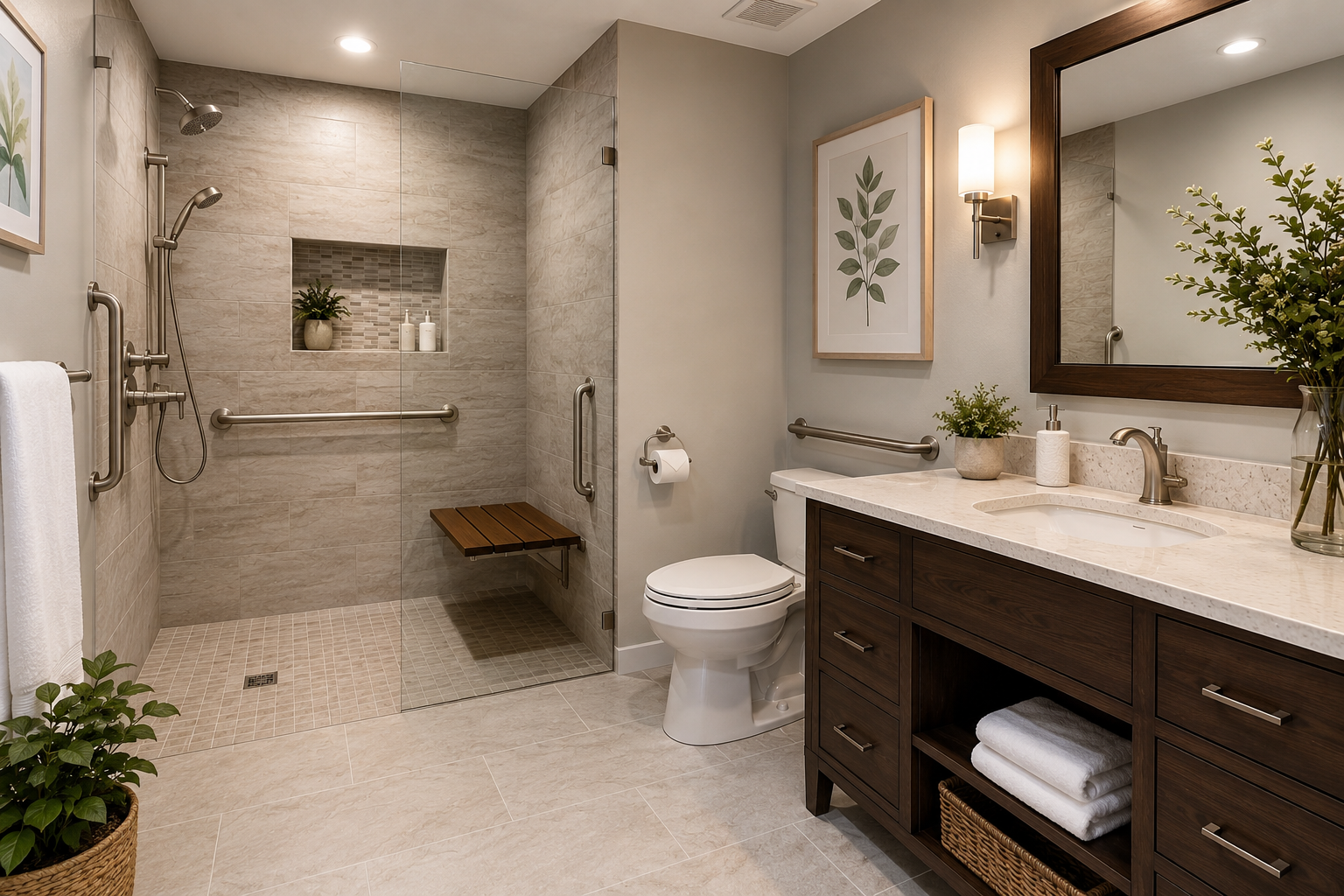
Aging-in-place bathroom remodeling in Maryland with walk-in shower, grab bars, built-in bench, modern tile, and accessible design.

Aging-in-Place Bathroom Remodeling in Maryland: Safer, Smarter Bathrooms for Long-Term Home Value

Bathroom remodeling is changing in Maryland. Homeowners are no longer thinking only about tile, vanities, mirrors, and luxury finishes. They are asking a more important question:

Will this bathroom still work for my family five, ten, or fifteen years from now?

That question is the foundation of aging-in-place bathroom remodeling in Maryland.

An aging-in-place bathroom is designed to make daily routines safer, easier, and more comfortable for people at different stages of life. It can support older adults, multigenerational families, homeowners recovering from injury, and anyone who wants a bathroom that feels more accessible without looking institutional.

Modern aging-in-place design does not mean sacrificing beauty. Many of the same features that improve safety also make a bathroom feel more elegant: walk-in showers, curbless entries, wider clearances, better lighting, built-in niches, slip-resistant flooring, comfort-height fixtures, shower benches, and thoughtful storage.

Bathroom renovation trends continue to show strong homeowner interest in walk-in showers, wet rooms, better accessibility, and comfort-driven design. Houzz bathroom trend data reported by Real Simple showed that shower expansions, wet rooms, system upgrades, and accessibility-friendly layouts are important priorities in recent bathroom renovations.

At H&C Construction Design Build, we help homeowners across Maryland, Washington, D.C., and Northern Virginia remodel bathrooms that are safer, more functional, and built for long-term value.

If your bathroom feels outdated, unsafe, too narrow, poorly lit, or difficult to use, this may be the right time to explore Bathroom Remodeling with a future-ready design strategy.


Why Aging-in-Place Bathroom Remodeling Matters

The bathroom is one of the most important rooms in the home, but it is also one of the most common areas where poor design creates risk.

Traditional bathrooms often include high tub walls, slippery tile, weak lighting, narrow clearances, low toilets, limited storage, and awkward layouts. These problems may seem small at first, but they can become serious obstacles over time.

Aging-in-place remodeling solves this problem by designing the bathroom around safety, movement, comfort, and long-term use.

For Maryland homeowners, this is especially relevant because many families want to remain in their current homes instead of moving. A well-designed bathroom remodel can help a homeowner stay comfortable in the home longer while also improving the daily function and resale appeal of the property.

This does not mean the bathroom needs to look medical or plain. In 2026, accessible bathroom design can look modern, warm, and high-end. Current bathroom design coverage points toward warmer materials, natural textures, spa-like comfort, and more personal spaces instead of cold, sterile bathrooms.

For larger home updates, aging-in-place bathroom design can also connect with Full Home Remodeling, especially when the goal is to make the entire home safer, more comfortable, and better prepared for long-term living.


What Is an Aging-in-Place Bathroom?

An aging-in-place bathroom is a bathroom designed to support safety, comfort, mobility, and independence over time.

A strong aging-in-place bathroom may include:

  • Walk-in shower
  • Curbless shower entry
  • Slip-resistant flooring
  • Grab bars or reinforced walls for future grab bars
  • Better lighting
  • Wider doorway where possible
  • Comfort-height toilet
  • Lever-style faucets
  • Handheld showerhead
  • Shower bench
  • Built-in wall niches
  • Easy-access storage
  • Improved ventilation
  • Clear floor space
  • Low-maintenance materials

The best aging-in-place bathrooms do not look clinical. They look clean, modern, and intentional.

A homeowner in Rockville may want a walk-in shower with warm tile and built-in seating. A family in Bethesda may need a first-floor bathroom that works better for aging parents. A homeowner in Potomac may want a luxury primary bathroom with universal design features hidden inside a spa-like layout.

That is the value of professional design-build work: the bathroom can be safer and more beautiful at the same time.


Why Walk-In Showers Are One of the Best Bathroom Remodeling Upgrades

One of the most important upgrades in aging-in-place bathroom remodeling is the walk-in shower.

Traditional tubs can be difficult to enter and exit. The high threshold creates a tripping risk, especially when the floor is wet. A walk-in shower reduces that problem and creates a more open, comfortable layout.

A strong walk-in shower design may include:

  • Low-threshold or curbless entry
  • Frameless or semi-frameless glass
  • Slip-resistant tile
  • Linear drain
  • Handheld showerhead
  • Built-in bench
  • Recessed niche
  • Grab bar or reinforced wall blocking
  • Clear turning space
  • Warm lighting
  • Easy-to-clean surfaces

Walk-in showers are also popular because they fit both safety and luxury. A bathroom can feel more open, more modern, and easier to use with the right shower design.

For homeowners planning Bathroom Remodeling, a walk-in shower is often one of the strongest investments because it improves safety, visual appeal, and long-term usability at the same time.


Curbless Showers: Modern, Accessible, and High-End

A curbless shower has no raised step at the entrance. The bathroom floor transitions smoothly into the shower area, creating a cleaner and more accessible design.

This upgrade is especially valuable for homeowners who want:

  • Easier shower entry
  • A more open bathroom layout
  • Less visual clutter
  • Better accessibility
  • A modern spa-like appearance
  • Long-term flexibility

Curbless showers require careful construction. The floor must be properly sloped, waterproofed, drained, and tiled. If the slope or waterproofing is poorly done, water can escape into the rest of the bathroom and create damage.

That is why curbless shower remodeling should be handled by experienced professionals, not treated as a cosmetic tile project.

A properly built curbless shower requires coordination between design, demolition, plumbing, waterproofing, tile installation, drainage, and inspection standards. Homeowners should work with Licensed Contractors in Maryland who understand both the design and technical requirements.


Slip-Resistant Flooring: Safety Without Sacrificing Style

Flooring is one of the most important safety decisions in a bathroom remodel.

Bathrooms are naturally wet spaces. A beautiful floor that becomes slippery when wet can create unnecessary risk. For aging-in-place bathroom remodeling, homeowners should consider materials with better slip resistance, texture, durability, and maintenance performance.

Good options may include:

  • Textured porcelain tile
  • Smaller-format tile with more grout lines
  • Matte-finish tile
  • Slip-resistant luxury vinyl tile
  • Natural stone with the right finish
  • Mosaic shower flooring
  • Heated flooring with safe surface selection

The goal is to choose flooring that looks premium but also supports safe movement.

Large polished tiles may look attractive, but they may not be the best choice for every bathroom. A professional remodeling team can help balance design, safety, cleaning, and long-term durability.

This is one reason homeowners should consider bathroom updates as part of a broader Full Home Remodeling strategy when multiple areas of the home need safer flooring, better lighting, or improved accessibility.


Better Bathroom Lighting for Safety and Comfort

Lighting is often underestimated in bathroom remodeling.

Poor lighting can make a bathroom feel smaller, older, and less safe. It can also make daily routines more difficult, especially for older homeowners or anyone with reduced vision.

A strong bathroom lighting plan may include:

  • Recessed ceiling lights
  • Vanity lighting at face level
  • Shower-rated lighting
  • Night lighting
  • Motion-sensor lighting
  • LED mirror lighting
  • Accent lighting
  • Natural light improvements
  • Dimmers for comfort

The goal is to remove shadows, improve visibility, and create a more comfortable environment.

For aging-in-place bathrooms, night lighting can be especially useful. A softly lit path to the bathroom can reduce risk during nighttime use.

Lighting also supports design quality. A bathroom with layered lighting feels more refined, more relaxing, and more valuable.


Grab Bars and Reinforced Walls: Practical Safety With Better Design

Many homeowners resist grab bars because they associate them with hospitals or institutional spaces. That perception is outdated.

Modern grab bars can be sleek, minimal, and integrated into the bathroom design. They can be installed near toilets, inside showers, near shower benches, and along key movement points.

Even if a homeowner does not want visible grab bars immediately, the contractor can add wall blocking during the remodel. This allows grab bars to be installed later without opening the wall again.

This is one of the smartest aging-in-place decisions because it gives the homeowner flexibility.

A bathroom remodel should not only solve today’s needs. It should make future updates easier and less expensive.

For homeowners planning to stay in their home long-term, this kind of preparation is valuable. It can also be coordinated with Home Additions when creating a first-floor suite, guest bathroom, or multigenerational living area.


Comfort-Height Toilets and Accessible Fixtures

Small changes can make a major difference in daily comfort.

A comfort-height toilet is slightly taller than a standard toilet, making it easier for many people to sit and stand. Lever-style faucets can be easier to operate than small knobs. A handheld showerhead improves flexibility for bathing, cleaning, and seated shower use.

Useful fixture upgrades include:

  • Comfort-height toilet
  • Lever-handle faucets
  • Handheld showerhead
  • Thermostatic shower valve
  • Anti-scald controls
  • Easy-turn controls
  • Touchless or single-handle faucets
  • Accessible towel bars
  • Easy-reach storage

These details may seem simple, but they directly affect how comfortable the bathroom feels every day.

Good remodeling is not only about what visitors see. It is also about how the room works when the homeowner uses it every morning and every night.


Bathroom Layout: The Hidden Factor Behind Safety

A bathroom can have beautiful finishes and still function poorly.

Layout is one of the most important parts of aging-in-place bathroom remodeling. If the doorway is too narrow, the toilet is poorly placed, the vanity blocks movement, or the shower entry is awkward, the bathroom may not support long-term comfort.

A better layout may include:

  • Wider entry where possible
  • More open floor space
  • Better shower access
  • Improved toilet placement
  • Vanity with practical clearance
  • Storage that does not block movement
  • Door swings that improve safety
  • Clear pathway from bedroom to bathroom

In some cases, layout improvements may require moving plumbing, removing walls, changing door placement, or expanding the bathroom footprint.

When the existing bathroom is too small, homeowners may need to consider Home Additions or a larger Full Home Remodeling plan to create a bathroom that truly supports the household’s needs.


First-Floor Bathrooms and Multigenerational Living

Aging-in-place remodeling is not limited to primary bathrooms.

Many Maryland homeowners are also thinking about first-floor bathrooms, guest bathrooms, and bathrooms connected to multigenerational living spaces.

A first-floor bathroom can be especially valuable when:

  • Aging parents visit or live in the home
  • A homeowner wants to reduce stair use over time
  • The home needs a more accessible guest area
  • A first-floor bedroom or office may become a future suite
  • The family wants long-term flexibility

This is where bathroom remodeling connects with larger construction planning.

A first-floor bathroom may be part of a Home Addition, a converted office, a basement-to-suite remodel, or a full layout redesign.

The key is to think ahead. A bathroom that works only for today may need another remodel later. A bathroom designed with long-term living in mind can provide value for many years.


Permits, Plumbing, Electrical Work, and Code Compliance

Bathroom remodeling often involves more than surface updates.

Depending on the project, a remodel may include plumbing changes, electrical upgrades, ventilation improvements, structural adjustments, waterproofing, and inspections. Baltimore County notes that a residential bathroom alteration permit may not be required in some cases, but plumbing and electrical permits are still required for that work, which must be handled by licensed trades.

This matters because bathrooms are high-risk spaces for water damage, electrical issues, mold, ventilation problems, and poor workmanship.

A professional bathroom remodel should address:

  • Waterproofing
  • Drainage
  • Plumbing connections
  • Electrical safety
  • GFCI protection
  • Ventilation
  • Structural support
  • Fixture placement
  • Shower slope
  • Tile installation
  • Moisture control
  • Code compliance

Skipping these details can lead to expensive repairs later.

That is why homeowners should work with a qualified General Contractor in Maryland or Licensed Contractors in Maryland when remodeling bathrooms that involve more than minor cosmetic updates.


Design Does Not Have to Look “Senior”

One of the biggest misconceptions about aging-in-place bathroom remodeling is that it must look medical or plain.

That is not true.

The best accessible bathrooms look modern, calm, and high-end. They simply include smarter design decisions.

A beautiful aging-in-place bathroom can include:

  • Warm neutral tile
  • Natural stone accents
  • Frameless glass
  • Curbless shower entry
  • Matte black or brushed nickel fixtures
  • Floating vanity
  • Wood-look cabinetry
  • Soft LED lighting
  • Large-format wall tile
  • Built-in shower bench
  • Spa-style niche
  • Textured flooring
  • Minimalist grab bars

This approach allows homeowners to remodel for safety while still creating a bathroom that feels elegant, personal, and aligned with the rest of the home.

For homeowners already improving other areas, the bathroom can be planned together with Kitchen Remodeling, Full Home Remodeling, or Home Additions for a more cohesive property upgrade.


When Should You Consider an Aging-in-Place Bathroom Remodel?

Aging-in-place bathroom remodeling may be a strong decision if your current bathroom has any of these issues:

  • High tub wall
  • Slippery floor
  • Poor lighting
  • Narrow entry
  • Weak ventilation
  • Limited storage
  • Low toilet
  • Difficult shower access
  • No place to sit in the shower
  • Outdated plumbing
  • Poor layout
  • Water damage
  • Mold or moisture problems
  • Fixtures that are hard to operate
  • Bathroom located far from main living areas

You do not need to wait for a problem to become urgent. The best time to remodel is often before the bathroom becomes unsafe or difficult to use.

For homeowners dealing with water damage, damaged tile, structural issues, or outdated systems, it may also be smart to review Restoration & Rebuild services before planning a full bathroom transformation.


How Aging-in-Place Bathrooms Improve Long-Term Home Value

Aging-in-place bathroom remodeling can improve value because it makes the home more functional for a wider range of buyers and life stages.

A safer, better-designed bathroom can appeal to:

  • Older homeowners
  • Multigenerational families
  • Families with young children
  • Buyers planning long-term ownership
  • Homeowners recovering from injury
  • Luxury buyers who want spa-style comfort
  • Buyers who prefer move-in-ready updates

A bathroom with a walk-in shower, better lighting, improved storage, and high-quality finishes can make a strong impression during resale.

However, value depends on execution. A poorly planned bathroom can look updated but still function badly. A professionally designed bathroom can improve both appearance and daily usability.

This is why Bathroom Remodeling should be approached as a construction and design investment, not just a decoration project.


How H&C Construction Design Build Helps Maryland Homeowners

At H&C Construction Design Build, we help homeowners create bathrooms that are beautiful, practical, safe, and built for long-term use.

Our process focuses on the details that matter most.

1. Understanding the Homeowner’s Needs

We begin by understanding who will use the bathroom, how the space functions today, and what problems need to be solved.

2. Evaluating the Existing Bathroom

We review the current layout, plumbing, electrical systems, ventilation, flooring, walls, shower or tub area, and any visible signs of damage or poor construction.

3. Planning the Right Design

We help homeowners choose the right layout, shower type, flooring, fixtures, lighting, storage, and accessibility features.

4. Coordinating Construction

We manage the remodeling process with attention to demolition, waterproofing, plumbing, electrical work, tile, fixtures, finishes, and quality control.

5. Building for Long-Term Value

We focus on craftsmanship, durability, safety, and a finished bathroom that supports the homeowner’s lifestyle today and in the future.

Whether you need a walk-in shower in Rockville, a safer primary bathroom in Bethesda, a first-floor bathroom in Potomac, or a full bathroom remodel in Montgomery County, H&C Construction can help you create a space that feels comfortable, modern, and built to last.

View Our Remodeling Projects to see how professional remodeling can transform the way a home feels and functions.


Build a Safer, More Beautiful Bathroom for the Future

Aging-in-place bathroom remodeling is not only for seniors. It is for any homeowner who wants a bathroom that is safer, smarter, more comfortable, and more valuable over time.

In 2026, Maryland homeowners are choosing walk-in showers, curbless entries, slip-resistant flooring, better lighting, reinforced walls, accessible fixtures, and spa-inspired finishes because these upgrades improve both daily life and long-term home performance.

The best bathroom remodels do not force homeowners to choose between beauty and safety. They deliver both.

If your bathroom feels outdated, unsafe, difficult to use, or disconnected from your long-term plans, H&C Construction Design Build can help you remodel it with purpose, craftsmanship, and a clear strategy.

Explore Bathroom Remodeling, Full Home Remodeling, Home Additions, and General Contractor in Maryland, or request a consultation with H&C Construction Design Build today.
Posted on Leave a comment

Outdoor Rooms in the DMV: Why Homeowners Are Replacing Basic Patios with Year-Round Living Spaces

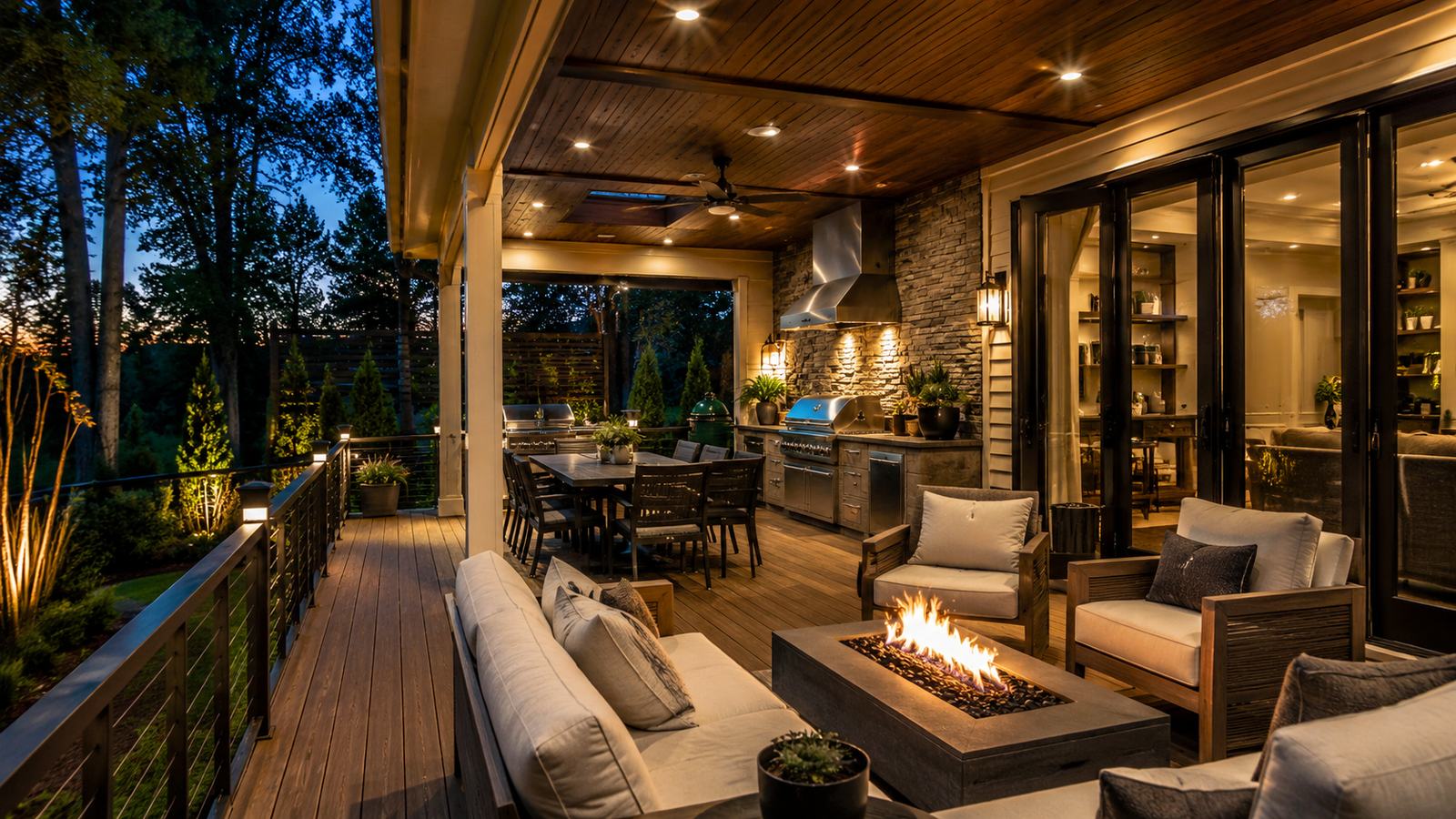
Outdoor room remodeling in the DMV with covered deck and outdoor kitchen.

Outdoor Rooms in the DMV: Why Homeowners Are Replacing Basic Patios with Year-Round Living Spaces in 2026

For years, many homeowners treated the backyard as a secondary space: a patio slab, a grill, a few chairs, and maybe a basic deck. But in 2026, that approach is changing across Washington, D.C., Maryland, and Northern Virginia.

Today, homeowners are not just asking for patios. They are asking for outdoor rooms.

An outdoor room is a fully designed exterior living space that works like an extension of the home. It may include a custom deck, covered porch, outdoor kitchen, privacy screen, lighting, dining area, lounge zone, fire feature, weather-resistant finishes, and a layout that feels intentional rather than improvised.

This trend is especially relevant in the DMV because homeowners want more functional space, better lifestyle value, improved privacy, and stronger indoor-outdoor flow without necessarily moving into a larger home. Recent D.C.-area design coverage has described this shift as “rooms, not patios,” highlighting how local homeowners are moving toward more defined outdoor living spaces instead of simple patio layouts.

For homeowners in Rockville, Bethesda, Potomac, Silver Spring, Chevy Chase, Kensington, Arlington, Alexandria, and Washington, D.C., outdoor room remodeling is one of the strongest ways to improve daily living and increase the perceived value of the home.

At H&C Construction Design Build, we help DMV homeowners create outdoor spaces that are beautiful, durable, functional, and built with the same care as an interior renovation.

To start planning a better exterior living space, explore our Decks & Porches service or view Our Remodeling Projects.


What Is an Outdoor Room?

An outdoor room is not simply a patio with furniture. It is an exterior space designed with structure, purpose, comfort, and long-term usability.

A well-designed outdoor room may include:

  • A custom deck or patio surface
  • A covered porch or pergola
  • Outdoor-rated flooring or decking
  • Built-in seating
  • Privacy screens or fencing
  • Outdoor kitchen or grill station
  • Lighting and electrical planning
  • Ceiling fans
  • Fire pit or outdoor fireplace
  • Dining area
  • Lounge area
  • Weather-resistant cabinetry
  • Storage
  • Landscaping integration
  • Strong connection to the interior of the home

The purpose is simple: create an outdoor space that feels like a true living area.

Instead of using the backyard only a few times per year, homeowners can create a space for morning coffee, family dinners, weekend gatherings, quiet reading, summer entertaining, and evening relaxation.

That is why outdoor rooms often connect naturally with Home Additions, Decks & Porches, Full Home Remodeling, and even Kitchen Remodeling when the goal is to create a better indoor-outdoor lifestyle.


Why Outdoor Rooms Are Trending in the DMV in 2026

The outdoor room trend is not random. It reflects how homeowners are thinking about space, comfort, and value in 2026.

Many families in the DMV are choosing to improve their current homes instead of moving. In high-demand areas like Bethesda, Potomac, Rockville, Chevy Chase, Arlington, and Washington, D.C., moving can be expensive, competitive, and disruptive.

As a result, homeowners are asking a more strategic question:

How can we make our current home work better for the way we live now?

Outdoor rooms answer that question by creating additional usable space without always requiring a full interior expansion.

A strong outdoor room can help a homeowner:

  • Use the backyard more often
  • Entertain more comfortably
  • Create privacy
  • Improve family gathering space
  • Connect the kitchen to the outdoors
  • Replace an unsafe or outdated deck
  • Add shade and weather protection
  • Improve resale appeal
  • Make the home feel larger and more complete

This is why outdoor rooms are becoming one of the most important remodeling conversations in the DMV for 2026.


Outdoor Room vs. Patio: What Is the Difference?

A basic patio is usually a flat surface with furniture. It may be useful, but it often lacks structure, lighting, privacy, storage, shade, and a clear design purpose.

An outdoor room is different.

It has a layout. It has zones. It has lighting. It may have a roof, pergola, deck structure, railings, privacy wall, outdoor kitchen, built-in seating, or fire feature. Most importantly, it is designed around how the homeowner actually lives.

A patio says:

“Here is a place to sit.”

An outdoor room says:

“Here is an extension of your home.”

That difference matters. A well-designed outdoor room can become one of the most used spaces on the property, especially during spring, summer, and fall.

For DMV homeowners, this is especially valuable because many properties have limited outdoor square footage. A smart design can make even a compact backyard feel intentional, private, and premium.


Why Decks and Porches Are the Foundation of Outdoor Rooms

For many homes in Maryland, Northern Virginia, and Washington, D.C., the best outdoor room starts with a professionally designed deck or porch.

A deck creates structure and elevation. A porch adds shade, protection, and architectural character. Together, they can transform the backyard from an unused area into a true extension of the home.

A deck or porch can support:

  • Outdoor dining
  • Lounge seating
  • Grilling
  • Covered relaxation
  • Fire features
  • Planters
  • Privacy screens
  • Lighting
  • Family gatherings
  • Outdoor storage
  • Safer transitions between indoor and outdoor spaces

This is why Decks & Porches should be one of the first services homeowners explore when planning an outdoor room.

However, deck and porch projects are not only aesthetic. They involve structural performance, footings, framing, railings, stairs, load requirements, waterproofing, drainage, and local code compliance.

That is why working with Licensed Contractors in Maryland matters. A properly built outdoor room should be safe, compliant, durable, and designed to last.


The Best Outdoor Room Ideas for DMV Homes

Every home is different. A townhouse in D.C. may need a compact privacy-focused patio. A single-family home in Potomac may support a large covered deck, outdoor kitchen, and fire lounge. A Rockville property may benefit from a screened porch or multi-zone backyard.

Below are some of the strongest outdoor room ideas for DMV homeowners in 2026.


1. Covered Outdoor Living Room

A covered outdoor living room is one of the most practical exterior upgrades for year-round comfort.

This type of space may include:

  • Roof extension
  • Covered porch
  • Pergola
  • Ceiling fans
  • Recessed lighting
  • Outdoor-rated furniture
  • Composite decking
  • Privacy walls
  • Outdoor heaters
  • Weather-resistant finishes

The main benefit is usability. A covered outdoor room protects the space from direct sun, light rain, and seasonal discomfort. It also gives the backyard a more finished architectural feel.

This type of project often connects with Home Additions because the structure may affect the roofline, exterior walls, siding, doors, windows, or foundation.

For homeowners who want a luxury exterior upgrade, a covered outdoor living room can become one of the most valuable spaces in the home.


2. Outdoor Dining Room Connected to the Kitchen

Outdoor dining is one of the most requested features for homeowners who enjoy hosting family and friends.

A strong outdoor dining room may include:

  • Dining table zone
  • Deck or patio surface
  • Outdoor lighting
  • Grill station
  • Countertop space
  • Storage
  • Privacy screen
  • Sliding or French doors
  • Easy kitchen access

The connection to the indoor kitchen is critical. If the outdoor dining area is too far from the kitchen, homeowners may use it less often.

For this reason, outdoor room planning should often be coordinated with Kitchen Remodeling. A kitchen remodel can improve access to the backyard, create better serving flow, add larger doors, or connect interior dining with exterior entertaining.

This is one of the strongest ways to make a home feel larger and more functional without changing the entire footprint.


3. Outdoor Kitchen and Grill Station

Outdoor kitchens are becoming more popular because they make exterior entertaining easier and more enjoyable.

A practical outdoor kitchen may include:

  • Built-in grill
  • Countertop space
  • Weather-resistant cabinets
  • Small refrigerator
  • Sink
  • Storage drawers
  • Trash pull-out
  • Pizza oven
  • Bar seating
  • Task lighting

In the DMV, outdoor kitchens must be built with durability in mind. Materials need to handle humid summers, cold winters, rain, freeze-thaw cycles, and heavy use.

This is where professional planning matters. Outdoor kitchens may involve electrical work, gas lines, plumbing, drainage, ventilation, fire safety, and local permit requirements.

A beautiful outdoor kitchen should not only look impressive. It should also be safe, functional, and built for long-term performance.

For homeowners planning a complete entertaining upgrade, the best strategy is often to connect the outdoor kitchen with Kitchen Remodeling and Full Home Remodeling so the indoor and outdoor spaces work together.


4. Privacy-Focused Backyard Retreat

Privacy is one of the biggest concerns for DMV homeowners, especially in dense neighborhoods.

A backyard may look attractive, but if it feels exposed to neighbors, sidewalks, or nearby streets, the family may not use it often.

A privacy-focused outdoor room may include:

  • Fencing
  • Horizontal privacy screens
  • Pergola walls
  • Tall landscaping
  • Planter boxes
  • Lattice panels
  • Outdoor curtains
  • Strategic lighting
  • Covered seating
  • Sound-buffering features

For homeowners in Bethesda, Silver Spring, Arlington, and Washington, D.C., privacy can transform an outdoor space from decorative to truly livable.

This type of outdoor remodeling can be especially valuable when paired with Decks & Porches or a broader Full Home Remodeling plan.


5. Fire Feature Lounge

A fire feature can turn an outdoor room into a natural gathering place.

Options include:

  • Gas fire pit
  • Wood-burning fire pit
  • Outdoor fireplace
  • Linear fire feature
  • Stone fire wall
  • Built-in seating around the fire area

A fire lounge works especially well for spring, summer evenings, and fall gatherings. It creates warmth, atmosphere, and a clear focal point.

However, fire features require careful construction planning. The contractor must consider material clearances, ventilation, safety, gas connections, drainage, and local regulations.

This is not an area where homeowners should improvise. Fire features should be designed and built with professional oversight.

For homes that already have exterior damage, drainage issues, aging masonry, or structural concerns, it may also be worth reviewing Restoration & Rebuild before adding new outdoor features.


6. Screened Porch or Three-Season Room

A screened porch is one of the most practical outdoor room upgrades in the DMV.

It allows homeowners to enjoy fresh air while reducing problems with insects, debris, direct sun, and light rain.

A screened porch may include:

  • Screened walls
  • Ceiling fans
  • Recessed lighting
  • Composite or wood flooring
  • Electrical outlets
  • Comfortable seating
  • Privacy features
  • Connection to a deck or patio

For many families, a screened porch becomes one of the most used spaces in the home during warmer months.

Depending on the project scope, a screened porch may be part of Decks & Porches or a larger Home Additions project.

The key is integration. The porch should not feel like an afterthought. It should match the architecture of the home and improve the way people move between indoors and outdoors.


7. Multi-Zone Backyard Design

One of the strongest outdoor room strategies is creating multiple zones instead of one large undefined area.

A multi-zone backyard may include:

  • Dining zone
  • Lounge zone
  • Cooking zone
  • Fire feature zone
  • Garden zone
  • Children’s play zone
  • Quiet reading area
  • Covered porch
  • Open deck
  • Walkout basement patio

This approach makes the backyard feel more organized and useful.

For example, adults can sit near the fire feature while children play nearby. Guests can gather around the outdoor kitchen while others relax under the covered porch.

A multi-zone layout can also connect with Basement Remodeling if the home has a walkout basement. A finished lower level that opens into a patio or outdoor lounge can create a powerful indoor-outdoor entertainment area.

This is especially valuable for sloped lots or homes with lower-level access in Montgomery County and Northern Virginia.


Construction Details That Make an Outdoor Room Last

A beautiful outdoor room is only successful if it is built correctly.

In the DMV, outdoor structures must handle humidity, rain, heat, freezing temperatures, drainage, soil movement, wind, and seasonal expansion and contraction.

Important construction details include:

  • Proper footings
  • Structural framing
  • Safe stairs
  • Code-compliant railings
  • Drainage planning
  • Flashing where structures connect to the home
  • Weather-resistant fasteners
  • Durable decking materials
  • Electrical planning
  • Lighting placement
  • Water management
  • Material expansion and contraction
  • Safe transitions between interior and exterior spaces

Poor construction can lead to water damage, unsafe railings, structural movement, premature material failure, rot, drainage issues, and costly repairs.

That is why homeowners should work with a professional General Contractor in Maryland or Licensed Contractors in Maryland instead of treating an outdoor room as a simple decorative project.

Outdoor rooms are design projects, but they are also construction projects. The best results come from combining both disciplines.


Permits, Safety, and Code Compliance Matter

Permits are one of the most important parts of outdoor remodeling.

Depending on the project, permits may be required for:

  • Deck construction
  • Porch construction
  • Structural framing
  • Roof extensions
  • Stairs
  • Railings
  • Electrical work
  • Gas lines
  • Plumbing
  • Outdoor kitchens
  • Significant grading or drainage work

Skipping permits can create serious problems. It can affect safety, resale, insurance, inspections, and future renovations.

For H&C Construction, high-quality remodeling should be approached with one principle: the project should not only look beautiful; it should also be safe, durable, compliant, and built for long-term value.

Need help planning a compliant outdoor remodeling project?
Explore Licensed Contractors in Maryland or request a consultation with H&C Construction Design Build.


Best Materials for Outdoor Rooms in the DMV

Material selection is critical for outdoor remodeling.

The best materials should resist moisture, sun exposure, insects, fading, temperature changes, and daily use.

Common options include:

  • Composite decking
  • Pressure-treated lumber
  • Cedar
  • Hardwood decking
  • PVC decking
  • Stone pavers
  • Porcelain pavers
  • Aluminum railings
  • Cable railings
  • Weather-resistant cabinetry
  • Exterior-rated lighting
  • Outdoor-rated ceiling fans
  • Fiber cement siding
  • Low-maintenance trim
  • Metal roofing accents

The right material depends on the home’s architecture, budget, maintenance expectations, and desired style.

For example, composite decking may be ideal for homeowners who want lower maintenance. Natural wood may work well for homeowners who prefer warmth and traditional character. Stone or porcelain pavers may be strong choices for ground-level patios and outdoor dining spaces.

The goal is not to choose the most expensive material. The goal is to choose the material that fits the property, climate, design, and long-term use.


How Outdoor Rooms Improve Home Value

Outdoor rooms can improve home value because they expand how the home functions.

They create more usable living space, improve lifestyle appeal, and make the property feel more complete.

A well-built outdoor room can make a home feel:

  • Larger
  • More comfortable
  • More private
  • Better for entertaining
  • Better connected to nature
  • More flexible
  • More premium
  • More aligned with modern buyer expectations

This matters in the DMV because buyers often compare homes based on lifestyle features. A thoughtful deck, porch, outdoor kitchen, or backyard living space can help a home stand out.

However, quality is essential. A poorly built deck or patio can reduce buyer confidence. A professionally designed outdoor room can become a major selling point.

For homeowners who are planning larger upgrades, outdoor rooms should be considered as part of a complete Full Home Remodeling strategy.


How Outdoor Rooms Connect With Full Home Remodeling

The best outdoor rooms do not feel disconnected from the house. They feel like they were always meant to be there.

That requires planning beyond the backyard.

A successful outdoor room should consider:

  • Kitchen access
  • Interior traffic flow
  • Door placement
  • Window views
  • Exterior materials
  • Rooflines
  • Siding transitions
  • Lighting continuity
  • Drainage
  • Privacy
  • Landscaping
  • Furniture layout
  • Future maintenance

This is why outdoor rooms often work best when coordinated with Full Home Remodeling, Kitchen Remodeling, Home Additions, or Basement Remodeling.

For example:

A kitchen remodel can create better access to an outdoor dining area.

A basement remodel can connect to a walkout patio or lower-level lounge.

A home addition can include a covered porch or terrace.

A full-home remodel can align interior and exterior materials so the whole property feels cohesive.

When indoor and outdoor spaces are planned together, the home becomes more functional, more elegant, and more valuable.


Outdoor Room Planning Checklist for Homeowners

Before starting an outdoor room project, homeowners should ask several important questions.

1. How do we want to use the space?

Is the goal dining, relaxing, entertaining, cooking, privacy, family time, or all of the above?

2. How often do we want to use it?

A seasonal patio requires a different design than a covered space intended for frequent use.

3. Do we need shade or weather protection?

Covered porches, pergolas, roof extensions, and screened rooms can improve comfort.

4. Do we need privacy?

Fences, screens, landscaping, and strategic layout can make the space feel more personal.

5. Will the project require permits?

Decks, porches, electrical work, gas lines, structural changes, and roof extensions may require permits.

6. How will the outdoor room connect to the kitchen or living room?

The better the connection, the more often the family will use the space.

7. What materials make sense for long-term maintenance?

The right materials should fit the home, climate, budget, and maintenance expectations.

8. Is the current deck or patio safe?

Older decks may have structural issues, weak railings, poor footings, or water damage.

If the current outdoor structure is aging, H&C Construction can help evaluate whether the best path is repair, replacement, or a full redesign through Decks & Porches or Restoration & Rebuild.


When Should You Remodel Your Outdoor Space?

Spring and early summer are strong planning periods for outdoor remodeling in the DMV.

Homeowners often begin thinking about outdoor upgrades when they notice:

  • The deck feels unsafe or outdated
  • The patio is rarely used
  • The backyard lacks privacy
  • The home needs better entertaining space
  • The kitchen does not connect well to the outdoors
  • The porch is damaged or too small
  • The family wants more usable square footage
  • The property needs better curb appeal
  • The outdoor area does not match the quality of the interior

If any of these issues sound familiar, an outdoor room may be a better investment than simply replacing furniture or adding temporary décor.

A professionally designed outdoor room can solve structural, functional, and lifestyle problems at the same time.


How H&C Construction Design Build Helps DMV Homeowners

At H&C Construction Design Build, we approach outdoor room remodeling with a complete design-build mindset.

That means we do not only think about how the space will look. We think about how it will function, how it will connect to the home, how it will perform over time, and how it will support your lifestyle.

Our outdoor remodeling process focuses on five priorities.

1. Lifestyle Discovery

We begin by understanding how you want to use the space. Outdoor dining, family gatherings, grilling, privacy, quiet relaxation, and entertaining each require different design decisions.

2. Existing Property Evaluation

We review the current deck, patio, porch, grading, structure, drainage, access points, exterior conditions, and potential code considerations.

3. Design and Material Planning

We help define the layout, materials, lighting, shade, privacy, railings, finishes, and connection to the home.

4. Construction Coordination

We manage the details that matter: framing, footings, decking, stairs, railings, lighting, structure, finishes, and sequencing.

5. Long-Term Value

We focus on craftsmanship, durability, safety, and a finished result that improves the way your home functions.

Whether you are planning a new deck in Rockville, a covered porch in Bethesda, an outdoor kitchen in Potomac, a patio redesign in Silver Spring, or a complete backyard renovation in the DMV, H&C Construction can help you create a space that feels intentional and built to last.

View Our Remodeling Projects to see examples of our work across Maryland and the DMV.


Build an Outdoor Room That Works Beyond Summer

The best outdoor spaces are not just seasonal. They become part of daily life.

In 2026, DMV homeowners are moving beyond basic patios and investing in outdoor rooms that provide comfort, privacy, functionality, beauty, and long-term value.

A well-designed outdoor room can help your family cook outside, host guests, relax after work, enjoy quiet evenings, create more usable space, and make your home feel larger without leaving the neighborhood you love.

If your backyard, deck, porch, or patio feels unfinished, outdated, unsafe, or disconnected from the rest of your home, now is the right time to rethink what that space could become.

H&C Construction Design Build helps homeowners across Maryland, Northern Virginia, and Washington, D.C. design and build outdoor living spaces with professional craftsmanship, durable materials, and a clear remodeling strategy.

Explore our Decks & Porches, Home Additions, Full Home Remodeling, Kitchen Remodeling, and Licensed Contractors in Maryland services, or contact H&C Construction Design Build to request a consultation.