
Posted on

How to Choose a Remodeling Contractor in Maryland & Virginia: 2026 Guide | H&C Construction

Professional remodeling contractor reviewing plans with a homeowner in Maryland

How to Choose a Remodeling Contractor in Maryland and Northern Virginia: The Complete 2026 Vetting Guide for DMV Homeowners

Choosing the wrong remodeling contractor is one of the most expensive mistakes a Maryland or Northern Virginia homeowner can make. In 2023 and 2024 alone, the Maryland Home Improvement Commission suspended multiple major contractors — including Elite Remodeling LLC, Liberty Garages, and Stone Guys — leaving hundreds of homeowners with incomplete projects and significant financial losses. The Maryland Guaranty Fund provided some compensation in those cases. However, prevention is always far less costly than recovery.

This guide gives you the exact framework to vet any remodeling contractor before signing a contract. Specifically, it covers what licensing means in Maryland and Virginia, what insurance you must verify, what a compliant contract looks like, what questions to ask, and which red flags end the conversation immediately.

At H&C Construction Design Build, we hold all required licenses across Maryland, Washington DC, and Northern Virginia. We publish this guide because informed homeowners make better decisions — and better decisions lead to better projects for everyone.


Step One: Verify the License Before Anything Else

Licensing is not a formality. In Maryland, it is a legal requirement and a consumer protection mechanism with real financial consequences.

Maryland — MHIC Licensing

In Maryland, any contractor performing home improvement work must hold a valid license from the Maryland Home Improvement Commission (MHIC), a division of the Maryland Department of Labor. This applies to virtually all residential remodeling work — regardless of project size or whether the homeowner believes it’s “just a small job.”

The MHIC license requires contractors to pass a competency test, carry the required general liability insurance, and contribute to the MHIC Guaranty Fund. Because of this, only MHIC-licensed contractors are covered by the Guaranty Fund — which means homeowners who hire unlicensed contractors have no state-backed recourse if a project goes wrong.

As of June 1, 2024, Maryland law requires all home improvement contractors to maintain a minimum of $500,000 in general liability insurance — a significant increase from the previous $50,000 minimum. This change substantially improves homeowner protection. However, you must verify current coverage directly — not simply trust that the contractor meets the requirement because they’re licensed.

How to verify an MHIC license: Visit the Maryland Department of Labor’s public lookup tool at dllr.state.md.us. Search by contractor name, business name, or license number. Confirm the license is active — not expired, suspended, or revoked. Also check for complaint history, which is displayed publicly.

Any reputable contractor gives you their MHIC number immediately and without hesitation. If a contractor is vague about their license number or discourages you from looking it up, that is a significant red flag.

Virginia — DPOR Licensing

In Virginia, residential contractors must hold a valid license through the Virginia Department of Professional and Occupational Regulation (DPOR). For whole-home remodeling, additions, and projects above a certain dollar threshold, a Class A contractor license is the appropriate credential.

Verify any Virginia contractor’s license at the DPOR public lookup at dpor.virginia.gov. Confirm the license class matches the scope of your project. In addition, confirm that the business entity named in your contract matches the licensed entity exactly — not a trade name that differs from the licensed business.

Specialty Trades

A general contractor’s MHIC or DPOR license covers the overall project. However, subcontractors performing electrical, plumbing, or HVAC work must each hold their own trade-specific license in Maryland or Virginia. A licensed general contractor manages and verifies this on your behalf. If a contractor cannot confirm that their subcontractors are individually licensed for their trades, that is a meaningful risk.


Step Two: Verify Insurance — Two Types, Not One

Licensing and insurance are separate requirements. Verifying one does not verify the other. You need both confirmed before any work begins.

General Liability Insurance

General liability covers property damage and injuries that occur during the project. As noted above, Maryland now requires a minimum of $500,000 in general liability coverage. In practice, most reputable contractors carry significantly more.

Request a certificate of insurance directly from the contractor — not just a verbal assurance. Then verify the certificate with the insurance company by calling the number on the certificate and confirming that the policy is active and that the coverage amounts are correct. Certificates can be falsified. A quick call to the insurer eliminates that risk.

Workers’ Compensation Insurance

Workers’ compensation covers injuries to workers on your property during the project. Without workers’ comp, an injured worker can potentially make a claim against your homeowner’s insurance — or directly against you as the property owner.

Request confirmation that the contractor carries active workers’ compensation coverage for the crew working in your home. This is especially important for larger projects with multiple workers on-site for extended periods.


Step Three: Read the Contract Before You Sign Anything

Maryland’s Home Improvement Law requires that all home improvement contracts be in writing and signed by both the homeowner and the contractor before work begins or any money is paid. This is not optional — it is the law.

A legally compliant Maryland contract must contain:

  • The contractor’s full legal name, address, telephone number, and MHIC license number
  • A detailed description of the work to be performed
  • A list of materials to be used, with specifics on type and grade where applicable
  • Approximate start and completion dates
  • The total contract price and payment schedule
  • A notice referencing the MHIC and the Guaranty Fund
  • A notice of the homeowner’s right to purchase a performance bond

If any of these elements are missing when a contract is placed in front of you, send it back for revision before signing anything.

Watch for allowances. Allowances are placeholder amounts — “$8,000 for countertops,” for example — that substitute for actual material selections not yet made. The Maryland People’s Law Library specifically identifies allowances as a risk area, noting that actual costs frequently exceed estimates, leaving homeowners to absorb the difference mid-project when they are already committed. Ask for all material selections to be finalized before the contract is signed. A well-run contractor can do this.

Understand the deposit limit. Maryland law limits the initial deposit to one-third of the total contract price. A contractor who demands more than one-third upfront is violating Maryland law — and that is an immediate red flag. You can also negotiate a lower deposit and a milestone-based payment schedule, with a meaningful final payment held until all punch-list items are resolved.


Step Four: Evaluate the Contractor’s Process and Portfolio

Beyond licensing and legal compliance, you’re also evaluating whether this contractor can actually deliver the result you want.

Portfolio of completed local projects. A confident contractor makes it easy to review completed work. Ask for examples of projects similar in scope to yours — completed in Maryland or Northern Virginia, in neighborhoods with comparable homes. Our Our Remodeling Projects portfolio shows completed kitchen, bathroom, addition, basement, and whole-home projects across the DMV.

References from recent clients. Ask for references specifically from homeowners in the DMV who have completed similar projects in the past 12 to 24 months. Then call them. Ask how the project was managed, how problems were handled, whether the final result matched expectations, and whether they would hire the contractor again.

In-house vs. subcontracted work. Understand who physically does the work. A contractor who manages all trades with licensed in-house crews is accountable in a fundamentally different way than one who subcontracts every trade to whoever is available. Ask directly who performs structural, electrical, plumbing, and finish work on your project.

Permit handling. A legitimate contractor pulls all required permits under their own license and manages all required inspections. If a contractor suggests that you pull permits yourself, or discourages permitting entirely, that is a serious red flag. The Federal Trade Commission identifies this as a known contractor scam tactic. Do not proceed with a contractor who takes this position.


Step Five: Recognize and Respond to Red Flags

Knowing what legitimate contractors look like is valuable. Knowing what disqualifying behavior looks like is equally important.

Walk away immediately if a contractor:

  • Cannot provide their MHIC or DPOR license number on request
  • Asks for a deposit exceeding one-third of the total contract price
  • Refuses to provide a written contract before work begins
  • Discourages permits or suggests you pull them yourself
  • Provides a bid that is 30% to 40% below all other estimates without a credible explanation
  • Pressures you to decide immediately — “this price is only good today”
  • Cannot provide local references from similar projects completed in the past two years
  • Uses vague, non-specific contract language about materials or scope
  • Cannot confirm that subcontractors are separately licensed for their trades

Each of these individually warrants serious caution. Two or more together warrants walking away entirely.

On suspiciously low bids: A bid dramatically lower than all others is not a deal. In the DMV, it typically signals one of three things — inferior materials, unlicensed subcontractors, or a contractor who will return mid-project asking for additional money. The cost of fixing poorly executed work almost always exceeds the money “saved” on a low bid.


How H&C Construction Meets Every Standard

As fully Licensed Contractors in Maryland and a licensed General Contractor in Maryland with coverage across Northern Virginia and Washington DC, H&C Construction holds every credential required to legally perform permitted remodeling work across the DMV.

Our process addresses every concern outlined in this guide:

  • We provide our MHIC license number and insurance certificate on request, without hesitation
  • We carry general liability insurance well above the Maryland minimum
  • We provide detailed, legally compliant written contracts before any work begins
  • We pull all required permits and manage all inspections under our own license
  • We use licensed, verified tradespeople for all electrical, plumbing, and mechanical work
  • We make our completed project portfolio available for evaluation
  • We provide references from recent local clients on request

Our design-build model — handling design, permitting, and construction under one contract and one accountable team — eliminates the gaps and miscommunications that cause most contractor problems.

Whether you’re planning a Kitchen Remodeling project, a Bathroom Remodeling renovation, a Home Additions project, or a Full Home Remodeling transformation, we meet the standard this guide describes — and we invite you to verify that for yourself.


The Questions to Ask Any Contractor Before Signing

Print this list. Use it in every contractor conversation.

  1. What is your MHIC or DPOR license number, and can I look it up right now?
  2. Can you provide a current certificate of general liability insurance and workers’ compensation coverage?
  3. Will you provide a written contract before any work begins or any money is paid?
  4. Who specifically manages my project day-to-day, and who is the named project manager?
  5. Will you pull all required permits under your own license?
  6. Are all subcontractors on my project individually licensed for their trades?
  7. Can you provide references from clients in my area who completed similar projects in the past two years?
  8. Can I visit or see photos of completed projects similar in scope to mine?
  9. How do you handle unexpected discoveries during construction — and what is your change order process?
  10. What is your payment schedule, and what is the deposit amount?

A contractor who answers all ten questions clearly and confidently, without hesitation, is demonstrating the professionalism the project deserves.


Ready to Work With a Contractor You Can Trust?

H&C Construction Design Build serves homeowners across Maryland, Washington DC, and Northern Virginia — including Rockville, Bethesda, Potomac, Silver Spring, Chevy Chase, Gaithersburg, Montgomery County, Arlington, Alexandria, and Fairfax. We are licensed, insured, and accountable — and we’ll show you our credentials before we ask for yours.

Request a consultation to discuss your project with our team.
Posted on

2026 Kitchen Design Trends in Maryland & Northern Virginia | H&C Construction

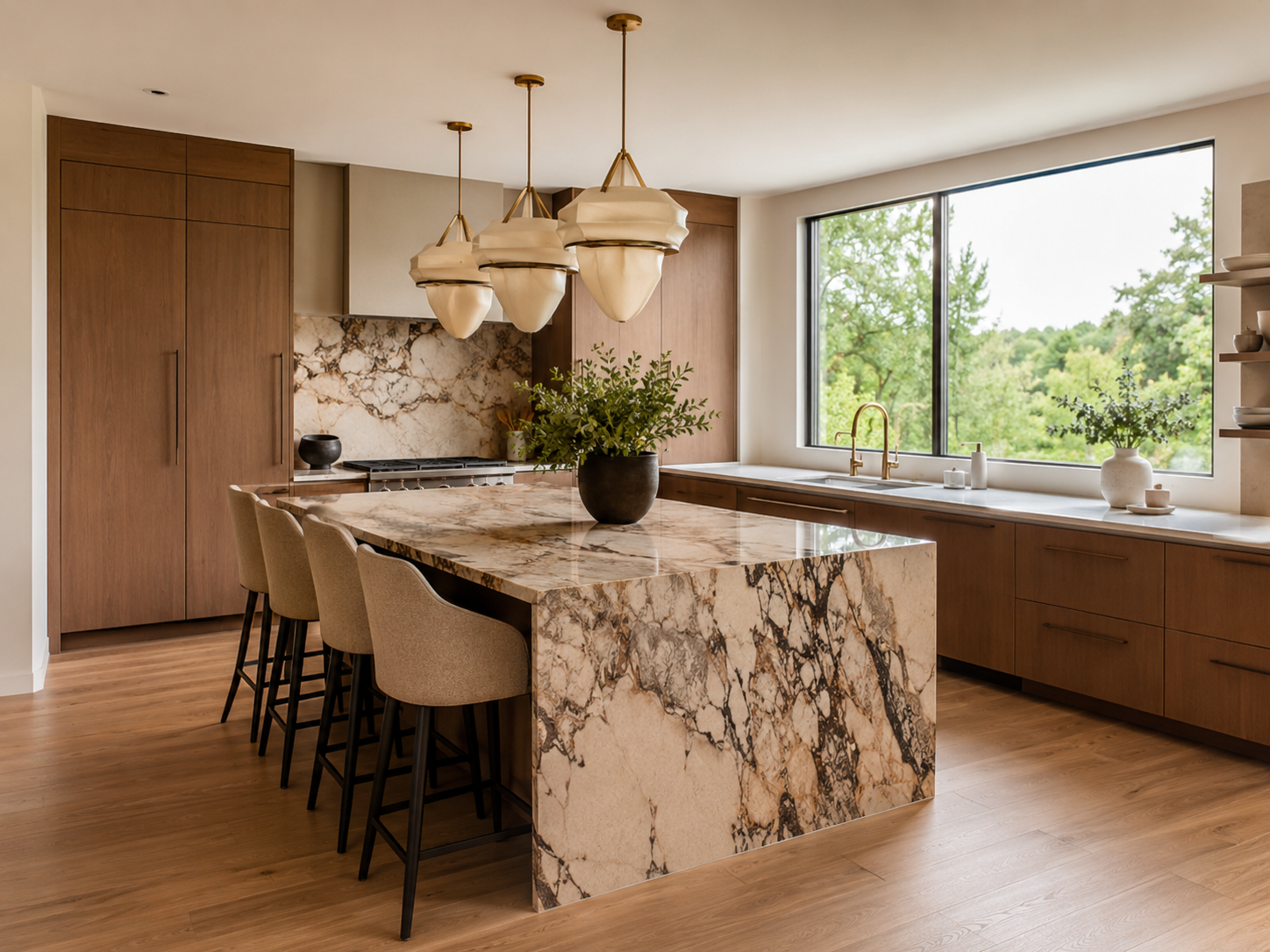
2026 kitchen design with wood cabinets and stone countertops in a Maryland home

2026 Kitchen Design Trends in Maryland and Northern Virginia: What DMV Homeowners Are Building Right Now

Something meaningful has shifted in how Maryland and Northern Virginia homeowners are thinking about their kitchens. For most of the past decade, the design formula was predictable. White cabinets. Gray quartz countertops. Stainless appliances. Open shelving. It was safe, it photographed well, and it satisfied most buyers. However, by 2026, that formula has run its course.

Today’s DMV homeowners are making bolder, more personal choices. According to the 2026 Houzz Kitchen Trends Study, the kitchen remains the most renovated room in the home, with 67% of remodeling homeowners including it in their scope. More importantly, the design decisions being made are fundamentally different from those made even two years ago. Warmth is replacing clinical minimalism. Wood is replacing white. Character is replacing uniformity. And function is evolving from “nice island” to a genuine system designed around how a specific family actually lives.

At H&C Construction Design Build, we design and build kitchen remodels across Maryland, Washington DC, and Northern Virginia. Here are the trends we’re seeing most consistently across Bethesda, Rockville, Potomac, Arlington, and Fairfax in 2026 — and why they matter.


Trend 1: Wood Cabinets Overtake White

This is the defining material shift of 2026. For the first time in years, wood cabinets have overtaken white as the most popular choice among renovating homeowners nationally, according to Houzz data. Nearly 3 in 10 remodeling homeowners are now choosing wood cabinetry — a 6-percentage-point jump year-over-year. White, meanwhile, dropped by 5 points.

In the DMV, this shift is strongly visible across mid-range and high-end kitchen projects. Medium wood tones lead the preference, followed by light wood and, increasingly, deeper, darker wood finishes.

Why is this happening? Because after a decade of white kitchens, homeowners are finding that white surfaces don’t age the way they imagined. They show wear, require constant cleaning, and feel colder than anticipated in daily use. Wood, by contrast, adds warmth, feels more grounded, and photographs well without requiring a spotless kitchen to look its best.

In addition, natural wood tones connect to the broader biophilic design movement — the desire to bring natural materials into the home. Maryland and Northern Virginia homeowners are responding to this shift because it aligns with how they want their homes to feel: warm, personal, and lived-in rather than staged and clinical.

What this means for your remodel: Wood cabinetry is not a trend that will look dated quickly. Natural materials with inherent character tend to age gracefully. However, wood selection matters significantly. Light woods like white oak create an airy, Scandinavian-influenced feel. Richer mediums like walnut and hickory add warmth without darkness. Our Kitchen Remodeling team guides homeowners through these choices in the context of their specific home’s light levels, adjacent finishes, and long-term goals.


Trend 2: Statement Countertops With Bold Veining

Quartz’s reign as the automatic default countertop choice is facing its first serious challenge in years. In 2026, natural quartzite and marble with expressive, dramatic veining are commanding serious interest — and NKBA data shows natural quartzite leading for both countertops and full-height backsplashes among premium kitchen projects.

This trend reflects a broader desire for character and individuality. A countertop with dramatic veining that spans the full island length is a design statement in itself. It anchors the room, draws the eye, and delivers a result no two homes share — because no two natural stone slabs are identical.

Alongside natural stone, bold monolithic applications are gaining ground. Waterfall edges, where the stone continues vertically down the sides of the island, are increasingly popular — turning the countertop into a sculptural element rather than simply a surface.

What this means for your remodel: Natural stone requires more maintenance than engineered quartz, and homeowners should factor in sealing requirements and sensitivity to acidic spills. For kitchens that see heavy daily use, a quartzite with stronger natural durability is often a better choice than marble. Our design team helps homeowners make material choices that balance the aesthetic they want with the maintenance reality they’re willing to live with.


Trend 3: Multi-Functional Islands — Beyond the Prep Station

The kitchen island continues its evolution in 2026. It is no longer simply a prep station. In DMV homes across Bethesda and Potomac, the island has become the most important piece of “furniture” in the house — serving simultaneously as a cooking workspace, casual dining area, social gathering point, homework station, and sometimes a remote work spot.

Because of this, island design in 2026 is being approached with far more intentionality. Homeowners are specifying:

  • Multiple seating arrangements — seating on two or even three sides
  • Integrated charging stations built into the island structure
  • Prep sinks on the island to separate washing and prep tasks from the main sink
  • Built-in storage designed for specific items rather than generic cabinetry
  • Contrasting materials — a different cabinet finish or countertop material than the perimeter cabinetry

Beyond this, some homeowners in larger DMV homes are adding secondary islands — a concept sometimes called the “companion island.” This second island is often positioned slightly apart from the main island, serving as an additional prep or serving surface during entertaining.

What this means for your remodel: Island planning should start with how you actually use your kitchen, not how a kitchen island typically looks. The right size, the right seating configuration, and the right built-in features depend entirely on your household’s specific patterns. In addition, an island that’s too large for the kitchen’s circulation space creates daily friction that no amount of aesthetic beauty can compensate for.


Trend 4: Warm, Earthy Color Palettes Replace Stark White

Alongside the shift from white cabinets to wood, the overall kitchen color palette is warming significantly in 2026.

According to Reico Kitchen & Bath designers in Northern Virginia, homeowners are gravitating toward creamy neutrals, honey-toned woods, and soft, organic hues that evoke calm and comfort — layered with natural textures like reeding, stone, and brushed metals. financialcontent

Specifically, the tones gaining momentum in Maryland and Northern Virginia kitchen projects include:

  • Creamy off-whites and warm whites that feel warmer than stark blue-toned whites
  • Warm greens — particularly sage and olive — used selectively on islands or lower cabinetry
  • Mushroom, putty, and greige tones replacing cool gray on painted cabinetry
  • Navy and deep green as bold accent choices for islands or lower cabinets paired with lighter uppers

Two-tone cabinetry — combining two complementary colors, typically a bolder lower cabinet with a lighter upper — remains strong. In fact, contrasting island colors have become nearly standard in mid-range and high-end DMV kitchen remodels, giving the island a distinct identity within the overall kitchen design.

What this means for your remodel: Color choices made in 2026 that lean toward warm neutrals and natural materials are significantly more durable as design decisions than trendy accent colors or highly specific combinations. The safest long-term kitchen color strategy pairs a warm neutral as the dominant palette with one well-chosen accent that reflects personal preference without committing the entire space to a color that may feel dated in five years.


Trend 5: Layered, Intentional Lighting

Lighting design in the 2026 DMV kitchen has moved well beyond a ceiling can and a couple of pendants. Because kitchens are now being used for more activities throughout more hours of the day — cooking, working, entertaining, eating — the lighting needs of the space are more complex, and homeowners are planning for that complexity from the start.

The 2026 standard in kitchen lighting includes:

Ambient lighting — the baseline layer. Recessed cans, properly spaced and on dimmers, provide the even foundation lighting that the whole kitchen needs.

Task lighting — focused and functional. Under-cabinet lighting directly over the countertop is now nearly universal in mid-range and above kitchens, because it dramatically improves visibility for prep work and eliminates the shadow problem that overhead recessed lighting creates on countertops.

Decorative accent lighting — personality and mood. Pendant lighting above the island, chosen for visual impact rather than pure function, anchors the island as the room’s centerpiece. In 2026, pendant choices are becoming more sculptural and expressive — oversized forms, asymmetrical arrangements, and natural materials like rattan and aged brass that contribute to the warm, organic aesthetic trending in the broader kitchen palette.

What this means for your remodel: Electrical planning for lighting needs to happen during the design phase, before walls are closed. Retrofitting additional lighting circuits, under-cabinet wiring, and dimmer switches after a kitchen is finished is significantly more disruptive and expensive than building it into the original plan.


Trend 6: Secondary Prep Spaces and Concealed Pantries

As noted in our recent article on kitchen storage remodeling, the concealed pantry has become the most-requested kitchen feature of 2026. The underlying driver is the same trend visible across all of these shifts: homeowners want their main kitchen to feel calm, organized, and visually clean — which means everything that creates clutter needs somewhere intentional to go.

In 2026, this is evolving further into secondary prep spaces — a small, separate zone adjacent to the main kitchen where messier tasks happen out of sight. Northern Virginia kitchen designers report strong demand for secondary prep areas, beverage zones, and microwave drawers outside the main kitchen work zone, because they make the kitchen function smarter without compromising the visual simplicity of the main space. financialcontent

These secondary zones are especially popular in larger DMV homes in Potomac, McLean, and upper Bethesda, where the kitchen footprint supports the additional square footage. However, even smaller kitchens are incorporating the concept at a reduced scale — a concealed appliance garage, a dedicated coffee station, or a butler’s pantry tucked behind a paneled door.


Trend 7: Indoor-Outdoor Kitchen Integration

In the DMV’s mid-Atlantic climate, the connection between the kitchen and outdoor living space has become an increasingly important design consideration. This aligns with the broader biophilic design movement — the desire for natural light, natural materials, and a connection to the outdoors in daily living.

In 2026, Maryland and Northern Virginia kitchen remodels increasingly incorporate:

  • Large folding or sliding glass doors that connect the kitchen to an adjacent deck or patio
  • Expanded kitchen windows that maximize natural light and garden views
  • Outdoor kitchen stations adjacent to the main kitchen, creating a continuous cooking and entertaining zone across indoor and outdoor space

When a kitchen remodel is being planned alongside an outdoor living project, coordinating the two is meaningfully more efficient than planning them separately. Our Decks & Porches team frequently coordinates with kitchen projects to ensure the indoor and outdoor spaces complement each other in material and design.


What 2026 Kitchen Trends Mean for DMV Homeowners Planning a Remodel

The common thread across all of these 2026 trends is personalization. Homeowners are moving away from kitchens that look like staged, editorial spaces, and toward kitchens that actually reflect how their families live.

Because of this, the right design decisions are highly dependent on your specific situation — your kitchen’s footprint, your household’s daily patterns, your home’s architectural character, and your long-term plans. A trend that’s right for a Bethesda Colonial may not be the right fit for a Rockville townhome.

The most important thing is to start with the right design-build partner. A team that listens carefully to how you actually use the space, advises honestly on what will and won’t serve you well long-term, and executes flawlessly through construction is far more valuable than one that simply follows trends without context.


Ready to Plan Your 2026 Kitchen Remodel?

H&C Construction Design Build serves homeowners across Maryland, Washington DC, and Northern Virginia — including Rockville, Bethesda, Potomac, Silver Spring, Chevy Chase, Gaithersburg, Montgomery County, Arlington, Alexandria, and Fairfax. Whether you’re inspired by wood cabinets, statement stone, or a fully redesigned layout, our design-build team is ready to help you plan a kitchen that reflects who you are — not just what’s trending.

Explore our Kitchen Remodeling service and request a consultation to start planning your project.