Smart Home Remodeling in Maryland: How 2026 Homeowners Are Integrating Lighting, Security, Climate Comfort, Kitchens, Bathrooms, and Outdoor Living
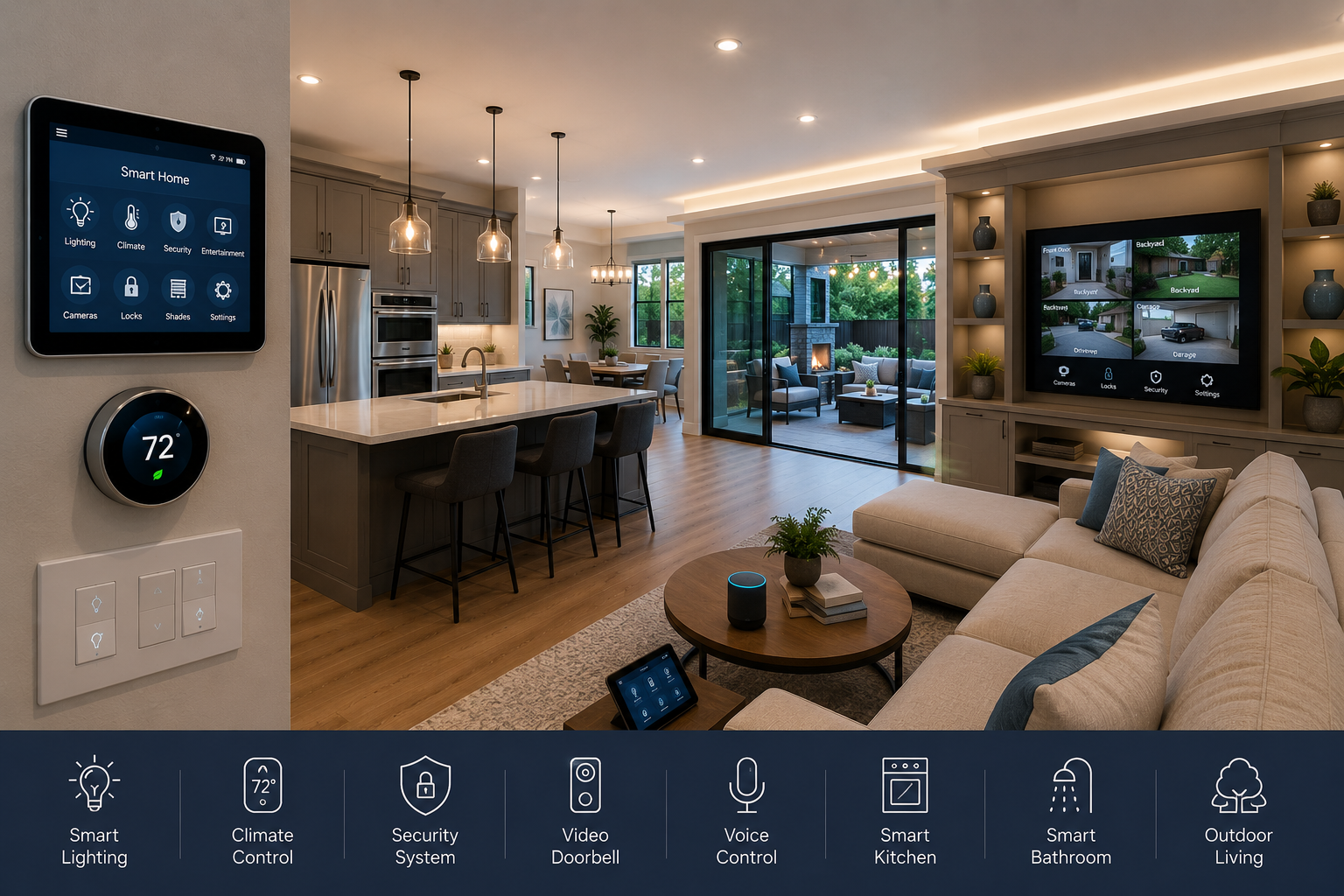
Smart home remodeling in Maryland is becoming one of the most important design-build strategies for 2026. Homeowners are no longer thinking about smart technology as a few separate gadgets. They want integrated homes that feel safer, easier to manage, more comfortable, more energy-aware, and better prepared for daily life.
For homeowners in Rockville, Bethesda, Potomac, Silver Spring, Chevy Chase, Gaithersburg, Washington, D.C., Arlington, and Northern Virginia, smart home remodeling is especially valuable because many homes are older, layouts may be outdated, electrical systems may need modernization, and families want homes that work better without feeling complicated.
Recent smart home trend coverage shows that homeowners are moving toward unified systems, energy-aware controls, design-conscious technology, better security, and automation that supports daily routines instead of adding complexity. Smart lighting is also becoming more adaptive and wellness-oriented, with newer systems emphasizing natural rhythm, color temperature, and deeper integration with everyday living.
At H&C Construction Design Build, we help Maryland and DMV homeowners remodel homes with better layouts, lighting, comfort, safety, and long-term value. If your home feels outdated, poorly lit, inefficient, disconnected, or difficult to manage, start with Full Home Remodeling or view Our Remodeling Projects.
Why Smart Home Remodeling Matters in 2026
A smart home remodel is not only about installing devices. It is about improving how the home works.
A modern smart remodeling plan may include:
- Smart lighting
- Motion-sensitive lighting
- Smart thermostats
- Integrated security
- Video doorbells
- Smart locks
- Whole-home Wi-Fi planning
- Smart bathroom mirrors
- Smart shower controls
- Outdoor lighting automation
- Basement entertainment controls
- Energy monitoring
- Automated shades
- Voice or app-based controls
- Garage and entry monitoring
- Leak detection
- Smoke and carbon monoxide alerts
The strongest smart home upgrades are not random. They are planned around the homeowner’s lifestyle.
A family may need better entry security. A remote worker may need lighting and climate comfort. An older homeowner may need safer pathways and easier controls. A homeowner who entertains may want integrated outdoor lighting, deck lighting, and kitchen-to-porch flow.
This is why smart home remodeling often works best as part of Full Home Remodeling. A whole-home approach allows lighting, electrical planning, room layout, storage, security, and comfort to be coordinated properly.
Smart Lighting Is One of the Highest-Impact Upgrades
Lighting affects the way every room feels.
Poor lighting can make a newly remodeled home feel unfinished. Smart lighting can improve comfort, safety, energy use, and daily routines.
Smart lighting can support:
- Morning brightness
- Evening relaxation
- Motion-activated hallway lighting
- Kitchen task lighting
- Bathroom night lighting
- Basement media room scenes
- Outdoor porch lighting
- Deck stair safety
- Accent lighting for built-ins
- Security lighting
- Dimming and color temperature control
Current design coverage shows that layered lighting is becoming more important across home design, from kitchens to bedrooms and bathrooms. Good Housekeeping’s 2026 kitchen trend coverage highlights bold and integrated lighting, including under-cabinet and toe-kick lighting that supports both ambiance and function. The Spruce also notes that layered lighting is replacing single overhead lighting in bedrooms because homeowners want spaces that feel warmer and more comfortable.
For Maryland homeowners, this means lighting should be planned early during remodeling.
During Kitchen Remodeling, lighting can improve cooking, prep work, island seating, pantry use, and entertaining. During Bathroom Remodeling, lighting can improve safety, grooming, relaxation, and nighttime movement.
Smart lighting should not be an afterthought. It should be part of the design.
Smart Kitchens Are About Function, Not Gimmicks
The kitchen is one of the best rooms for smart remodeling because it handles cooking, storage, lighting, appliances, family routines, and entertaining.
A smart kitchen remodel may include:
- Under-cabinet lighting
- Toe-kick night lighting
- Smart switches
- Smart appliance planning
- Charging drawers
- Hidden outlets
- Appliance garages
- Smart ventilation controls
- Leak sensors under sinks
- Beverage station lighting
- Pantry lighting
- Indoor-outdoor serving connections
- Better electrical planning for future appliances
Kitchen design is moving toward richer materials, hidden functionality, pantry zones, statement lighting, and better indoor-outdoor connection. Good Housekeeping’s 2026 kitchen trend coverage highlights butler’s pantries, pocket door cabinets, integrated lighting, indoor-outdoor connectivity, and warmer color choices. The Spruce also reports that future kitchens are expected to include more appliance garages, richer colors, zoned layouts, and scullery-style support spaces.
For H&C Construction clients, the important point is simple: smart kitchen remodeling should make the kitchen easier to use.
Explore Kitchen Remodeling if your kitchen lacks storage, lighting, appliance planning, or modern function.
Smart Bathrooms Improve Safety, Comfort, and Daily Routines
Bathrooms are becoming smarter because homeowners want spaces that feel safer, cleaner, warmer, and more spa-like.
A smart bathroom remodel may include:
- Backlit mirrors
- Motion-activated night lighting
- Heated floors
- Smart ventilation fans
- Humidity sensors
- Smart shower controls
- Leak detection
- Better vanity lighting
- Touchless fixtures
- Integrated outlets
- Heated towel bars
- Layered lighting scenes
Bathroom remodeling trends are moving toward immersive, restorative spaces with intentional lighting, warm finishes, cocoon-like showers, and spa-inspired comfort.
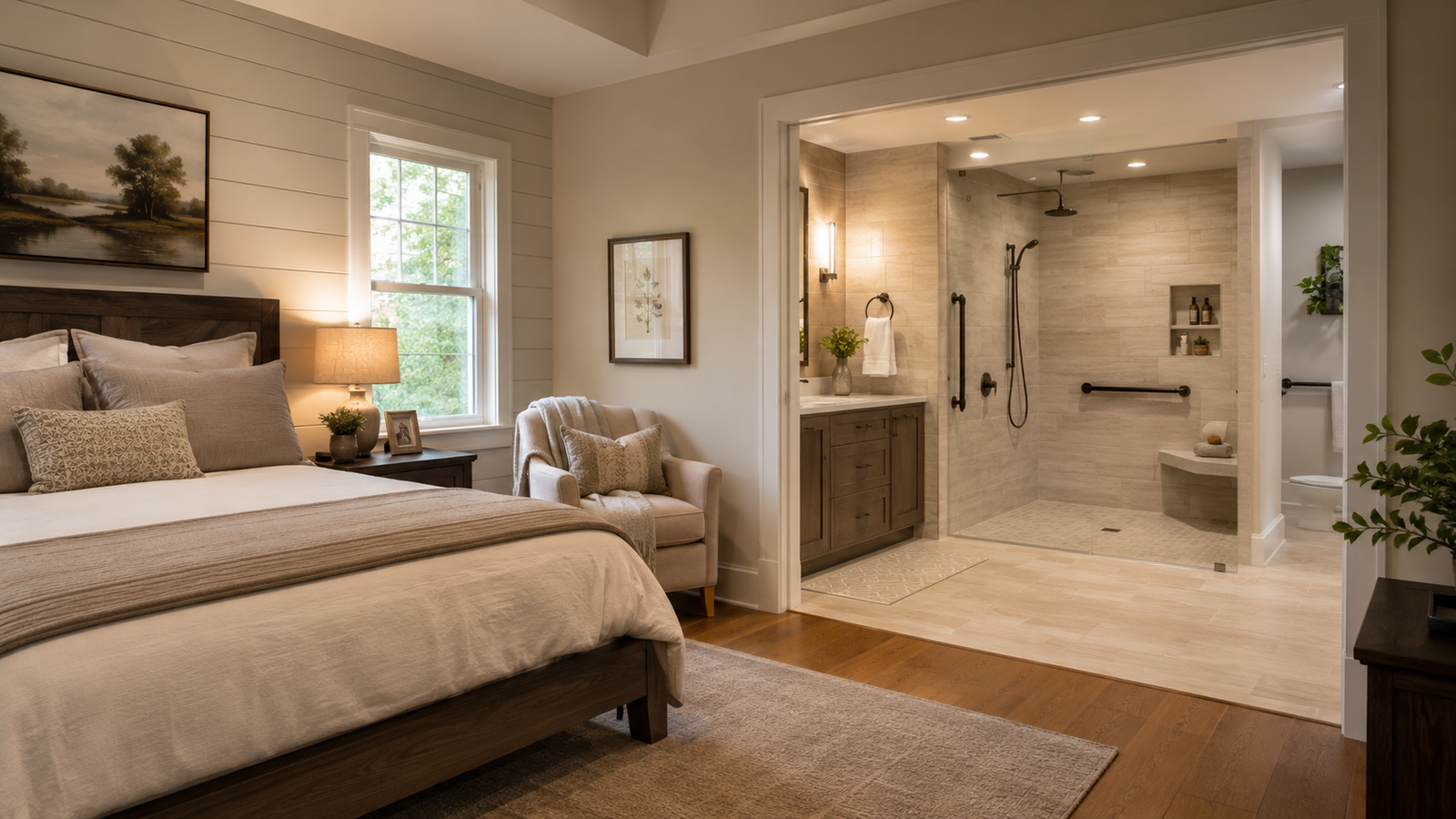
For Maryland homeowners, smart bathroom design is especially valuable when combined with safety and aging-in-place planning. Motion lighting, curbless showers, better ventilation, and slip-resistant flooring can make the room feel modern while also improving long-term usability.
This is why smart bathroom remodeling connects directly with Bathroom Remodeling and Full Home Remodeling.
A bathroom should look beautiful, but it should also work intelligently.
Smart Security Starts at the Entry Points
Smart home remodeling should also improve security.
For many homeowners, the most important smart upgrades are not luxury features. They are practical protections around doors, windows, exterior lighting, garages, and outdoor spaces.
Smart security upgrades may include:
- Video doorbells
- Smart locks
- Door sensors
- Window sensors
- Exterior cameras
- Motion lighting
- Garage door monitoring
- Floodlight cameras
- Smart smoke alarms
- Smart carbon monoxide detectors
- Water leak sensors
- App-based access controls
These upgrades are especially valuable when paired with exterior remodeling.
During Decks & Porches, homeowners can plan exterior lighting, porch lighting, deck stair lighting, and backyard visibility. During Home Additions, smart access and security can be planned into the new structure from the beginning.
The goal is not to make the home feel like a security system. The goal is to make safety feel seamless.
Smart Climate Comfort Supports Year-Round Living
Smart thermostats and climate controls can help homeowners manage comfort more intelligently.
This matters in Maryland because homes must handle humid summers, cold winters, changing seasons, basements, additions, sunrooms, and rooms with different comfort needs.
Smart comfort upgrades may include:
- Smart thermostats
- Zoned temperature control
- Smart ceiling fans
- Humidity monitoring
- Basement comfort monitoring
- Sunroom comfort planning
- Automated shades
- Ventilation improvements
- Energy-use insights
- Smart leak and freeze alerts
Smart home trend coverage continues to emphasize energy-aware systems and connected controls that help homeowners reduce waste and adapt to daily routines. A recent IoT home automation research paper also shows how sensors for motion, temperature, humidity, light, and smoke can support automated control and energy efficiency.
For remodeling, this means comfort planning should happen before walls are closed.
This is especially important for Basement Remodeling, Home Additions, and Full Home Remodeling.
A smart remodel should help the home feel better in every season.
Smart Outdoor Living Makes Decks and Porches More Usable
Outdoor living is becoming smarter too.
A deck, porch, or outdoor kitchen becomes more valuable when homeowners can control lighting, comfort, and security easily.
Smart outdoor remodeling may include:
- Deck stair lighting
- Porch ceiling fans
- Outdoor-rated outlets
- Smart landscape lighting
- Outdoor security cameras
- Motion lighting
- Outdoor speakers
- App-controlled lighting scenes
- Smart irrigation coordination
- Exterior door sensors
- Outdoor kitchen lighting
- Weather-resistant controls
For families who entertain, these upgrades make outdoor spaces more usable after sunset. For homeowners who care about security, smart lighting and cameras improve visibility. For daily living, automated lighting makes porches, stairs, and backyard paths safer.
This is why smart remodeling connects strongly with Decks & Porches.
The best outdoor living spaces are not only beautiful during the day. They are comfortable, safe, and usable at night.
Smart Remodeling Requires Good Construction Planning
Smart home remodeling should not be improvised at the end of a project.
Technology works best when electrical planning, wall locations, lighting layouts, outlets, Wi-Fi coverage, cabinetry, appliances, and room functions are coordinated before construction begins.
Smart remodeling may require planning for:
- Outlet placement
- Low-voltage wiring
- Switch locations
- Lighting circuits
- Network coverage
- Device power
- Cabinet-integrated charging
- Hidden wiring
- Bathroom-safe electrical planning
- Outdoor-rated systems
- Future upgrades
This is why homeowners should work with a qualified General Contractor in Maryland and Licensed Contractors in Maryland when integrating smart systems into a remodel.
The technology should support the design, not clutter it.
A smart home should still feel warm, beautiful, and human.
Repair Old Problems Before Adding Smart Features
Smart upgrades should not cover construction problems.
Before investing in smart systems, homeowners should address issues such as:
- Outdated electrical work
- Water damage
- Poor ventilation
- Failing flooring
- Moisture in basements
- Unsafe decks
- Poor previous remodeling
- Damaged drywall
- Leaking windows or doors
- Structural concerns
If these problems exist, the right starting point may be Restoration & Rebuild.
A smart home still needs strong construction behind the walls.
Technology can improve daily life, but it cannot fix poor waterproofing, unsafe framing, damaged materials, or outdated infrastructure.
When Should You Consider Smart Home Remodeling?
Smart home remodeling may be a strong decision if your home has any of these issues:
- Poor lighting
- Outdated switches and outlets
- Weak home security
- Uneven room comfort
- Dark hallways or stairs
- Basement comfort issues
- Outdoor areas are hard to use at night
- Kitchen lacks modern electrical planning
- Bathroom ventilation is weak
- Home office needs better lighting and connectivity
- You want easier control of daily routines
- You are planning aging-in-place upgrades
- You want the home to feel more modern without looking overly technical
Smart remodeling is most effective when it is planned with the whole home in mind.
How H&C Construction Design Build Helps Maryland Homeowners
At H&C Construction Design Build, we help homeowners remodel with design, comfort, safety, craftsmanship, and long-term value.
Our smart home remodeling approach focuses on five priorities.
1. Understanding Daily Routines
We begin by learning how the home should function: lighting, security, comfort, entertainment, kitchen flow, bathroom use, outdoor living, or aging-in-place support.
2. Evaluating the Existing Home
We review layout, electrical needs, lighting gaps, basement comfort, kitchen planning, bathroom ventilation, exterior access, and old construction issues.
3. Planning the Right Smart Remodeling Strategy
We help homeowners decide whether the project should focus on smart lighting, kitchen upgrades, bathroom comfort, outdoor living, full-home remodeling, basement improvements, or additions.
4. Coordinating Construction Professionally
We manage remodeling with attention to electrical planning, lighting, layout, materials, safety, waterproofing, and finish quality.
5. Building for Long-Term Value
We focus on creating homes that feel easier, safer, more comfortable, and better prepared for the future.
Whether you need smart lighting in Bethesda, a connected kitchen in Rockville, smart outdoor living in Potomac, bathroom comfort upgrades in Silver Spring, or full-home remodeling in Montgomery County, H&C Construction can help you remodel with purpose and craftsmanship.
View Our Remodeling Projects to start planning.
Build a Smarter Home Without Losing Warmth and Design
Smart home remodeling in Maryland is not about filling the home with gadgets. It is about creating a home that feels easier to use, safer to manage, more comfortable, and better aligned with daily life.
In 2026, homeowners want smart lighting, better security, climate comfort, connected kitchens, spa-like bathrooms, safer outdoor spaces, and full-home systems that work quietly in the background.
If your home feels outdated, poorly lit, disconnected, inefficient, or difficult to manage, H&C Construction Design Build can help you remodel with intelligence, craftsmanship, and long-term value.
Explore Full Home Remodeling, Kitchen Remodeling, Bathroom Remodeling, Decks & Porches, and General Contractor in Maryland, with H&C Construction Design Build today.