Posted on Leave a comment

Building Safety Month Montgomery County 2026, The “Built to Last” Standard

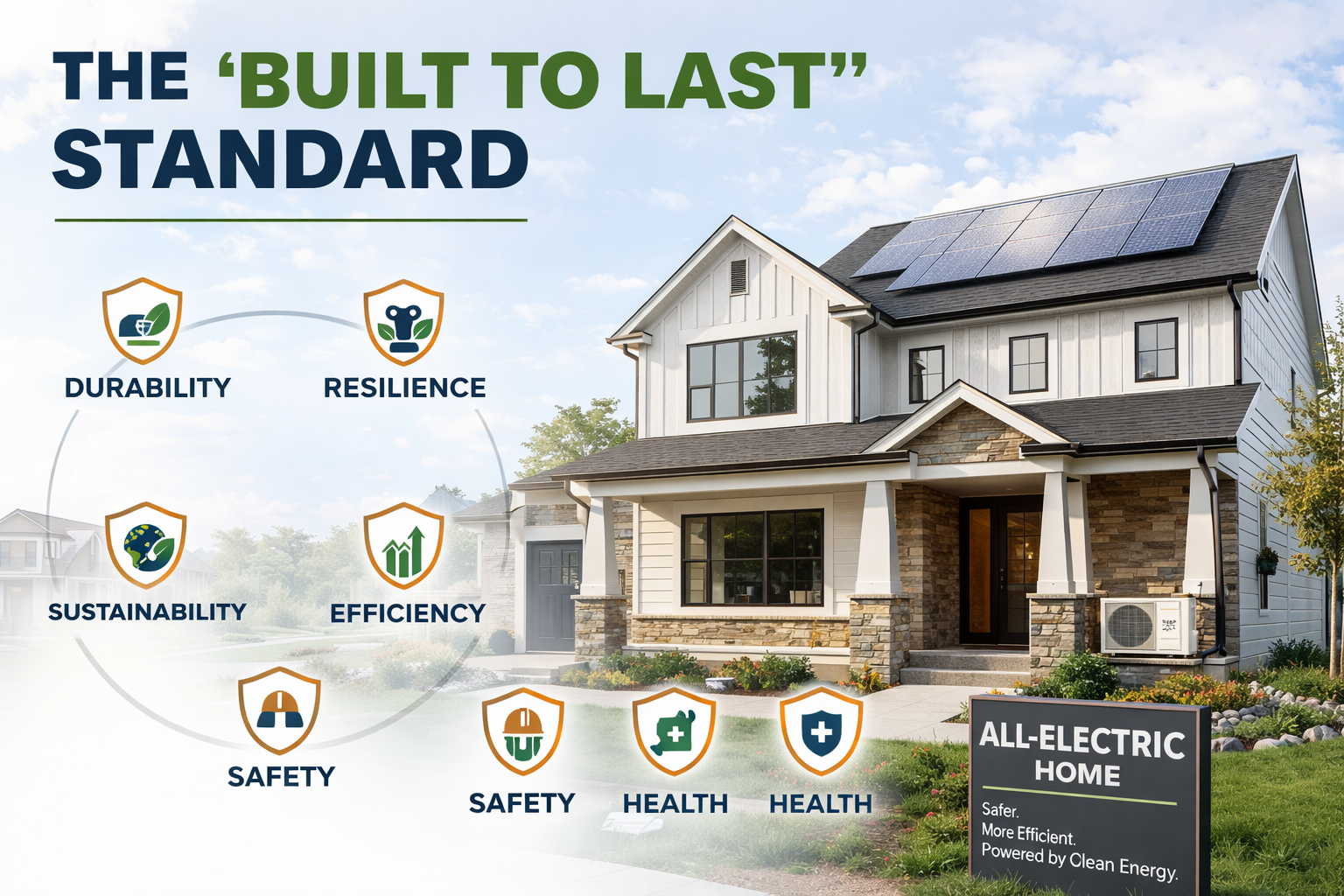
Built to Last,  Montgomery County’s 2026 Safety Month Proclamation

On Tuesday, April 21, 2026, Montgomery County leaders will officially proclaim May as Building Safety Month. Under this year’s international theme, “Built to Last,” the Department of Permitting Services (DPS) is prioritizing structural durability, resilient electrical systems, and the long-term sustainability of the DMV’s housing stock.

For homeowners in Bethesda and Potomac, this proclamation is far more than a formality. It is a technical directive to ensure that luxury estates meet the rigorous 2026 International Residential Code (IRC) benchmarks. Consequently, Full Home Remodeling in Maryland has shifted; it is no longer just about aesthetics, but about verifying that your property is engineered to endure the evolving climate and regulatory demands of the mid-Atlantic.

The “Check Your Deck” Initiative: Preventing Structural Failure

A cornerstone of the 2026 campaign is the Residential Deck Maintenance Inspection Program, which opens for its 300-appointment limit on Friday, May 1, 2026. Montgomery County inspectors will be specifically targeting the Ledger Attachment and lateral load support systems—the two most frequent failure points in residential structures across the DMV.

If you are currently planning a Decks & Sunrooms expansion, the “Built to Last” standard requires a move toward Helical Pier foundations and non-corrosive, stainless-steel fastening systems. These components are designed to withstand the increased soil saturation and hydrostatic pressure seen in recent Maryland spring seasons. By proactively performing a structural audit during your Restoration & Rebuild phase, you avoid the catastrophic safety hazards that lead to failed inspections and diminished resale value during the peak 60-day selling window.

Mechanical Resilience and the Healthy Homes Mandate

The “Built to Last” theme also integrates the newly launched Maryland Healthy Homes Production Grant (April 7, 2026). This program provides up to $18,000 per property for critical safety repairs, including mitigating gas leaks, electrical hazards, and structural damage.

Whether you are finishing a Basement Remodeling or an extensive Home Additions project, your 2026 infrastructure must prioritize:

  • Smart Smoke & VOC Detection: Integrated with whole-home automation to monitor IAQ (Indoor Air Quality) in real-time.

  • Whole-Home Surge Protection: Essential for protecting the sensitive control boards of high-efficiency heat pumps required by the new 2026 all-electric codes.

  • Lead & Asbestos Remediation: Now a primary focus of state-backed “Safe Home” funding, ensuring that older Bethesda estates are brought up to modern biological safety standards.

The ROI of “Safety as Infrastructure”

In the 2026 market, “Safety” has become a quantifiable valuation metric. Homeowners who can produce a Technical Safety Audit—demonstrating upgraded fire-rated materials in a Kitchen Remodeling or moisture-proof Flooring systems—are seeing a 7% premium on appraisals compared to “cosmetic-only” renovations.

By aligning your remodel with the 2026 “Built to Last” proclamation, you aren’t just following code; you are securing your property’s status as a high-performance asset. Partnering with a General Contractor in Maryland who treats structural safety as the foundation of luxury ensures your property remains a secure sanctuary for generations.


Capitalize on the 2026 Safety Standards

Are you ready to move your property to the “Built to Last” standard? Explore our specialized 2026 design-build services:
Posted on Leave a comment

The ‘Quiet Luxury’ Trend, Why 2026 Homeowners Prioritize Acoustic Privacy

The ‘Quiet Home’ Premium, Why 2026 Luxury Buyers Prioritize Acoustic Privacy

In the 2026 DMV real estate market, the definition of luxury has moved from “visual showiness” to “Sensory Sovereignty.” The “Quiet Luxury” movement—a dominant force in high-end architecture this year—prioritizes homes that function as sensory retreats from an increasingly connected world. Unlike the echo-prone open concepts of the past decade, 2026 buyers in Bethesda and Rockville are paying a significant premium for Acoustic Privacy: spaces specifically engineered to facilitate deep concentration, mental restoration, and restorative sleep.

As of April 20, 2026, properties that feature “Integrated Acoustic Suites” are outperforming standard luxury listings by nearly 9% in price per square foot. Consequently, Full Home Remodeling has evolved into a discipline of interior performance, where the “sound” of a room is as important as its silhouette.

The Sound-Sensitive Remodel: Engineering Silence

The surge in multi-generational living and the permanence of high-level remote leadership roles have made acoustic separation a functional requirement rather than a perk. Accordingly, any high-performance Basement Remodeling or Home Additions project must now integrate Advanced Sound-Sensitive Design. At H&C Construction, we achieve this through a “Layered Attenuation” strategy:

  • High-Density Mineral Wool: We’ve moved beyond fiberglass to mineral wool insulation, which provides superior fire resistance and a massive increase in Sound Transmission Class (STC) ratings.

  • Decoupled Framing: For master suites and home offices, we utilize resilient channels to decouple the drywall from the studs, effectively “breaking” the path for vibration and sound waves.

  • Solid-Core Infrastructure: Replacing hollow-core units with 1 ¾-inch solid-core doors and drop-seals is now a mandatory baseline for any 2026 Bathroom Remodeling or bedroom wing expansion.

Biophilic Textures: The 2026 Material Shift

The “Quiet Luxury” aesthetic is intrinsically linked to the Biophilic Design movement. In 2026, the sterile “white-box” look has been replaced by layered, earthy textures that naturally absorb sound.

In a modern Kitchen Remodeling project, this means replacing high-gloss, reflective cabinets with matte-finished natural woods and honed stone. These materials don’t just “look” warmer; they reduce the “visual and auditory noise” that contributes to cognitive fatigue. Similarly, we are seeing a massive demand for Bio-Based Mycelium and PET Felt Wall Panels. These acoustic treatments, often disguised as custom art installations, are the primary tool for dampening the echoes in high-ceilinged Decks & Sunrooms or grand foyers.

The “Underfoot” Investment: Acoustic Flooring

Often the most overlooked aspect of a luxury remodel is the impact of vertical sound transmission. During a Restoration & Rebuild phase, we prioritize high-performance Flooring underlayments—such as recycled cork or specialized rubber membranes. These materials mitigate the “click-clack” of high-traffic areas, ensuring that a Home Additions unit above a garage or a basement suite remains a silent sanctuary regardless of the activity elsewhere in the estate.

The 2026 ROI of the “Quiet Home”

Market data indicates that “Quiet Luxury” homes are achieving a 99% list-to-sale ratio in the current Spring 2026 window. By investing in the “Quiet Home” premium today, you are not just following a design trend; you are building an environment that supports the health, focus, and longevity of its inhabitants. Partnering with a General Contractor in Maryland who understands the physics of sound is the only way to ensure your luxury project delivers the serenity it promises.


Experience the Future of Quiet Luxury

Are you ready to transform your property into a high-performance sensory retreat? Explore our specialized 2026 design-build services to see how we scale silence: