How to Prioritize Kitchens, Bathrooms, Basements, Outdoor Spaces, and Energy Upgrades in 2026
A whole-home remodel is one of the most important investments a Maryland homeowner can make. It can improve comfort, increase usable space, modernize outdated rooms, solve structural problems, prepare the home for long-term living, and create stronger resale appeal.
But a successful whole-home remodel does not begin with choosing tile, cabinets, flooring, or paint colors.
It begins with priorities.
That is why homeowners need a whole-home remodeling roadmap in Maryland before starting a major renovation.
In 2026, homeowners are thinking more strategically about remodeling. They want homes that are more functional, more comfortable, more energy-conscious, more flexible, and better aligned with long-term family needs. Houzz’s 2026 home design trend coverage highlights accessible layouts, richer materials, wellness-focused spaces, and homes designed around how people actually live. May is also National Home Remodeling Month, and NAHB Remodelers uses the annual campaign to highlight the benefits of hiring professional remodelers and planning remodeling projects carefully.
For homeowners in Rockville, Bethesda, Potomac, Silver Spring, Chevy Chase, Gaithersburg, Washington, D.C., Arlington, and Northern Virginia, the right remodeling roadmap can help avoid scattered decisions and create a stronger final result.
At H&C Construction Design Build, we help homeowners plan remodeling projects with structure, craftsmanship, and long-term value. If your home needs more than a single-room update, start with Full Home Remodeling or view Our Remodeling Projects for inspiration.
Why Whole-Home Remodeling Needs a Roadmap
Many homeowners begin with one problem.
The kitchen feels outdated. The bathroom is too small. The basement is unfinished. The deck is aging. The home needs more space. The floors feel worn. The layout does not support modern living.
Those individual problems matter, but they are often connected.
A kitchen remodel may affect flooring, lighting, plumbing, electrical work, and the dining area. A bathroom remodel may reveal ventilation or moisture problems. A basement remodel may require egress, insulation, moisture control, and electrical planning. A home addition may affect rooflines, siding, HVAC, windows, and the entire traffic flow of the home.
Without a roadmap, homeowners can end up remodeling in the wrong order.
That can create problems such as:
- Paying twice for overlapping work
- Choosing finishes before solving structural issues
- Replacing flooring before layout changes
- Remodeling a kitchen before deciding on an addition
- Finishing a basement before addressing moisture
- Building a deck before correcting exterior drainage
- Updating bathrooms without improving ventilation
- Choosing materials that do not match the rest of the home
- Creating a home that feels patched together instead of cohesive
A whole-home roadmap helps homeowners decide what should happen first, what can happen later, and how each project should support the next.
This is why Full Home Remodeling should be treated as a strategic planning process, not just a collection of separate upgrades.
Step 1: Start With the Home’s Condition, Not the Finishes
The first step in a whole-home remodeling roadmap is understanding the current condition of the home.
Before choosing finishes, homeowners should evaluate whether the home has issues that need to be repaired or rebuilt.
Important areas to review include:
- Water damage
- Foundation concerns
- Roofline leaks
- Basement moisture
- Old electrical systems
- Plumbing problems
- Poor ventilation
- Damaged flooring
- Rot around doors or windows
- Unsafe decks or railings
- Mold or musty odors
- Structural movement
- Poor previous remodeling work
This matters because cosmetic upgrades should not cover hidden problems.
For example, installing new basement flooring before solving moisture issues can lead to future damage. Remodeling a bathroom without correcting ventilation can create humidity problems. Building a new deck without inspecting the ledger connection or framing can create safety risks.
If the home has water damage, storm damage, structural issues, or unsafe previous construction, the right starting point may be Restoration & Rebuild.
A strong remodel begins by making the home sound, safe, and ready for long-term improvements.
Step 2: Define How the Home Needs to Function
After reviewing the home’s condition, the next step is defining how the home should function.
A whole-home remodel should not only make the house look newer. It should make the house work better for the people who live there.
Homeowners should ask:
- Does the kitchen support daily cooking and entertaining?
- Are the bathrooms comfortable and safe?
- Is the basement usable or wasted space?
- Does the home need more bedrooms or flexible rooms?
- Is there enough storage?
- Does the layout support family life?
- Is the home ready for aging-in-place?
- Does the home need better indoor-outdoor flow?
- Are there spaces that feel too dark, too hot, or too disconnected?
- Does the home need better privacy for guests or multigenerational living?
In 2026, many homeowners are prioritizing function, livability, and long-term value over purely decorative updates. Remodeling trend coverage continues to show demand for flexible rooms, multigenerational spaces, indoor-outdoor living, energy performance, and aging-in-place design.
This is where a design-build contractor can help translate lifestyle goals into a practical construction plan.
A homeowner may think they need an addition, but the existing floor plan may be reworked. Another homeowner may think they need only a kitchen remodel, but the best solution may include flooring, lighting, and dining room changes. Another may want a finished basement, but the basement may first need moisture correction.
The right roadmap prevents isolated decisions.
Step 3: Prioritize the Kitchen Because It Drives Daily Living
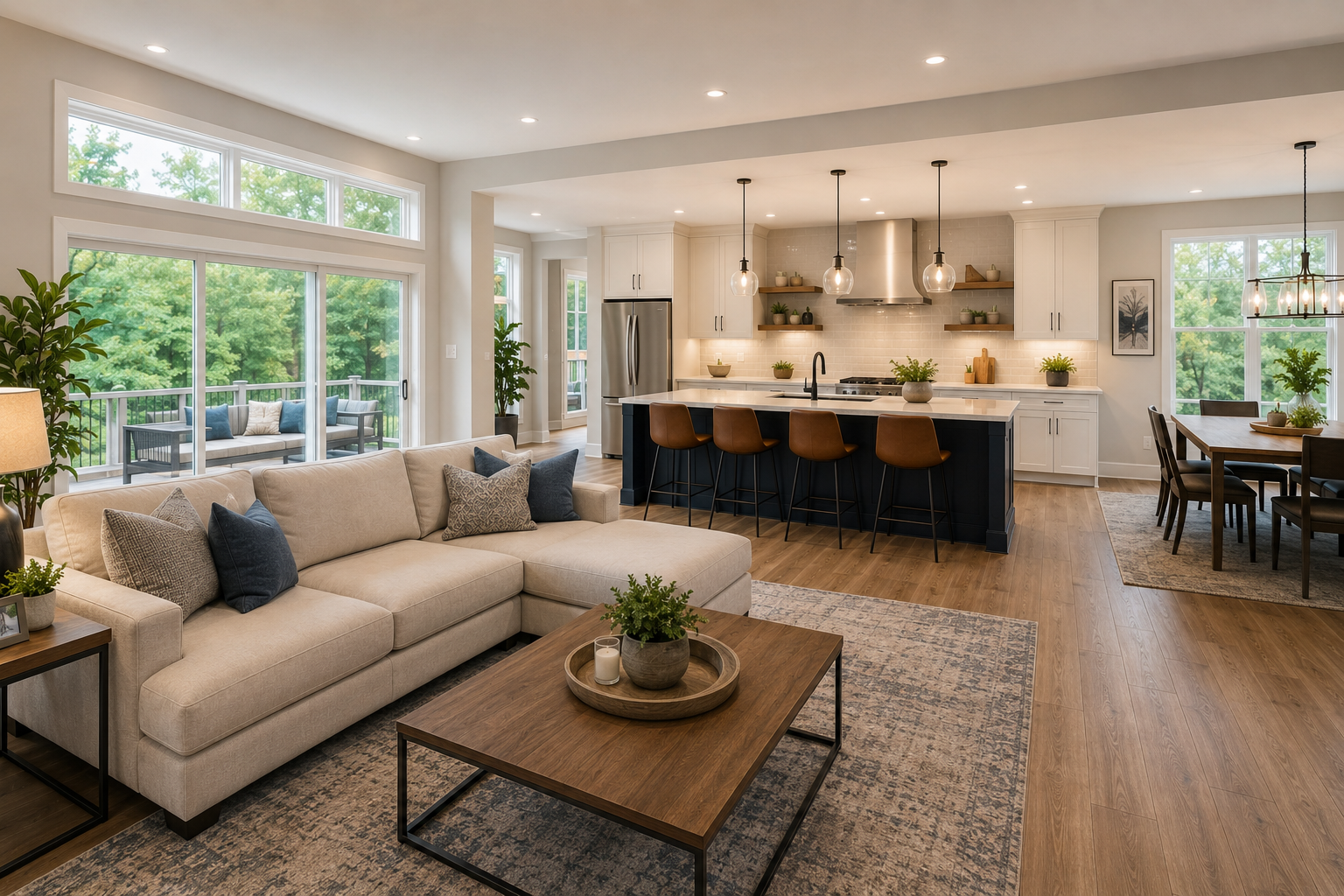
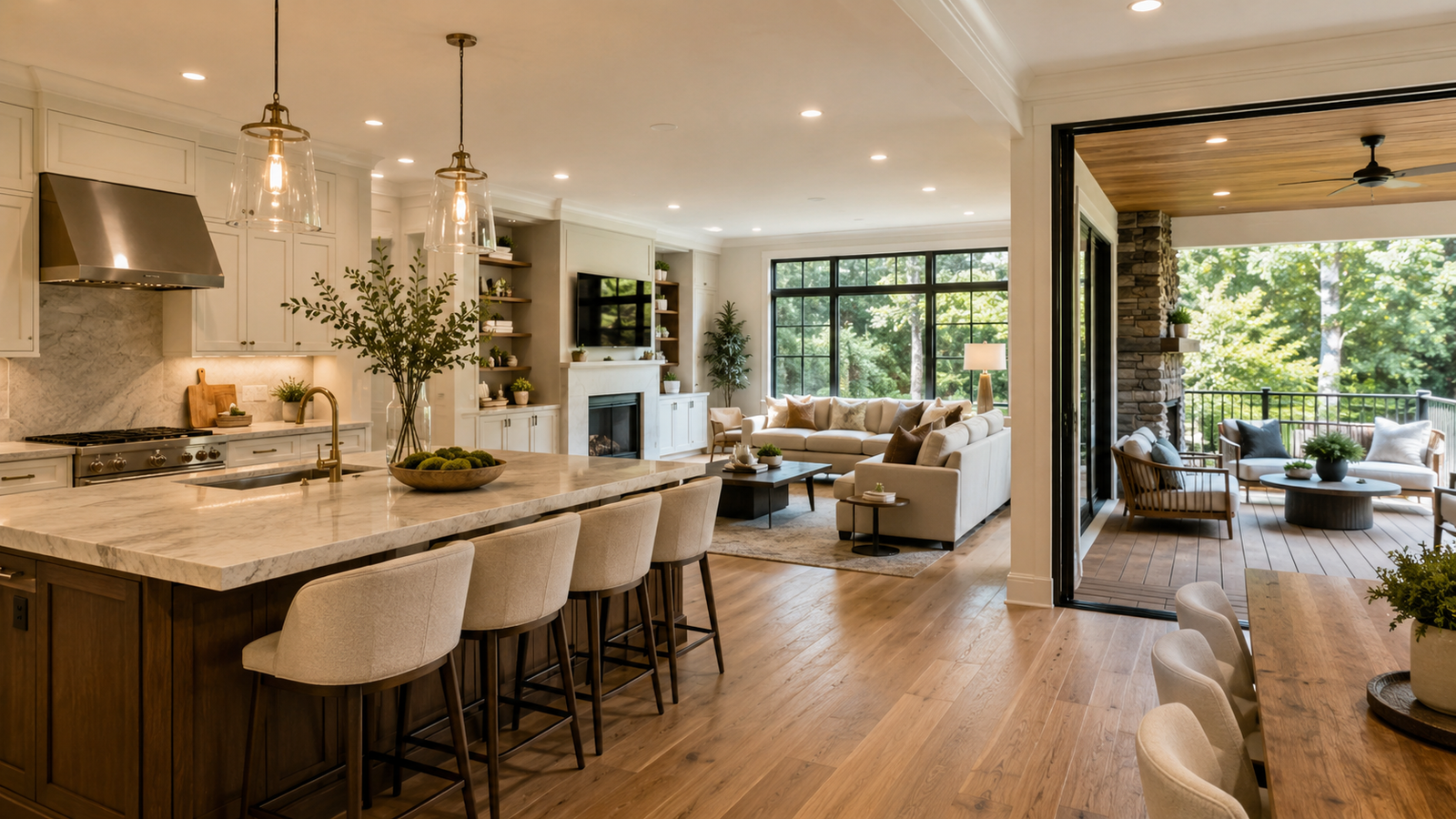
For many Maryland homeowners, the kitchen is the center of the whole-home remodeling plan.
The kitchen affects cooking, storage, family routines, entertaining, traffic flow, natural light, and connection to dining or outdoor spaces. When the kitchen does not work, the entire home can feel inefficient.
A kitchen remodel may include:
- New layout
- Larger island
- Better storage
- Updated cabinets
- Durable countertops
- Improved lighting
- Better appliance placement
- Pantry upgrades
- Flooring continuity
- Indoor-outdoor connection
- Improved dining flow
A kitchen remodel should be prioritized when:
- The layout blocks movement
- Storage is insufficient
- The island is poorly placed
- Appliances are outdated
- Lighting is weak
- The kitchen feels disconnected from the family room
- The kitchen does not support entertaining
- Flooring transitions are awkward
- Cabinets or counters are damaged
- The home needs a more modern central gathering space
A kitchen is not just a room. It is a performance zone.
That is why Kitchen Remodeling often becomes one of the first major priorities in a whole-home plan.
However, the kitchen should not be planned in isolation. If the homeowner is also considering an addition, wall removal, flooring replacement, outdoor living upgrades, or full-home layout changes, those decisions should be considered before construction begins.
Step 4: Prioritize Bathrooms for Comfort, Safety, and Long-Term Value
Bathrooms are another high-priority area in whole-home remodeling.
A bathroom remodel can improve daily comfort, safety, resale appeal, moisture control, and long-term usability.
A bathroom remodel may include:
- Walk-in shower
- Curbless shower
- New vanity
- Better storage
- Improved lighting
- Slip-resistant flooring
- Waterproofing
- Better ventilation
- Updated fixtures
- Modern tile
- Comfort-height toilet
- Aging-in-place features
Bathrooms should be prioritized when:
- The shower or tub is difficult to use
- Tile or grout is failing
- Ventilation is poor
- Mold or moisture is visible
- Lighting is weak
- Storage is inadequate
- The layout feels cramped
- Fixtures are outdated
- Flooring is slippery
- The bathroom does not support long-term living
A bathroom may seem like a smaller project than a kitchen, but it requires serious technical execution. Plumbing, electrical work, waterproofing, ventilation, drainage, tile installation, and fixture placement must be handled correctly.
That is why Bathroom Remodeling should be part of a professional whole-home roadmap, especially when homeowners are planning aging-in-place improvements or multigenerational living.
A beautiful bathroom should also be durable behind the walls.
Step 5: Turn the Basement Into Usable Living Space
Many DMV homes have basements that are unfinished, outdated, poorly lit, damp, or used mostly for storage.
That is a major opportunity.
A finished basement can create:
- Guest suite
- In-law space
- Family room
- Home office
- Media room
- Playroom
- Fitness area
- Storage zone
- Entertainment space
- Flexible living area
Basement remodeling is especially valuable because it can increase usable living space without always requiring a full addition.
However, basements need careful planning.
A proper basement remodel should consider:
- Moisture control
- Foundation wall condition
- Insulation
- Egress
- Lighting
- Flooring
- Ventilation
- Ceiling height
- Electrical work
- Plumbing options
- Bathroom feasibility
- Storage
- Sound control
- Stair safety
The most important rule is simple: do not finish a basement before addressing moisture.
If the basement has water stains, musty odors, soft flooring, or visible damage, homeowners should review Restoration & Rebuild before moving forward with finishes.
When the basement is ready, Basement Remodeling can become one of the strongest whole-home remodeling investments because it turns underused space into real daily value.
Step 6: Decide Whether the Home Needs an Addition
Sometimes a home cannot meet the family’s needs within its existing footprint.
In that case, a home addition may be the right solution.
A home addition can create:
- Larger kitchen
- First-floor suite
- Expanded family room
- New bedroom
- Home office
- Sunroom
- Mudroom
- Larger bathroom
- Multigenerational living area
- More storage
A Home Addition should be considered when the existing home lacks the square footage or layout flexibility needed to support the homeowner’s goals.
However, additions must be planned carefully.
A good addition should consider:
- Foundation
- Roofline integration
- Exterior materials
- Siding transitions
- Window placement
- Insulation
- HVAC coordination
- Electrical work
- Plumbing if needed
- Interior flow
- Natural light
- Drainage
- Permit requirements
- Connection to the existing structure
A poorly planned addition can feel disconnected from the home. A well-planned addition feels like it was always meant to be there.
This is why homeowners should decide early whether an addition is part of the roadmap. If an addition is likely, it can affect kitchen planning, flooring, lighting, exterior work, and budget priorities.
Step 7: Plan Outdoor Spaces as Part of the Home
Outdoor spaces are no longer secondary.
In 2026, homeowners want decks, porches, patios, outdoor dining areas, screened porches, and backyard rooms that function like extensions of the home. Houzz’s 2026 design coverage continues to show strong interest in wellness-focused spaces, richer materials, and outdoor areas that support daily living. Recent remodeling trend coverage also notes that the boundary between indoor and outdoor living continues to blur, with homeowners investing in functional exterior spaces for entertaining and year-round use.
Outdoor remodeling may include:
- Deck replacement
- Covered porch
- Screened porch
- Outdoor dining area
- Fire feature
- Outdoor kitchen
- Privacy screens
- Lighting
- Railings
- Stairs
- Drainage-aware design
- Connection to kitchen or basement
A deck or porch should be prioritized when:
- The current deck feels unsafe
- Railings are loose
- Stairs are unstable
- Boards are rotting
- The backyard is underused
- The home lacks outdoor entertaining space
- The kitchen does not connect well to the exterior
- The family wants better summer living
A professional Decks & Porches project should consider safety, structure, materials, drainage, lighting, and how the outdoor space connects to the interior.
A strong whole-home remodel should not stop at the back door. It should consider how the entire property supports daily life.
Step 8: Add Energy-Efficient and Comfort-Driven Upgrades
Energy-efficient remodeling should be part of the whole-home roadmap because comfort and performance affect every room.
Many Maryland homes have issues such as uneven temperatures, drafty windows, weak insulation, damp basements, poor ventilation, or rooms that overheat in summer.
Energy-conscious remodeling may include:
- Better insulation
- Air sealing opportunities
- Improved windows
- Durable flooring
- Better ventilation
- Efficient lighting
- Smarter room layouts
- Exterior shade
- Moisture-conscious materials
- Better basement comfort
- Improved kitchen ventilation
- Bathroom humidity control
Energy upgrades are especially important when walls, floors, ceilings, windows, or exterior transitions are already being opened during remodeling.
A homeowner planning Full Home Remodeling should use that opportunity to improve comfort behind the scenes, not only update visible finishes.
Energy-efficient improvements can also support long-term value because buyers increasingly care about comfort, durability, operating costs, and modern home performance.
Step 9: Choose Materials That Connect the Whole Home
One of the biggest mistakes in whole-home remodeling is choosing materials room by room without considering the complete home.
The result can feel inconsistent.
The kitchen may feel modern, the bathroom may feel traditional, the basement may feel generic, and the outdoor space may feel disconnected.
A better approach is to create a unified design language.
This does not mean every room should look the same. It means the materials should feel related.
A cohesive whole-home material strategy may consider:
- Flooring continuity
- Cabinet tones
- Countertop materials
- Tile palettes
- Lighting finishes
- Door and trim style
- Hardware finishes
- Paint colors
- Wood tones
- Exterior materials
- Outdoor-to-indoor transitions
Current design trends show homeowners moving toward warmth, texture, richer materials, and character-driven spaces rather than flat minimalism. Real Simple’s coverage of Houzz’s 2026 summer trends notes rising interest in cozy, old-world details, earthy color palettes, textured finishes, and analog entertainment spaces.
For whole-home remodeling, this is useful because it supports a more timeless, personal, and comfortable design direction.
A successful remodel should not feel like a showroom. It should feel like a better version of the home.
Step 10: Work With a Licensed Design-Build Contractor
Whole-home remodeling requires coordination.
A major remodel can involve demolition, framing, electrical work, plumbing, HVAC coordination, flooring, cabinetry, tile, windows, doors, exterior work, painting, inspections, and finish details.
Without professional coordination, the project can become fragmented.
That is why homeowners should work with a qualified General Contractor in Maryland and Licensed Contractors in Maryland.
A design-build contractor helps homeowners connect:
- Vision
- Budget
- Scope
- Materials
- Construction feasibility
- Permit needs
- Scheduling
- Trade coordination
- Quality control
- Long-term value
This is especially important when the project includes multiple rooms or structural changes.
NAHB’s National Home Remodeling Month campaign emphasizes the value of hiring professional remodelers and gives consumers resources for choosing a qualified remodeler. That message matters because the contractor decision affects every part of the project.
The right contractor helps homeowners avoid unclear scope, poor sequencing, weak workmanship, and expensive mistakes.
Recommended Whole-Home Remodeling Priority Order
Every home is different, but many Maryland homeowners can use this general priority order:
1. Repair Damage First
Start with water damage, structural concerns, unsafe decks, moisture issues, or failing previous work.
Explore Restoration & Rebuild.
2. Decide Whether the Layout Works
Before choosing finishes, decide whether walls, rooms, traffic flow, or square footage need to change.
Explore Full Home Remodeling.
3. Plan Any Additions Early
If the home needs more space, plan additions before finalizing kitchen, flooring, exterior, or mechanical decisions.
Explore Home Additions.
4. Prioritize the Kitchen
The kitchen drives daily living, storage, entertaining, and home value.
Explore Kitchen Remodeling.
5. Upgrade Bathrooms
Bathrooms affect comfort, safety, moisture control, and resale appeal.
Explore Bathroom Remodeling.
6. Finish the Basement Properly
Basements can add major usable space, but moisture and comfort must come first.
Explore Basement Remodeling.
7. Improve Outdoor Living
Decks, porches, and outdoor rooms expand how the home functions.
Explore Decks & Porches.
8. Align Energy and Comfort Upgrades
Windows, insulation, ventilation, flooring, lighting, and layout decisions should support comfort and long-term performance.
9. Finalize Materials as One Cohesive System
Choose finishes that connect the whole home visually and functionally.
10. Build With Professional Coordination
A whole-home remodel needs experienced project management, trade coordination, and quality control.
How H&C Construction Design Build Helps Maryland Homeowners
At H&C Construction Design Build, we help homeowners plan and build remodeling projects with structure, craftsmanship, communication, and long-term value.
Our whole-home remodeling process focuses on five priorities.
1. Understanding the Homeowner’s Goals
We begin by learning what the homeowner wants to improve: layout, comfort, safety, storage, energy performance, outdoor living, damage repair, resale value, or long-term family needs.
2. Evaluating the Existing Home
We review visible conditions, layout constraints, moisture concerns, structural issues, exterior conditions, and areas where remodeling should be prioritized.
3. Creating the Right Remodeling Strategy
We help homeowners decide whether the right path involves full-home remodeling, kitchen remodeling, bathroom remodeling, basement remodeling, home additions, decks and porches, restoration, or a phased plan.
4. Coordinating Construction Professionally
We manage remodeling with attention to sequencing, materials, trade coordination, quality control, communication, and construction details.
5. Building for Long-Term Value
We focus on remodeling that looks beautiful, works better every day, and supports the home for years.
Whether you need a whole-home remodel in Bethesda, a kitchen and basement renovation in Rockville, a bathroom and addition project in Potomac, or a complete home improvement roadmap in Montgomery County, H&C Construction can help you move from scattered ideas to a clear remodeling plan.
View Our Remodeling Projects or request a consultation to start planning.
Build the Right Remodeling Roadmap Before You Start
A whole-home remodel should not feel improvised.
The best results come from clear priorities, professional planning, and strong construction execution.
In 2026, Maryland homeowners are remodeling for more than appearance. They want better kitchens, safer bathrooms, finished basements, outdoor living spaces, home additions, energy-conscious upgrades, and layouts that support real life.
The right roadmap helps homeowners make those decisions in the right order.
If your home feels outdated, inefficient, too small, poorly organized, damaged, or disconnected from the way your family lives, H&C Construction Design Build can help you plan a remodel that improves comfort, function, safety, and long-term value.
Explore Full Home Remodeling, Kitchen Remodeling, Bathroom Remodeling, Basement Remodeling, and Home Additions, or request a consultation with H&C Construction Design Build today.