Posted on Leave a comment

Kitchen Remodeling vs. Bathroom Remodeling in Maryland

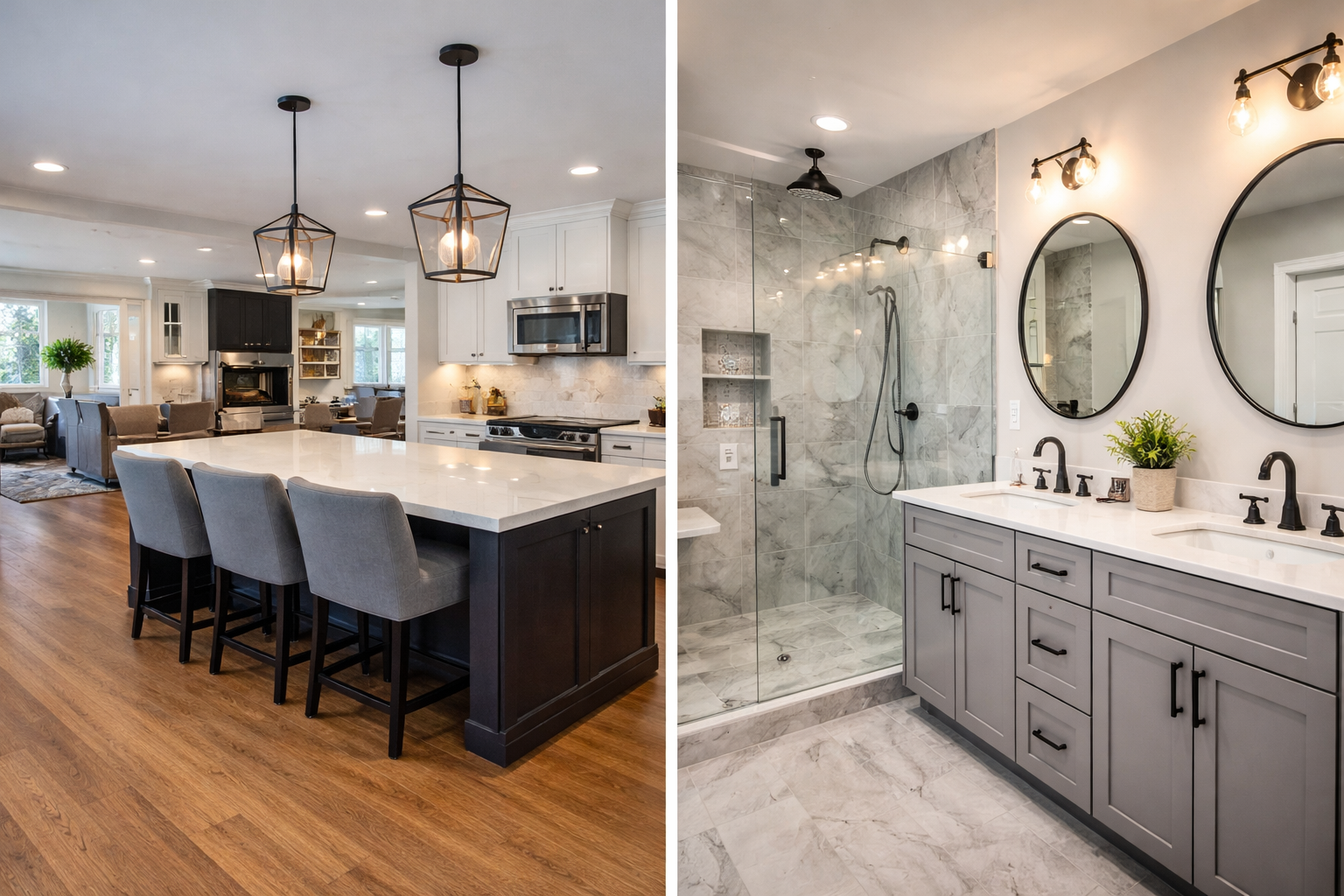
Comparison of kitchen remodeling and bathroom remodeling in Maryland, showing a luxury kitchen and a modern bathroom as two high-value renovation options.

Kitchen Remodeling vs. Bathroom Remodeling in Maryland: Which Upgrade Should You Prioritize First?

When homeowners start planning a renovation, one question comes up again and again: should you remodel the kitchen first or the bathroom?

Both spaces have a major impact on daily comfort, function, and resale appeal. But they solve different problems, involve different types of disruption, and create value in different ways. For some Maryland homeowners, the kitchen is the obvious first investment because it drives everyday life, storage, traffic flow, and entertaining. For others, the bathroom should come first because comfort, privacy, maintenance issues, and outdated fixtures are affecting daily routines more directly.

The right answer is not universal. It depends on how you live, which room creates the most friction right now, and how the renovation fits into your larger plan for the home. In many cases, the smartest decision is the one that improves the house strategically—not just cosmetically.

If you are deciding where to invest first, start by comparing the real role each space plays in your home.

1) Why the Kitchen Often Comes First

A kitchen remodel tends to have the biggest daily visibility. It is usually the most active room in the house, and it affects far more than cooking alone. Storage, lighting, seating, workflow, family interaction, and how open or closed the house feels often start here.

That is why many homeowners begin with kitchen remodeling. If your kitchen feels cramped, outdated, poorly lit, or inefficient, improving it can change the way the entire home functions. A strong kitchen renovation can create better circulation, more usable counter space, improved storage, and a more natural connection to dining and living areas.

This becomes even more important when the kitchen sits at the center of the floor plan. In those homes, a better kitchen does not just improve one room. It improves the rhythm of the whole house.

2) Why Bathroom Remodeling Can Be the Smarter First Move

While kitchens often dominate attention, bathrooms create a different kind of value. A dated bathroom can affect comfort every single day, especially if the layout is inefficient, ventilation is poor, storage is limited, or surfaces are worn and difficult to maintain.

For many homeowners, bathroom remodeling is the more practical priority because it solves immediate lifestyle problems faster. A better bathroom can improve privacy, accessibility, moisture resistance, lighting, and everyday convenience. In primary suites, it can also change how the home feels at a much more personal level.

If the current bathroom feels too small, too old, or too difficult to use comfortably, this may be the renovation that delivers the strongest quality-of-life improvement first.

3) Which Project Creates More Daily Impact?

If you measure value by how often you experience the upgrade, kitchens usually lead. Most households use the kitchen constantly throughout the day. It is not only a cooking space, but also a gathering zone, a storage hub, and often a visual anchor for the rest of the main level.

But if the problem is not visibility, but discomfort, then the bathroom may deserve priority. A home can function with an outdated kitchen longer than it can function with a bathroom that feels cramped, deteriorated, or impractical.

This is why the first question should not be “Which room adds more value?” but rather, “Which room is causing the bigger problem in the way we live right now?”

That single distinction often makes the decision much clearer.

4) Which Renovation Feels More Disruptive?

Kitchen projects often feel more disruptive because they affect the heart of daily activity. When the kitchen is under construction, routines around meals, storage, cleanup, and movement through the house are all affected.

Bathroom remodels can also be disruptive, especially when the home has limited bathrooms. But in many cases, they are easier to isolate than kitchens, particularly if another bathroom remains available during the work.

This matters because project sequencing affects the homeowner experience just as much as design. If you want to reduce confusion, delays, and repeated trade overlap, it helps to work with a general contractor in Maryland who can manage scope, scheduling, permits, and execution under one plan.

5) Which Upgrade Supports Resale More Clearly?

Kitchens and bathrooms both matter strongly to buyers, but they do so in different ways.

A kitchen often shapes the first emotional reaction to the home. Buyers notice layout, openness, cabinetry, countertops, storage, and how connected the space feels to the rest of the house. A good kitchen can make the home feel more current, more social, and more livable.

Bathrooms influence confidence. Buyers notice whether the bathrooms feel clean, modern, durable, and comfortable. Updated bathrooms help signal that the home has been maintained well and upgraded with care.

In short, kitchens often drive “wow,” while bathrooms often reinforce trust.

That is why many Maryland homeowners ultimately renovate both—but the best first move depends on which upgrade creates the biggest improvement right now and which one aligns with the broader strategy for the property.

6) The Bigger Question: Is This a One-Room Upgrade or Part of a Larger Plan?

This is where many homeowners make the wrong call. They choose the next project in isolation without asking how it fits into the larger home.

For example, if you already know the home needs a broader transformation, it may make more sense to think in terms of full home remodeling rather than treating each room as a separate decision. A kitchen remodel done today may need to be visually reconnected later to flooring, lighting, wall changes, or adjacent living spaces. The same is true for bathrooms if a future layout change or whole-home finish update is likely.

In other homes, the next priority may not even be the kitchen or bathroom. If your biggest issue is flexible living space, working from home, guest accommodations, or entertainment use, then basement remodeling may create more meaningful functional value first. And if the home simply lacks enough square footage, home additions may be the more strategic path than investing heavily in a room that still leaves the house undersized.

The best renovation decisions usually come from looking at the home as a system—not as a collection of unrelated rooms.

7) Choose the Kitchen First If…

Choose kitchen remodeling first if your current kitchen:

  • feels cramped or inefficient every day
  • lacks storage or usable prep space
  • disrupts flow between rooms
  • feels outdated compared with the rest of the home
  • limits entertaining or family routines
  • would improve the visual impact of the main level immediately

If the kitchen is the center of your daily life, upgrading it first often delivers the strongest immediate transformation.

8) Choose the Bathroom First If…

Choose bathroom remodeling first if your current bathroom:

  • feels too small or hard to use
  • has poor ventilation or persistent moisture issues
  • lacks functional storage
  • feels outdated, worn, or difficult to maintain
  • affects comfort more than any other space in the home
  • needs a better shower, vanity, lighting, or layout to support daily life

If the issue is comfort, usability, and everyday friction, the bathroom may provide the better first return.

9) The Best Results Come From Sequencing, Not Guessing

The reason some remodels feel successful and others feel fragmented is not only craftsmanship. It is sequencing.

When homeowners renovate the right room first, in the right order, with the right long-term perspective, they avoid rework, design inconsistency, and budget waste. They also create smoother transitions into future projects.

That is why a renovation should not begin with finishes alone. It should begin with priorities, scope, and how the first project supports the next one. Whether you start with the kitchen, the bathroom, a basement remodeling project, a broader full home remodeling plan, or even home additions, the goal should be a more functional and more valuable home overall.

Ready to Decide What to Remodel First?

If you are choosing between a kitchen remodel and a bathroom remodel in Maryland, the smartest next step is not guessing which room feels more popular. It is evaluating which renovation solves the most important problem in your home right now—and how that investment fits into your larger remodeling roadmap.

Explore our most relevant services here:
Posted on Leave a comment

Finished Basement vs. Home Office Addition in Maryland

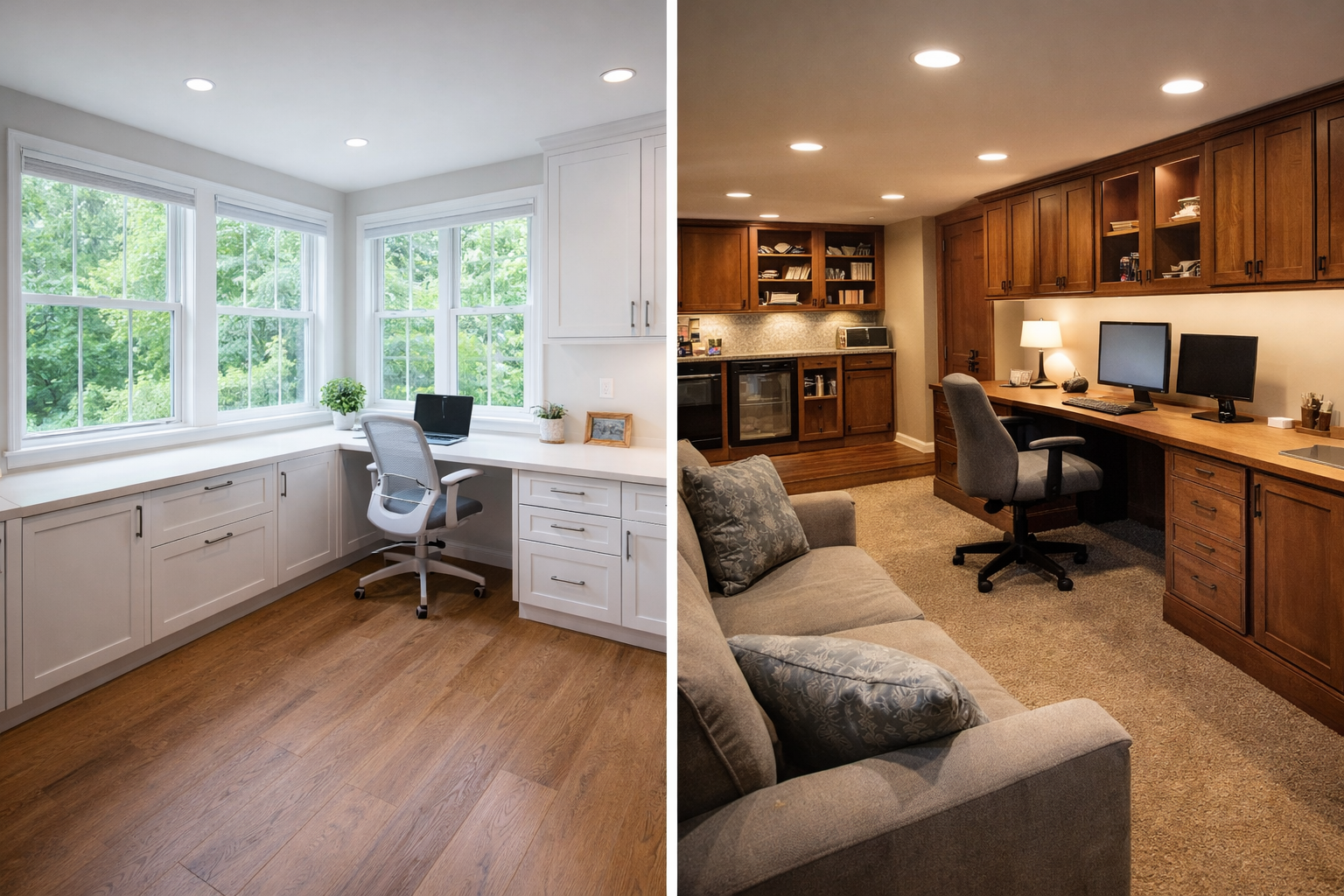
Comparison of a finished basement office and a home office addition in Maryland, showing two ways to create a functional workspace at home.

Finished Basement vs. Home Office Addition in Maryland: Which Upgrade Works Better for Modern Living?

For Maryland homeowners, the need for more functional space has changed. It is no longer only about adding square footage for a growing family. Today, many renovation decisions are driven by remote work, hybrid schedules, guest flexibility, privacy, storage, and the need to make the home perform better every day.

That is why one of the smartest questions homeowners can ask is this: should you invest in a basement remodeling project or build a home addition specifically designed as a home office or multi-purpose workspace?

Both options can solve the same core problem, but they do so in very different ways. One uses the structure you already have. The other creates new above-grade square footage. One may be more budget-efficient. The other may feel more premium, visible, and integrated into the main living environment.

The right choice depends on what kind of space you need, how private it must be, how often it will be used, and whether your long-term priority is flexibility, resale appeal, or true expansion.

Why This Decision Matters More Than Ever

The home office is no longer a luxury feature for a small percentage of homeowners. It has become a practical part of modern living. Even for families that do not work remotely full time, there is still growing demand for spaces that support focused work, school routines, video calls, quiet reading, admin tasks, and flexible guest use.

This is why the decision should not be reduced to “which option gives me another room?” The better question is which upgrade creates the most useful kind of room for your lifestyle.

For some households, finishing the basement is the best answer because it creates a quieter separation from the main floor. For others, a dedicated office addition feels more natural because it brings natural light, easier daily access, and stronger long-term design value.

When a Finished Basement Makes More Sense

A basement remodeling project is often the stronger choice when the home already has underused lower-level space with good potential for conversion.

This approach is ideal when you need:

  • a quiet workspace separated from the busiest parts of the house
  • a flexible area that can also serve as a guest zone, gym, lounge, or media room
  • more function without expanding the home’s exterior footprint
  • a renovation that builds on existing structural space rather than starting from scratch

A basement office can work especially well for remote professionals who need fewer interruptions during the day. It can also be a smart choice when the goal is not just one office, but a multi-use lower level that supports work, relaxation, and future adaptability at the same time.

The biggest advantage is versatility. A basement is rarely limited to one purpose. With the right layout, lighting, storage, and finish strategy, it can support a home office now and still function as additional living space later.

If that lower level also needs a bathroom or more comfort for guests, it can naturally connect with future bathroom remodeling decisions as part of a broader lower-level upgrade.

When a Home Office Addition Is the Better Investment

A home addition is often the better move when the house truly lacks enough above-grade space and the new office needs to feel fully integrated into the main living environment.

This option makes more sense if you want:

  • a dedicated office with strong natural light
  • direct access from the main level without using basement stairs
  • a space that feels more premium and visible within the home
  • a long-term expansion that clearly increases the home’s usable footprint
  • a room that may later serve as a bedroom, library, studio, or private suite component

A home office addition tends to feel more intentional because it is designed from the ground up for that purpose. It can be placed exactly where it supports your floor plan best. It may also create a stronger emotional impression because above-grade square footage typically feels more connected to the core living experience of the home.

If your current main floor already feels tight, this route may be much more effective than finishing the basement, because it solves both the need for an office and the bigger issue of limited usable space.

Privacy, Noise, and Daily Function

One of the biggest differences between these two options is how they affect concentration and privacy.

A basement office often wins on separation. It physically removes the workspace from kitchen traffic, TV noise, front-door activity, and the constant flow of daily family life. That can be a major benefit for professionals who spend hours on calls, need uninterrupted focus, or simply want a cleaner boundary between work and home.

An office addition often wins on comfort and accessibility. It usually provides easier access, more natural light, and a stronger sense of connection to the rest of the house. For homeowners who want a workspace that feels bright, polished, and easy to use throughout the day, that can matter just as much as privacy.

So the real comparison is not just basement versus addition. It is separation versus visibility, quiet versus integration, and value-focused flexibility versus premium expansion.

Cost Logic: Build Within the Home or Expand the Structure?

In many cases, basement remodeling is more cost-efficient because the structure already exists. You are working within the home’s footprint instead of extending it.

That usually means fewer exterior construction demands, less structural expansion, and a project scope that can be more manageable when the goal is to gain usable space efficiently.

A home addition often costs more because it involves structural expansion, exterior integration, framing, roofing, and a more complex building sequence. But that added complexity can also create a more premium and visible result if what you truly need is new above-grade square footage.

This is where planning matters. A homeowner who only needs a strong, private workspace may find that the basement is the smarter investment. A homeowner whose entire house feels undersized may find that an addition solves the deeper issue more effectively.

Resale and Long-Term Flexibility

From a resale perspective, both upgrades can be valuable, but they communicate value differently.

A finished basement tends to appeal through flexibility. Buyers see space they can use as a lounge, office, gym, guest retreat, media area, or secondary living zone. The more polished and functional the lower level feels, the stronger its value perception becomes.

A home office addition tends to appeal through permanence and premium square footage. Buyers usually understand an addition immediately. It feels like a visible expansion of the home rather than a conversion of existing space.

That said, the best resale result usually comes from fit. If your neighborhood and house layout support an addition well, that may be the stronger long-term move. If your basement has excellent potential and the main home already functions well above grade, then finishing the basement may create more practical value without overextending the project.

If the bigger issue is that multiple areas of the house need rethinking at the same time, the smarter path may be full home remodeling rather than evaluating one isolated room decision at a time.

Which Option Is Better for Modern Living in Maryland?

Choose basement remodeling first if your priority is flexible use, privacy, and better value from the home’s existing footprint.

Choose home additions first if your priority is above-grade space, natural light, and a more visibly integrated expansion.

And if your office need is only one part of a much larger issue, such as outdated circulation, insufficient storage, or disconnected main living areas, it may be worth reviewing whether kitchen remodeling or a broader full home remodeling strategy would solve more than one problem at once.

This is why the best renovation decisions are rarely made by comparing rooms alone. The right decision comes from understanding how the entire home is used.

The Real Success Factor: Planning, Sequencing, and Execution

Whether you choose a basement office or an addition, the success of the project depends on planning. Layout, lighting, comfort, electrical needs, storage, acoustics, finish quality, and long-term adaptability all matter.

That is where working with a general contractor in Maryland becomes critical. The best results come from clear scope definition, smart sequencing, clean trade coordination, and a finish standard that makes the new space feel intentional rather than improvised.

Without that structure, even a good concept can turn into a disconnected project that underperforms in daily life.

Ready to Choose the Right Office Upgrade?

If you are deciding between a finished basement and a home office addition in Maryland, the next step is a professional evaluation of your layout, priorities, and long-term goals.

Explore the most relevant service pages here: